
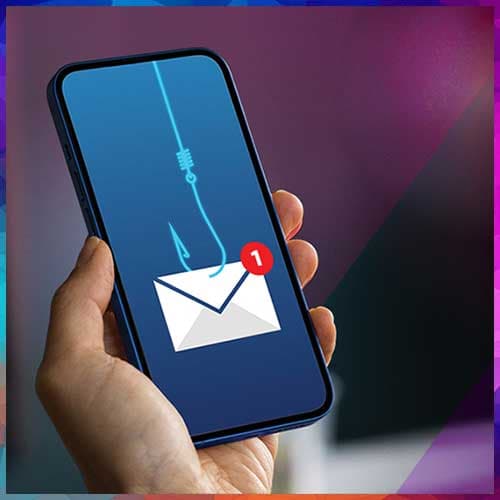
Cybercriminals are rapidly shifting from email-based phishing to mobile-focused attacks as traditional email security becomes stronger. According to Verizon’s latest Data Breach Investigations Report (DBIR) 2026, attackers are increasingly using text messages, phone calls, messaging apps, and mobile notifications to target employees and businesses.
The report, based on more than 31,000 security incidents and 22,000 confirmed data breaches across 145 countries, found that mobile phishing campaigns now generate higher engagement rates than traditional email phishing attacks. Verizon concluded that “mobile is more dangerous than email” because users tend to trust messages received on personal devices and react faster without carefully verifying authenticity.
One major reason behind this shift is the growing effectiveness of email security tools. Organizations have invested heavily in spam filtering, secure email gateways, and phishing detection technologies. As a result, cybercriminals are moving toward channels where defenses remain weaker and human behavior is easier to exploit.
Mobile social engineering attacks often rely on urgency, trust, and impersonation. Attackers use fake delivery notifications, banking alerts, HR messages, OTP requests, and executive impersonation calls to manipulate victims into clicking malicious links or sharing credentials. Verizon’s findings also highlight the rise of pretexting attacks, where criminals create believable fake scenarios to convince users to disclose sensitive information.
The increasing use of mobile devices for work has further expanded the attack surface. Employees now access enterprise applications, financial systems, cloud platforms, and confidential communications directly from smartphones. However, many organizations still treat mobile security as secondary to desktop and email protection.
Cybersecurity experts warn that businesses must rethink their security awareness strategies. Traditional phishing training focused mainly on suspicious emails is no longer sufficient. Enterprises now need mobile-first cybersecurity education covering SMS phishing (smishing), voice phishing (vishing), QR code scams, messaging app fraud, and AI-powered impersonation attacks.
Organizations are also being encouraged to deploy stronger mobile device management (MDM), multi-factor authentication, real-time threat detection, and zero-trust security frameworks. As cybercriminals increasingly target human behavior rather than technical vulnerabilities alone, mobile security is becoming a critical component of enterprise cyber resilience.