Cybercriminals are exploiting the global popularity of Netflix to launch sophisticated phishing campaigns designed to steal payment credentials and personal information. The attacks demonstrate how trusted consumer brands can become powerful instruments for financial fraud without their systems necessarily being compromised.
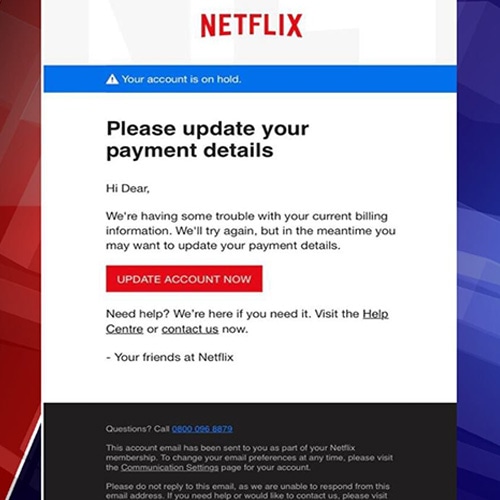
In May 2026, cybersecurity company MailGuard reported intercepting a phishing campaign impersonating Netflix. Fraudulent emails claimed that subscribers' accounts had been locked because of payment problems, urging recipients to update their billing information to avoid service interruption.
The campaign exploited a familiar psychological trigger: fear of losing access to a paid subscription. By presenting an apparently routine billing problem, attackers attempted to persuade customers to disclose login credentials, credit card information and sensitive personal details.
Unlike a confirmed breach of Netflix's payment infrastructure, this was a brand-impersonation attack. The criminals relied on deceptive communications and counterfeit payment experiences rather than demonstrated unauthorised access to Netflix's internal financial systems.
The financial implications can extend beyond the initial theft. Compromised credentials may enable fraudulent purchases, account takeover and further impersonation attempts. Stolen information can also be combined with other leaked data to create convincing, personalised scams.
For banks, payment companies and subscription providers, these incidents highlight the importance of detecting suspicious account behaviour, strengthening transaction authentication and educating customers about fraudulent payment notifications.