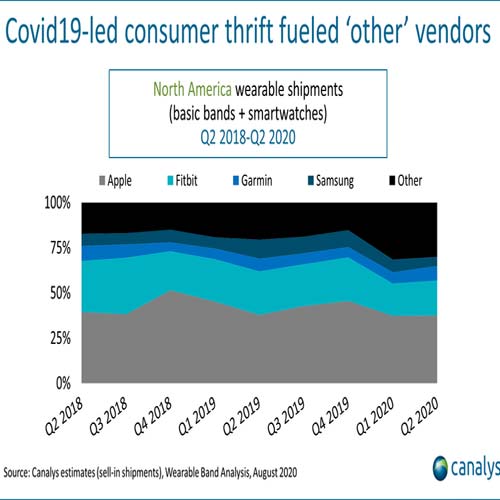
The value of North America's wearable band market in Q2 2020 remained flat year-on-year at US$2 billion, despite shipments growing 10% annually. The average selling price declined 11% to US$235 due to a boom in low-end activity trackers and 30% year-on-year growth for Apple Watch Series 3. Apple Watch Series 5 was North America’s best-selling smartwatch, matching last year’s Series 4 shipments.
North America was only one of two regions to grow quarter-on-quarter, demonstrating sustained consumer demand for wrist-worn devices. As consumers scrutinized personal budgets, their thrift fueled a remarkable growth among the long-tail of lesser-known brands of activity trackers on e-commerce platforms like Amazon. Canalys Analyst Vincent Thielke commented, “Americans invested heavily in sub-US$50 trackers during the pandemic to stay accountable for the greater amount of time spent at home. Amazon’s Q3 introduction of the Halo tracker was timely, following two back-to-back quarters of strong activity tracker sales. Subscription-based companion apps helped Fitbit and less-familiar players like Whoop better differentiate themselves against the vast array of devices sold online. Turnkey service offerings proved a surprising pandemic winner as social distancing discouraged personal trainers and exercising in close proximity to others.”
The surge in basic bands offset the United States’ third consecutive quarter of smartwatch decline, triggered by the clearing-out of channel inventory as Samsung and Fitbit prepared August releases. Wear OS brands also greatly reduced sell-in because of store closures, but also as they began transitioning to Qualcomm’s next-generation chip. As all major vendors set their sights on 2021, medical-oriented devices will move certain products into an elevated tier, creating stronger differentiation between casual fitness and advanced health tracking.