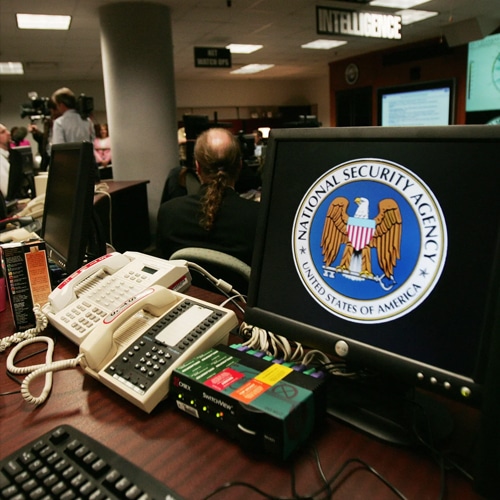
The US National Security Agency (NSA) experienced a major disruption to its classified internal network, NSANet, on November 17, 2026, temporarily affecting internal communications and prompting emergency operational adjustments at its headquarters.
NSANet serves as a critical communication platform for NSA personnel, enabling the exchange of classified intelligence, including highly sensitive national security information.
The disruption reportedly forced the agency to stagger employee arrivals at Fort Meade, Maryland, before restricting campus access largely to essential personnel as technical teams worked to restore services.
According to reports citing sources familiar with the incident, the network suffered significant degradation, raising concerns about the resilience of systems supporting America's intelligence operations.
However, NSA officials described the incident as a temporary service degradation during scheduled maintenance, emphasizing that mission-critical intelligence capabilities remained operational throughout the disruption.
Officials also highlighted multiple layers of infrastructure redundancy designed to maintain essential intelligence functions during unexpected technical failures or system outages.
Subsequent explanations attributed the disruption to software patching intended to address critical vulnerabilities affecting PHP, a widely used programming language supporting numerous web applications.
The vulnerabilities, reportedly identified with assistance from artificial intelligence tools, required urgent remediation. However, certain systems failed to restart as expected following the updates.
The resulting technical complications triggered elevated operational status codes, including code yellow, alongside restrictions on employee movement and access to affected facilities.
Despite the disruption, officials maintained that urgent intelligence communications to President Donald Trump remained unaffected, supported by alternative communication channels and established contingency procedures.
Some associated intelligence facilities, including operations supporting Middle East-related activities, reportedly experienced secondary disruptions but continued functioning through temporary workarounds.
The incident coincided with several unrelated technology disruptions across the United States, affecting airlines, banking services and Microsoft platforms. Authorities reported no evidence connecting these events or indicating hostile cyber activity.
The outage highlights a growing cybersecurity challenge: even essential security updates can disrupt critical infrastructure without adequate testing and recovery planning. For intelligence agencies and enterprises alike, operational resilience increasingly depends on balancing rapid vulnerability remediation with robust redundancy, controlled patch deployment and reliable business continuity mechanisms.