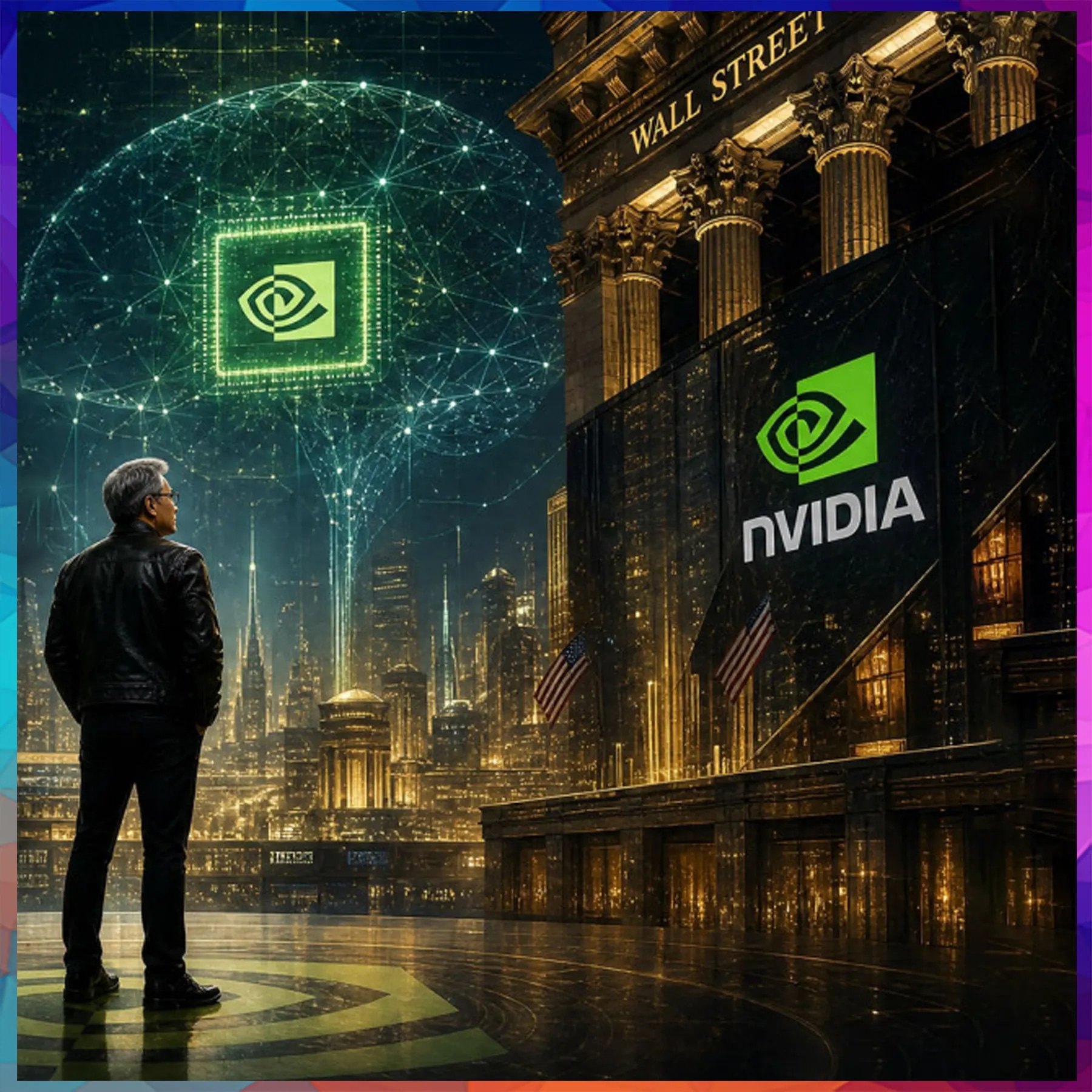
Nvidia is transforming from the world's dominant AI chip supplier into a powerful investor, financier and infrastructure enabler. Under Jensen Huang, the company is increasingly using its financial strength to support businesses that depend on its computing technology.
Its reported investment discussions with Perplexity, at a valuation exceeding $30 billion, illustrate this strategy. The proposed investment could deepen Nvidia's exposure to AI-powered search, autonomous agents and enterprise applications, although the transaction remains unconfirmed.
Key Highlights
-
Perplexity Investment: Nvidia is reportedly exploring investment in AI search and autonomous agents.
-
SB Energy Deal: A $1.5 billion investment strengthens Nvidia's AI infrastructure ecosystem.
-
Massive Financing: Nvidia is helping mobilise over $500 billion in third-party AI infrastructure capital.
-
Ecosystem Control: Investments in AI cloud providers reinforce demand for Nvidia's GPUs and software.
-
Financial Risk: Circular financing, GPU depreciation and infrastructure debt could challenge long-term sustainability.
The biggest infrastructure commitment involves SB Energy, where Nvidia announced a $1.5 billion investment supporting a massive Ohio AI data centre project designed for OpenAI's computing requirements.
Nvidia has also agreed to provide financial guarantees potentially reaching $105 billion for the project, linking chip demand with electricity, land, infrastructure financing and long-term data centre development.Beyond individual investments, Nvidia is working with Apollo, BlackRock, Blackstone, Brookfield, Goldman Sachs and KKR to mobilise more than $500 billion in third-party AI infrastructure capital over time.
Its backing of AI infrastructure providers such as CoreWeave and Lambda further strengthens an ecosystem where Nvidia technology powers expanding cloud capacity and enterprise AI workloads. The strategy creates a reinforcing commercial cycle: Nvidia supports AI developers and infrastructure providers, enabling capacity expansion that can subsequently increase demand for its processors, networking equipment and software.
However, this interconnected financing model raises questions about circular investment flows, customer concentration, infrastructure debt and whether AI revenues can justify rapidly escalating capital expenditure. Another concern is hardware depreciation. Financial institutions remain cautious about treating GPUs as long-lived collateral because technological improvements could reduce their economic value faster than projected.
Nvidia's ambition now extends beyond semiconductor leadership. Huang is positioning the company at the centre of AI infrastructure, financing and innovation—potentially creating a powerful ecosystem while increasing exposure to the industry's financial risks.