Nvidia's dramatic stock-market decline has reshaped global technology rankings, raising questions about leadership stability, artificial intelligence valuations and the sustainability of unprecedented semiconductor investments.
Once approaching $5 trillion in market capitalisation, Nvidia slipped to fourth place among America's most valuable companies, falling behind Apple, Microsoft and Alphabet.
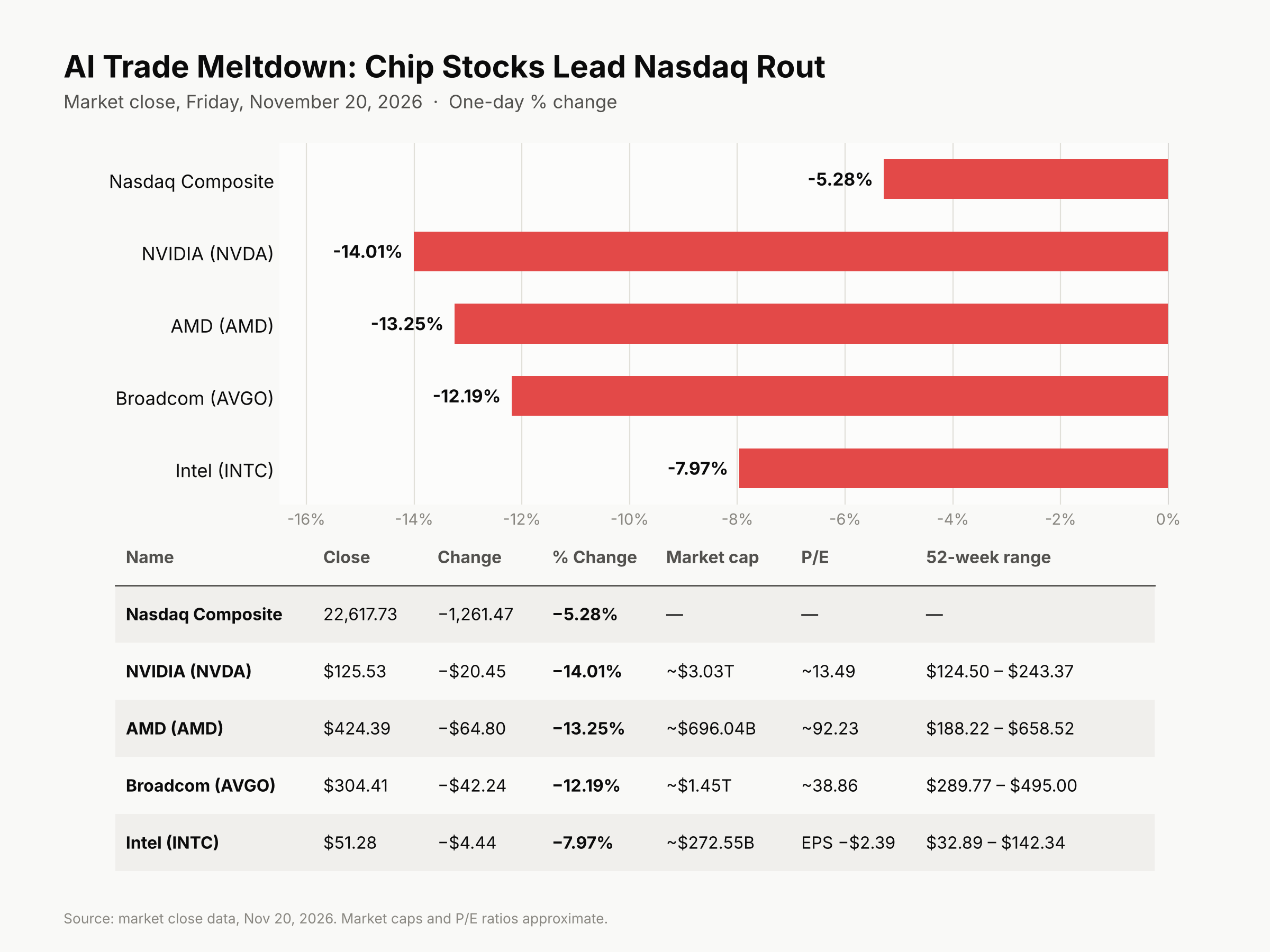
Reports indicate its valuation declined approximately 41% from its early October peak, erasing trillions in shareholder wealth and unsettling investors worldwide.Nvidia plunged 12% Friday as the AI sell-off deepened, with AMD and Broadcom suffering double-digit losses. Analyst Dan Ives called it panic-driven selling, not a warning of darker times ahead
Key Highlights
-
Nvidia Falls: Slips to fourth in US market rankings.
-
Leadership Crisis: Jensen Huang exits; interim CEO appointed.
-
AMD Under Pressure: China-related allegations trigger sharp losses.
-
Intel Struggles: Shares fall amid turnaround challenges.
-
AI Market Warning: Investors reassess valuations and profitability.
The downturn accelerated following Jensen Huang's November 11 resignation as CEO, ending his decades-long leadership of the AI computing giant.
Chief Financial Officer Colette Kress assumed interim leadership, while Nvidia's board initiated a search for a permanent successor amid regulatory scrutiny and uncertainty.
Despite leadership turbulence, Nvidia continues benefiting from substantial demand for AI accelerators, advanced networking technologies and data-centre infrastructure supporting generative AI workloads.
However, investors increasingly question whether extraordinary capital expenditure by hyperscalers can translate into sustainable profits, rather than inflated valuations driven by expectations.
Meanwhile, AMD faces separate pressure following Hunterbrook Media's allegations concerning technology links with blacklisted Chinese server manufacturer IEIT Systems and potential export-control exposure.
AMD rejected wrongdoing, but its shares fell 7.72% on November 19 and declined further on November 20, reflecting growing investor anxiety.
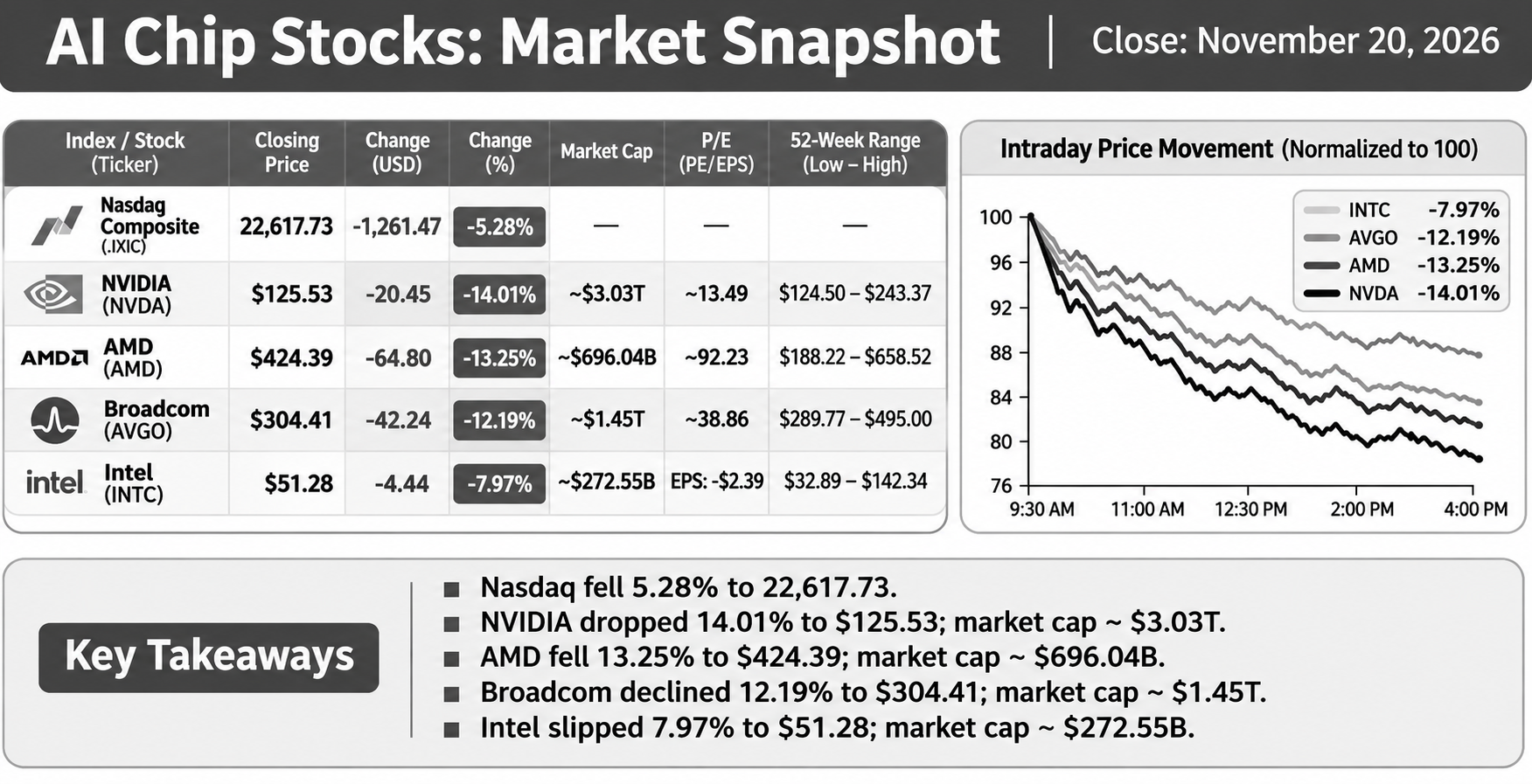
Intel has also experienced selling pressure, with shares declining approximately 8% on November 20 amid broader weakness across semiconductor stocks.
Unlike Nvidia and AMD, Intel's recovery depends heavily on manufacturing execution, foundry competitiveness, server processor demand and restoring sustainable profitability.
The simultaneous weakness highlights how geopolitical restrictions, leadership uncertainty and expensive AI infrastructure commitments can influence semiconductor valuations despite continued technology demand.
For global enterprises, these developments reinforce the importance of diversified chip suppliers, flexible computing architectures and reduced dependence on individual technology ecosystems.
The bigger question is whether the AI investment boom can deliver lasting financial returns. Semiconductor leadership will increasingly depend on innovation, execution, regulatory compliance and sustainable profitability.