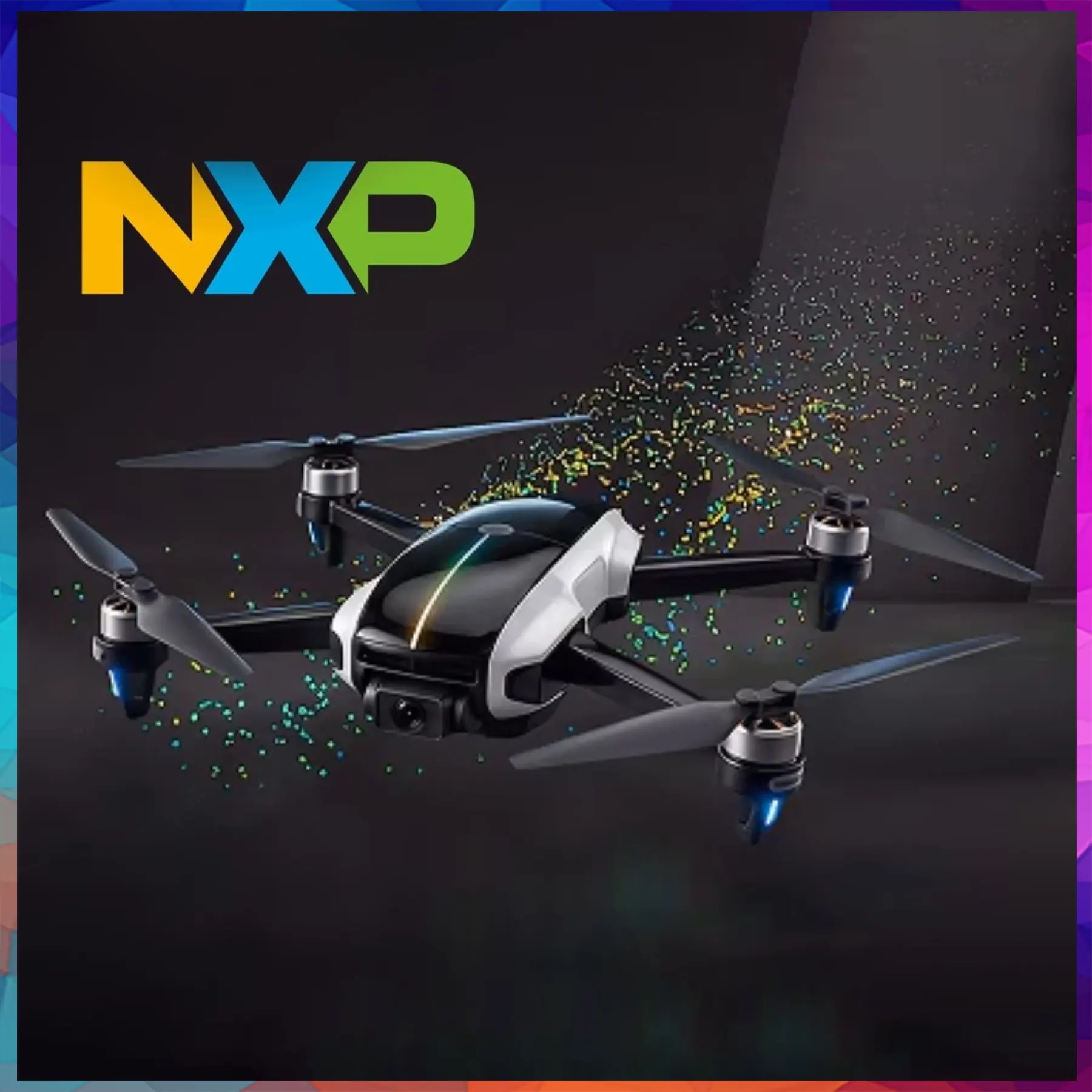
The platform combines an open-source software development kit with validated hardware designs. Drone developers get the first reference designs, with support for service robots and other autonomous systems expected in the second half of 2027.
NXP Semiconductors has launched a unified robotics platform that brings sensing, AI processing, real-time control and communications into a common hardware and software environment. The platform is built on NXP’s neural axis architecture and is designed to help developers move from testing individual subsystems to building complete robots.
NXP said the platform can reduce integration and validation work from months to days or weeks by supplying pre-integrated software and subsystems already tested to work together. Developers can start with a component such as a motor controller and add functions such as AI-based perception, flight control and navigation.
“As autonomous robots increasingly move beyond controlled environments and into the spaces where people live and work, trust becomes a prerequisite for adoption,” said Jerome Legros, Vice President and General Manager, Robotics, NXP Semiconductors. “To deliver that trust, developers need a foundation designed with security, functional safety, real-time control and full lifecycle reliability in mind. NXP's unified robotics platform brings together these non-negotiable capabilities in a scalable architecture that helps developers build the next generation of trusted physical AI systems.”
Open-source toolkit supports established robotics frameworks
The modular software development kit (SDK) includes drivers, middleware, reference applications and configuration tools, with integrations for PX4, Zephyr and ROS 2. The hardware reference designs incorporate secure processing, deterministic real-time control and features that support functional safety.
Drone reference designs lead the rollout
The first reference designs cover onboard computing, flight management, sensor networking and motor control. They include the NavQ95 autonomy computer and flight controller, based on NXP’s i.MX 95 applications processor, and the Tropic flight management unit, based on the i.MX RT1064 crossover microcontroller. NXP says developers can use the designs and SDK to get basic drone functionality running within 30 minutes of setup.
The platform, SDK and drone reference designs are available now. NXP expects to add support for service robots, autonomous mobile robots and other autonomous systems in the second half of 2027.