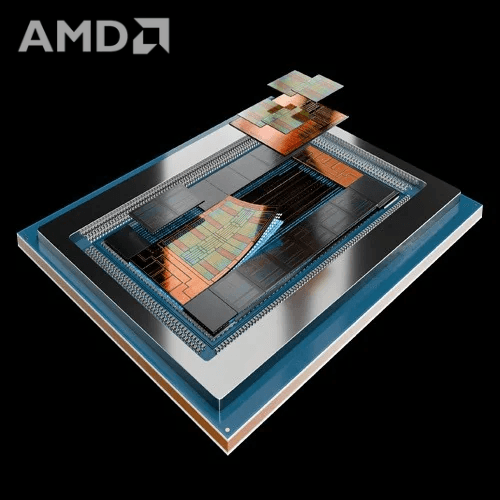
AMD is advancing the AMD Instinct MI400 Series GPU portfolio with updates spanning scientific computing and AI. AMD is sharing additional details on AMD Instinct MI430X GPUs for high-performance computing and AI for science, alongside new measured inference results for the AMD Instinct MI455X GPU on the AMD Helios rackscale solution. AMD is also introducing the AMD Instinct MI450X GPU, giving AMD Helios customers another option to match memory capacity with their AI workloads and deployment needs.
Scientific simulation, frontier AI and interactive inference place different demands on infrastructure. MI400 Series GPUs address those needs with native double-precision compute for scientific applications, high-capacity memory for demanding AI models and additional configuration choices.
“AMD Instinct MI400 Series GPUs bring leadership performance and new capabilities to AI and scientific computing. With advances in high-precision compute, new milestones in AI inference performance and an expanded range of configurations, we’re giving customers more options to power their next generation of AI and HPC workloads,” says — Andrew Dieckmann, corporate vice president and general manager, Data Center GPU Business, AMD.
The AMD Instinct MI430X GPU is designed for workloads that bring together high-precision simulation and AI. Its native FP64 capabilities support demanding scientific calculations, while 432 gigabytes (GB) of HBM4 memory and up to 23.3 terabytes per second of memory bandwidth help researchers work with larger simulations and datasets.
AMD is sharing a closer look at the role of native double precision in scientific computing. New AMD research examines 47 workload configurations across 11 applications and benchmarks, exploring where FP64 emulation can help and where scientific codes depend on native double-precision compute. The findings reinforce the focus on supporting the varied computational demands of HPC and AI for science with the AMD Instinct MI430X GPUs.