VARINDIA witnessed a tremendous growth and momentum among the partners who attended the 21st edition of VARINDIA Star Nite (SNA) Awards, held at Hotel Roseate House, Aerocity, New Delhi on 11th November 2022. With the changing buying behaviour in both online and offline customers, Indian VARs find massive opportunities and they continue to grow their business.


(Left To Right): Mr. Suryanarayan CS, Country Category Manager - Aruba, a Hewlett Packard Enterprise company, Dr. Deepak Kumar Sahu, Publisher & Editor-in-Chief - VARINDIA, Mr. Puneet Singhal, President - Computer Media Dealers Association, Mr. Devesh Rastogi, President - FAIITA, Mr. Deepak Sar, Director (Distribution & Alliances)- Hitachi Vantara, Mr. L Ashok, Chairman - ISODA, Mr. Amit Luthra, Managing Director - Lenovo ISG, Mr. Alok Gupta, President - PCAIT, Mr. Praveen Khandelwal, Secretary General - CAIT, Ms. S Mohini Ratna, Editor - VARINDIA
VARINDIA witnessed a tremendous growth and momentum among the partners who attended the 21st edition of VARINDIA Star Nite (SNA) Awards, held at Hotel Roseate House, Aerocity, New Delhi on 11th November 2022. As both online and offline buying behaviour changes, Indian VARs find massive opportunities and they continue to grow their business. Transformation drives innovation and the Industry Brainstorming sessions are the most effective way to engage in a Face-To-Face conversation. The 12 hours marathon hybrid event started at 9.00 am and went on till 9.00 pm at night. The event attracted over 2347 attendees - Physical attendees were 400 and the rest of the attendees attended online (VARs/Partners/OEMs) from 30 different cities from across the country.
 SNA is well recognised as “the DNA of the Channel”. The Partners and VARs who got together took this opportunity to share best practices, network with peers, and gain exclusive market intelligence from the industry, which will result in bottom-line growth. This event was a true testimonial to how companies are well prepared to go physical and digital (Phygital). The event was presented by GoTo. The day-long session SNA was opened with a welcome note by VARINDIA Editor-in-chief Dr. Deepak Kumar Sahu, where he acknowledged the role played by the VARs and Partners on how they are accelerating the digital transformation for the IT companies and customers at large. He also discussed the opportunities for partners such as rapid digitization and how OEMs are pushing sales through their website, online platform and brand show-rooms, with an intention to cut down the intermediaries. It is for the first time 50 leaders from various IT Associations from across the country had attended the event, with this the message of the corporates has reached to 90% ,which is equivalent to 30,000 partner eco-system in the country.
There is technology behind every disruption happening today
 DEVESH RASTOGI
President, FAIITA
With today’s challenges, disruptions and the things which are happening in the last four- five years, we are seeing fast changes in business. Technology has been evolving, disturbing and creating disruption. It is also creating a lot of opportunity for us, because any disruption which is happening today, there’s technology behind it. Till last year, we have been a comfortable platform where vendors, associations, partners have had some working relationships and they were trying to understand each other’s challenges. This year, a new challenge has come up that is a disruption in the T1 distribution space. We should be mentally prepared for this disruption. On the technology front, FAIITA has been working with the partners, and state associations. We have created India IT mall wherein we are connecting each and every brick-and-mortar store through their e-stores at an economical and convenient cost. The government came up with the idea of ONDC and FAITTA is one of the sponsors for ONDC. FAIITA has also engaged with a number of government agencies in the last two years. FAIITA is the partner with GeM, for the training programs and other things.
Technology can only function with a human touch
 L. ASHOK
Chairman, ISODA
No technology can function without a human touch and human interaction and you have a separate thing on a UX and UI. We go with a multiple association to see a benefit from each association, which brings on table to us. In its 14th year of existence, ISODA has about 190 partners pan India, that was initially started for fighting the double taxation and today migrated and navigated to bring value not only to the software partner but also to the system integrators and regional distributor support of members. This is essential for us when we share our knowledge with our fellow entrepreneurs. This brings us new ideas, new avenues and new methods to be profitable in our own business. Invariably, all media companies are part of us and VARINDIA plays a significant role in the growth of this association. I would invite more and more partners to be part of ISODA in the coming years. There is much more we’re going to be bringing on the table for the people to work on, especially in system integration and the software related thing.
Every association’s motto should be business that comes with networking
 ALOK GUPTA
President - PCAIT
Any association has to be meaningful. It has to be profitable, effective and powerful. Any association is powerful when its members are powerful. Effectiveness is when you can give a business environment which is clean to its members. As A PCAIT, we consider ourself as one of the most powerful and effective association of the country. We ensure that we create a clean business environment and whenever the situation comes, the association ensures that the problem should be handled. In the last six months we have added about 11 members but we have said no to more than 28 members. We get at least one small case per week, but 99% of those are not for the PCAIT members but are still resolved and given back to that particular association. Every association’s first motto should be business which comes with networking. Every association’s role is to increase the members’ business, not operating the business for them. Whether it comes to the OEMs, distributors or with the government, operating the business is the work of business houses which can provide the kind of environment and networking. Whenever there is a small glitch or any issues with the members, we immediately come into the act. We are doing three kinds of networking. We have listed more than 100 OEMs with whom we are interacting. We are bringing them on board with our partners. OEMs want business with the partners and partners want more and more OEMs to be associated so that they can increase their business.
India’s future business will rely on Internet, Digital Payment and Logistics
 PRAVEEN KHANDELWAL
Secretary General- Cait
Under PM Narendra Modi’s leadership, digitalization, computerization and upgradation have had a strong hold since 2014. There was a time when the computer manufacturing business was only done by big enterprises. Now, digital technology has entered every household in the form of computers and smartphones. We have started the Rashtriya Vyapar Digital Abhiyan from 15th November in Delhi. In this abhiyan, we are including each organization, from big firms to small retailers, who use digital tools. 40,000 trade associations along with many other ministries, are working with CAIT for this abhiyan. India has around 8 crore entrepreneurs, but only 35% of them are digitally connected. There are three important things for future business - Internet, Digital Payment and Logistics. We have to grow digitally. The government wants to reduce cash circulation. We are going to launch a portal -Bharat E-mart- Of the Traders, By the Traders, For the Traders. Not only goods, the portal will be providing services as well, like financial services, in which HDFC Bank, SBI, ICICI bank and Shree Ram finance will provide insurance to the citizens. This portal will also provide travel bookings with IRCTC, flight tickets (national/international flights) to the people. By launching this portal, we are trying to help the businesses in the e-commerce sector, so that they don’t rely on foreign e-commerce firms.

The age of data economy is growing rapidly
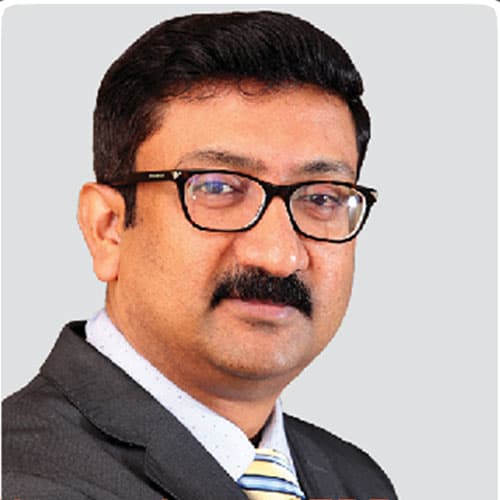
“Life was very easy earlier, we used to have enterprise applications and then we used to have resources which used to size enterprise applications. But in today's world, life has definitely changed. Today a lot of things are happening in the industry with edge computing, analytics, and cloud. In fact, social media, mobility, analytics, and cloud computing have changed the way we live today. Technology is changing at an ever increasing pace. Do we actually go back and see that we don't empower our sales teams; we don't actually change our business models or find something which is efficient enough in this contemporary world. Definitely technology is a big opportunity around us. Technologies are helping to do a lot of things in the industry; there are a lot of ways to help our customers when they are walking up this journey. What has changed primarily is, when you build your business models or select your partnership it is important to understand that we have been talking about core to cloud. Then we again saw that a lot of applications are moving from edge to core to cloud. But what has changed recently is, it's not one-way, it’s two-way. Everyone wants to build intelligence at each and every layer. Today bi-directional flow of data is happening. Similarly from edge to cloud is also bi-directional flow of data happening while a lot many different types of data networks are evolving as well. In this new IT world, it is very important to build in intelligence. This is what most of our customers expect from us when they are building up new technologies. We all are living in this data economy.”
Data Center market transforming the economy
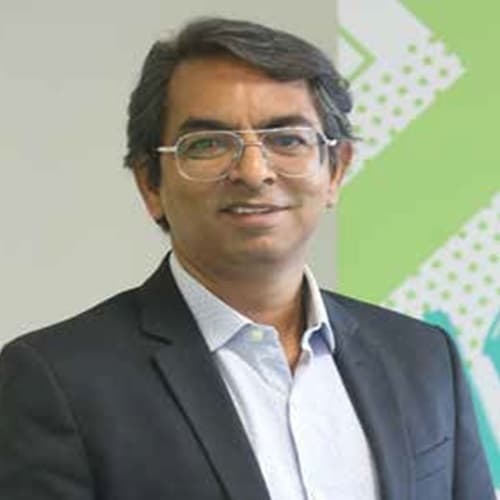
 “We are at the crux of the change. The technology trends are shifting. Intel is coming out with a new processor and similarly Nvidia is doubling the teraflops of its processor. The main challenge while designing the server design or the system designed to a data center design is the power or the T case the temperature needed to cool down the systems. How to design systems and data centers to make use of these humongous power requirements is the key challenge which system designers like us are facing today. The power which we see on the system side translates to a lot of challenges when we transfer it to the datacenter side. Generally it's the 40% of the power you use in designing the system or cooling the system. More power means more fans, more mechanical components, more air cooling type systems and more failure rates. This means more power is hazardous for a data center guy. As 40% of the power is needed cooling down the system, so, if you have 23 kilowatt of power you end up paying for 35 kilowatt. The extra kilowatt is needed just to take the heat out of the systems. Lenovo created a sub-brand called Neptune for data-center, in which we have a software called Energy aware runtime and direct water cool nodes.”
Cloud is a journey, not a destination
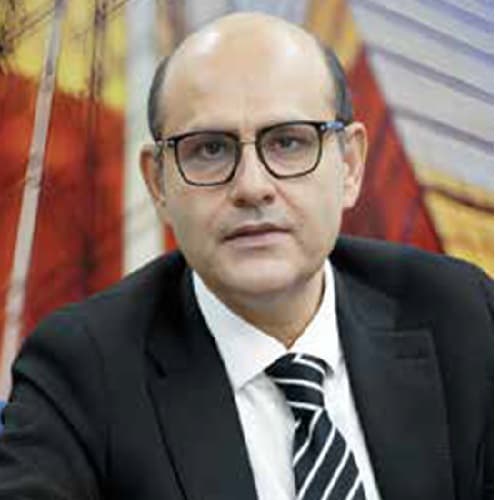
 "It is important for us to be agile, so that we can adapt to the new requirements that are coming in, day in and day out. There are four essential pillars which define the success of any digital transformation journey. First and foremost, we have to look at cloud native applications. The way applications are being deployed by our customers, they have to be agile enough. We talk of technologies like containers, micro services. It is important to have your applications built in such a way that they're adapted or adaptable to the cloud native industry that we're talking about. The second important thing is how we manage data. Data has become a currency in today's world. The currency in itself is of no use unless you are able to analyze and interface that data. That is where the whole AI and analytics comes into picture. The way data is being generated and the way data is being consumed has definitely changed over the years. Now back in the day, data primarily was being generated from the core data centers, but today we are looking at a scenario where nearly 75% of the data is getting generated at the edge and a lot of data is also getting consumed at the edge. It is important for us to look at that whole paradigm and that whole ecosystem of where the data is getting generated, and how we can help our customers manage that data far more effectively. And lastly, we have to look at a hybrid, multi cloud sort of an environment. It is one of the important pillars to drive success.”