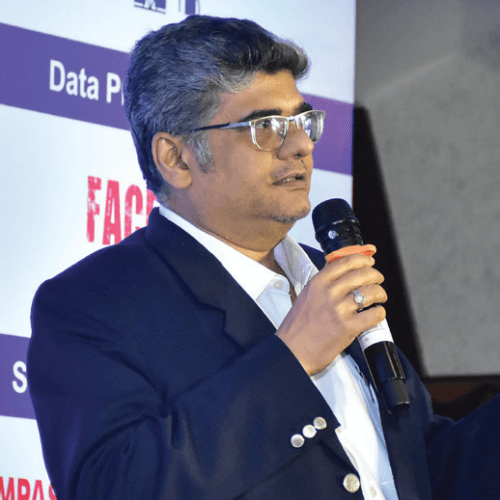
Asoke K. Laha
President & MD, Interra IT
The dust and din has settled. A new government is in place. As usual, all predictions, except one by a relatively unknown organization, have gone wrong. Never mind, we are in the beginning of the learning curve. Let us hope that next time they would be more accurate.
I am aware that, in the last two columns, I have been writing about polls to the brink of making it boring. But I cannot resist the temptation of making this column more glued to politics. There is a reason for that. I thought of packing this with a wishlist. There is a reason for that. By the time I write the next column, this government will be almost two months old and the honeymoon with the press and voters will be over. The government will be subjected to criticisms, constructive or otherwise, and that will keep them engaged.
Happily, the government has acquired all signs of stability and hope that it would be the order. That is important because we have not seen for more than two decades a government that has the authority to assert its agenda. Some of the good programmes enunciated by the successive governments remained as mere plans bereft of action, due to lack of consensus among the coalition partners. There were instances when coalition partners walked out as and when they thought it would be politically expedient to them. Let us hope that the present position will enable the government to leverage its policy frameworkand implement them in a given time frame.
Every day when you open the newspaper, there are columns, expert opinions about what the government should do – and should not do. There are also reports about what the government intends to do in the next 100 days.
My submission is that there is some mechanical undertone in setting a time-limit for carrying out plans. I may be wrong, but I firmly believe that, if someone believes that prices can be brought down in the next 100 days in a vast country like India, he or she is living in a fool’s paradise. Price stability, I believe, is an interplay of many factors. Similarly, setting a target for accelerating the flow of FDI into the country can be a misnomer. Of course, we can attract a lot of funds from FIIs into the stock or debt market. But these are flight capital. They can vanish into thin blue air at the flick of a second on negative sentiments erupting.
The second set of euphoria that we have to demystify is relating to the capacity of the government to create gainful employment in a shorter time frame. Closely attached to this is the need for de-escalating the expectations of the people. There is a heightened expectation from the government. It is alright that the political parties, knowingly or unknowingly, or wittingly or unwittingly, try to exploit the mass psyche to win in the electoral plank. But, in real-life situations, such things require meticulous planning and implementation in all avenues of the economy to create newer jobs. For instance, higher investments need not necessarily lead to higher employment since the corporations across the world are embarking on automation as a safe bet for survival during the bad times.
The only area that can generate more employment is in the informal services sector like housing, road construction, etc. These are low-paid jobs, suitable for unskilled or semi-skilled people. It does fit into the scheme of things that the educated masses away from major cities and townships are looking for.
The other day I heard somebody opining that the government should create opportunities for self-employment since it is very difficult for absorbing such a large number of people in the organized sector. It is easier said than done. Entrepreneurs cannot be created from a vacuum. They need finance, machinery and above all necessary infrastructure for production such as adequate power, marketing outlets and a host of other facilities.
The newspapers are replete with reports about the wishlist of India Inc. There is a long- pending demand for bringing down the interest rate, which has been riding very high for quite some time. The high cost of money has shied away the investors from availing themselves of the loans since servicing them is costly and makes the unit cost of production higher. This is a valid point. For kick-starting the economy, a low-interest regime is a must. That will have a chain effect. A low-interest rate will enable corporations to go for expansion and diversification by availing cheaper loans from institutional sources. This can generate employment and income to the people. And yet, generation of employment will take time and it is not possible in the short run.
We have to reinvent the basic technical institutions to make them relevant to the cotemporary situation. How do we do that? First and foremost is to inject a sense of pride among the technicians however high or low they may be in the pecking order.
Now let me turn to some of the job opportunities that can be created in the IT sector. Recently, I understand, the government has written to chambers and other organizations seeking their inputs to evolve a youth and employment policy. I feel that IT provides huge opportunities for employment of millions of people without much investment and training.
The other area that we have to focus on is the hardware sector. It is a common knowledge that, by 2030, India’s hardware imports bill will outstrip the oil import bill. Unless we take proactive steps, this situation will emerge. The first and foremost is to create capacities for hardware manufacture in the country. We have the technical reservoir for undertaking expansion of hardware manufacturing base in the country. We can create many hardware hubs in the country for various hardware products like micro chips, connectors, TV and computer equipment, telecom and telephony, etc. This would not only help us to resort to import substitution but also augment our exports.
Another area that needs closer attention is making India a destination for servicing hardware. For instance, world over, the average life span of a mobile telephone or any other gadget is hardly a few months. We can allow for temporary import of these items under various schemes provided by the government and re-exporting them after repair or overhaul.
While concluding my election-based columns, I may have to submit that the installation of the new government has created a lot of expectations and excitements among the voters. We have to work sincerely for meeting their expectations and leave no stone unturned in realizing their dreams. Otherwise, it will lead to alienating them, which no government can afford.