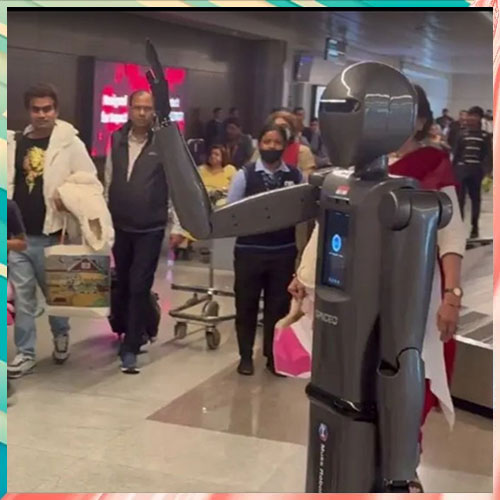
Developed by Pune-based Muks Robotics, the multilingual AI-powered robot is undergoing an 8–10 day pilot to assist passengers with navigation, flight updates and local information, as airport authorities assess its performance and public response.
Passengers arriving at Pune Airport are being greeted by an AI-enabled humanoid robot as part of a short-term pilot project aimed at enhancing passenger services. The robot, Spaceo M1, has been deployed in the arrivals section for an 8–10 day trial, marking its first test run at the airport.
Built by Muks Robotics, the robot is designed to support travellers with real-time information and on-ground assistance. It can help passengers navigate terminals, locate restaurants, book cabs and access details about nearby attractions. The system is also capable of sharing live flight updates, announcing gate changes and directing passengers to check-in counters, boarding gates and baggage claim areas.
Multilingual, mobile and interactive
Unlike static information kiosks, Spaceo M1 is wheel-based and can move autonomously across flat surfaces. It is designed to accompany passengers who require assistance and can even carry luggage weighing up to 60 kilograms. Equipped with sensors, the robot can also detect unusual activity, adding a basic layer of support to airport security operations.
One of its key features is multilingual capability. The robot can communicate in more than 85 languages, including Hindi, English, Marathi, Tamil and Telugu, making it accessible to a diverse mix of domestic and international travellers. Developers say future integration with live airline data could allow passengers to scan boarding passes and instantly retrieve gate information.
Performance under evaluation
According to Pune Airport Director Santosh Dhoke, the airport has permitted the limited trial to evaluate the robot’s technical reliability, crowd-handling ability and passenger response. The pilot is being conducted across multiple zones, including entrances, check-in counters and boarding areas.
If the trial proves successful, airport authorities may consider permanent deployment, potentially requiring multiple units to cover the entire terminal effectively.
The initiative reflects a broader push toward integrating advanced technologies into public infrastructure, as airports explore smarter and more interactive ways to enhance passenger experience.

See What’s Next in Tech With the Fast Forward Newsletter







Tweets From @varindiamag
Nothing to see here - yet
When they Tweet, their Tweets will show up here.