

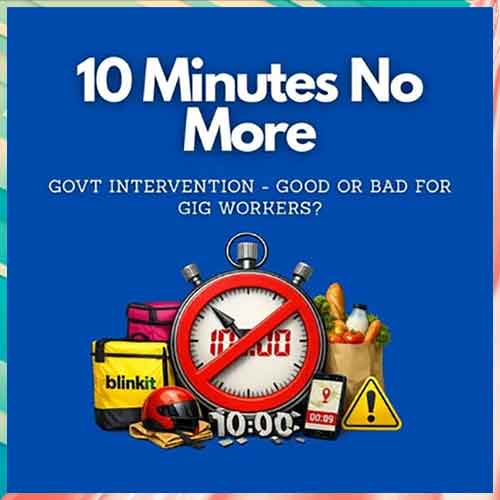
The advisory aims to ease pressure on delivery partners and address safety concerns, prompting platforms like Blinkit and Instamart to remove ultra-fast delivery branding while largely retaining their existing business models.
In a move aimed at improving the safety and working conditions of gig workers, the government has urged quick commerce companies to stop prominently advertising “10-minute” delivery promises. The recommendation, made during recent discussions with industry players, has already led to visible changes, with platforms such as Blinkit and Swiggy Instamart removing the ultra-fast delivery claim from their branding.
The intervention comes amid growing concerns that aggressive delivery timelines place undue pressure on delivery partners, potentially compromising road safety and working conditions. While no formal directive has been issued, government officials said the response from companies has been encouraging, with more platforms expected to adjust their messaging in the coming days.
Focus on worker safety, not business models
Labour Minister Mansukh Mandaviya met representatives from major quick commerce platforms last week to discuss gig worker welfare, including safety measures, payouts and working conditions. According to officials familiar with the meeting, companies were advised to move away from marketing strategies that emphasise extreme delivery speeds.
“The minister is not opposed to the quick commerce business model,” said an industry executive aware of the discussions. “The concern is about advertising claims around 10-minute deliveries, which create pressure on delivery partners and raise unrealistic expectations among consumers.”
The meeting took place against the backdrop of planned protests by gig workers, who have raised issues ranging from earnings and incentives to the stress caused by tight delivery deadlines.
Eternal, the parent company of Blinkit, clarified that the removal of the 10-minute tagline does not reflect any change in its core operations. The company said there is no material impact on its business model or service delivery approach.
Largely an optics-driven shift
Industry analysts believe the move is largely cosmetic and unlikely to significantly affect demand or operations. Quick commerce platforms have built their businesses on rapid fulfilment, enabled by dense networks of dark stores and advanced logistics, rather than fixed delivery guarantees.
Karan Taurani, vice-president at Elara Capital, noted that delivery timelines on these apps are already dynamic. “Actual delivery times depend on multiple factors such as distance from the dark store, traffic, weather conditions and rider availability,” he said, adding that removing a static 10-minute promise does not fundamentally alter how these platforms function.
Analysts also point out that consumers have become accustomed to variable delivery estimates, making the branding shift more about reducing liability and pressure than changing user behaviour.
While the government’s nudge signals increased scrutiny of gig economy practices, industry watchers expect quick commerce firms to continue competing on speed—albeit with more tempered messaging focused on reliability and safety rather than headline-grabbing timelines.

See What’s Next in Tech With the Fast Forward Newsletter









Tweets From @varindiamag
Nothing to see here - yet
When they Tweet, their Tweets will show up here.