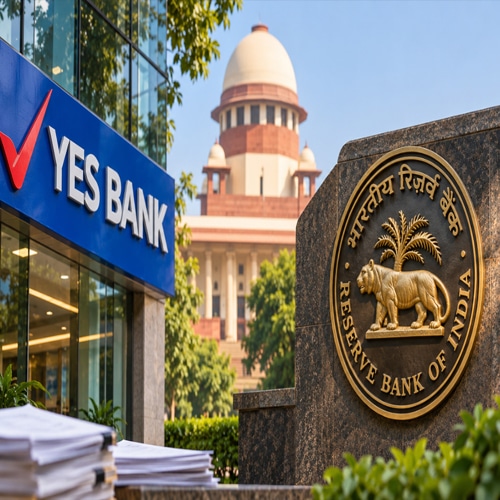
The Reserve Bank of India (RBI) has approached the Supreme Court seeking reconsideration of its judgment overturning the ₹8,415-crore write-off of YES Bank's Additional Tier-1 (AT-1) bonds, warning of wider consequences for banking stability.
The central bank filed its review petition on November 13, challenging the October 15, 2026 ruling that upheld the Bombay High Court's decision invalidating the controversial bond write-off.
The dispute originated during YES Bank's March 2020 financial crisis, when regulators implemented a reconstruction scheme involving State Bank of India and other investors to rescue the struggling lender.
AT-1 bonds are designed to absorb losses when banks encounter severe financial distress. Investors receive higher returns but face the possibility of losing their entire investment under specified conditions.
However, the Supreme Court questioned the administrator's authority to extinguish these instruments after the government removed the explicit write-off provision from the final reconstruction scheme.
The RBI argues that the judgment could undermine regulatory mechanisms intended to protect depositors and maintain financial stability during future banking emergencies.
According to reports, the regulator believes uncertainty surrounding loss absorption could discourage investors from injecting fresh capital into distressed banks requiring urgent reconstruction.
Another concern involves the interpretation of Basel III regulations, particularly contractual write-off provisions and the distinction between predetermined capital triggers and the point of non-viability.
YES Bank has separately sought judicial review, while bondholders continue demanding restoration of their investments and associated rights following the Supreme Court's ruling.
The financial implications remain substantial. Restoring the bonds could affect YES Bank's Common Equity Tier-1 capital ratio, potentially requiring additional capital-management measures and influencing future growth plans.
The larger issue is balancing regulatory intervention with investor protection and legal certainty. Banks need credible mechanisms to absorb losses, but authorities must exercise those powers within clearly defined legal boundaries. The Supreme Court's review decision could establish an important precedent for future bank rescues, capital instruments, depositor confidence, and India's financial stability framework.