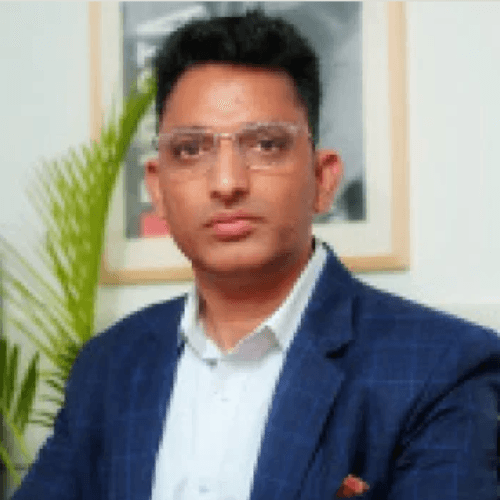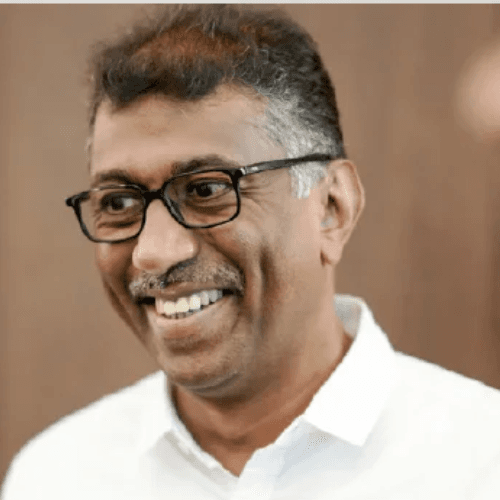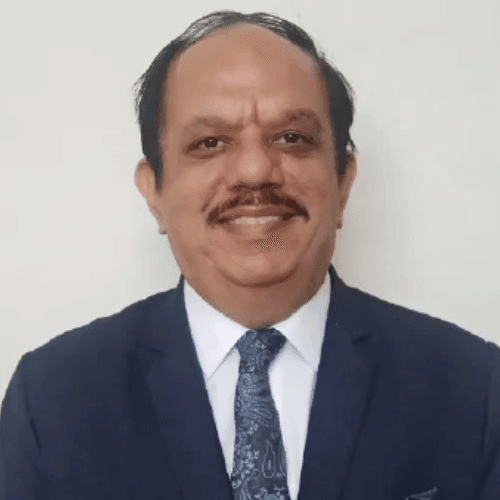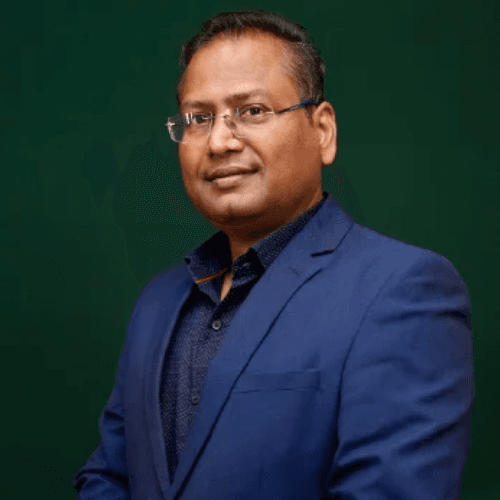
At present, the entire world is undergoing the crisis of the global pandemic - COVID-19 which has left the human race with no option other than to stay at home and protecting themselves. And this has led to the emergence of a new era of remote working. Along with it organizations are also looking at the implementation of RPA for end to end automation. On this context, in an exclusive round table conference with VARINDIA, Murli Mohan, Vice President, India Business, UiPath, Hiren Panchani, Founder and CEO, Feat Systems and Sidharth Subramani, MD, Spectrum 7 discuss the trends, automation strategies, customer demands in pre and post-COVID-19 era and much more. The session was moderated by Dr. Deepak Kumar Sahu, Editor-in-Chief, VARINDIA.
 Murli Mohan
Vice President, India Business, UiPath
Trends:
“Some of the key trends that we are observing now are that customers are moving from the initial phase to expecting more out of RPA. Customers are now talking about some capabilities that go beyond the traditional build, run and manage. Customers are asking us how they can make automation on our portfolio; also which areas are good candidates for automation. The second trend is going beyond the traditional build, run and manage. Customers are now asking about what is next, what are those machine learning capabilities or cognitive capabilities that we can bring into this whole notion of traditional RPA, which has led to this global trend led by UiPath, the notion of hyper automation. It is about process discovering building, running, managing, taking out insights and driving metrics and analytics out of the automation platform. Finally, the number one trend that is going on is customer expectation from partners. I am seeing a paradigm shift in these trends.”
Automation Strategies
“Traditional Brick and Mortar Companies which were very averse to automation in the past are now coming to the fore. So, customers are looking at various ways in which they are trying to adopt automation to drive financial transformation. So, whether it is on taxation, reconciliation, basically, trying to find more financial efficiencies, especially in this time of Covid-19 where AR or accounts receivable is such a critical part of every business. India is a very data centre heavy country and has a lot of automation, whether it is security, help desk, infrastructure, monitoring all those are potentially manpower heavy areas. IT automation is now coming to the fore and going beyond the traditional and the one last thing is the area of document understanding. We have to acknowledge India is a very document heavy economy. So, we have a lot of capabilities now, which actually addresses how customers can look at the entire legacy documentation, regardless of the form and structure and how to bring it out to the pure play digitization.”
Customer demands during Pre and Post Covid-19 era
“Customers are expecting to go up the value chain, AI cognitive document understanding etc. The others is, the whole notion around how do the customers discover more processes to automate to make more business sense or show more ROI to the C level or sponsorship at the board level. But if I were to pick one aspect of what most customers are beginning to expect especially in this era is this whole notion of skin in the game, they did like more active involvement of our partners and to a large extent of UiPath in the form of professional services assisting the able partners like Spectrum 7, Feat Systems. They want us to take an extra step along with our partners to go into their processes, understand their domain and actually show some outcomes in their environment.”
 Hiren Panchani
Founder and CEO, Feat Systems
Trends:
“Currently being in the space, since the last three to four years I personally term this as the digital Transformation journey for the enterprises. So, when I say the digital transformation journey, it starts with digitisation and then it gradually moves to digitalization and then it will transform the particular business process with the hyper intelligent automation mechanism. So when we have the typical invoices in physical mode and when we convert those invoices into the scanned copy it becomes digitization documentation. And, once we have that digitized document then we have our journey open for digitalization where the RPA and other technologies are coming into the picture. In terms of the current trends which are going on are the intelligent automation, the hyper intelligent automation where the customers are transforming their entire invoice processing, the journey starts from getting the invoices into the system, getting it approved today, giving it to the robot to process it with the OCR mechanisms, some AI mechanism to take the decision on those invoices and then process those invoices end to end. So, this is the fair good example of how the industry is trending towards digital transformation.”
Automation strategies
“In terms of taking the right automation strategies with the innovation, we as a company are taking customer centric as well as the complete digital transformation approach with resilient and agile solutions and services.”
Customer demands during Pre and Post Covid-19 era
“Before Covid-19 scenario, automation was of two types - one is attended automation and second is unattended automation. So, in pre-Covid-19 scenario, customers were in favour of building attended automation because they had workforce on the system or were in the offices to trigger the robots to do the automation tasks. With this Covid-19 situation, since everybody is working from home and the efficiency is lesser in terms of the outputs and the remote working mechanisms are very tough in the situations to handle. With these scenarios customers are also implementing unattended automation where they do not require humans to trigger the robots and they are also demanding the kind of end to end automation that I termed as the digital transformation.”
 Sidharth Subramani
MD, Spectrum 7
Trends:
“One of the main reasons that the economy growth has happened in India is because of the offshoring. So it is a fundamental in which the Western countries have been offshoring a lot of human intensive work to India. Within our organization we call it as either human offshoring or a digital offshoring. So, it used to be cost driven and people are effectively using the cost arbitrage at that point in time wheneverything was human dependent and India was riding that wave and people were recruited effectively. But today the driver is not cost, but it is lights. The situation has fundamentally shaken the fundamentals of our economic growth. So, the second wave actually to get back the economy and the organization people in line and to look at growth in the future the digital transformation has become outmost important and customers have stopped expecting human to do a work and insteadthey are looking at faceless robot or a machine to do the work. So that is in my opinion is the transformation that this last one year and it is been seen very effectively in the last four to five months.”
Automation Strategies
“In Indian business the major automation is required in two areas, one is the BPO and the other is the KPO. The rest can still be managed but if you look at the volume where digitalization can play a major role is in terms of BPO and KPO. So, what these BPOs and KPOs are doing is that they have been seeing how they can reduce the human dependency and move to a more agile and efficient method of getting their processes done. For example, over three, four years back I has one of my renewals of funding, I did an investment and what happened is everything was so seamless that within half an hour I did my KYC; there was a chat bot that took my Pan card, Aadhar card and I did a video, introducing myself. I got my processed documents online and nobody had to come and sign and explain things to me. It was such an innovative way that I started looking to provide that kind of digitalization to customers. We started going behind those organizations who are looking at extremely human intensive work converting into digital. That is where the volume also grew. That is where human dependency got reduced and we could prove that by using a faceless robot or machine, you can achieve whatever you want. So that brings in more efficiency as well.”
Customer demands during Pre and Post Covid-19 era
“Nothing has changed actually in sense that we still order food online, we still renew our insurance be it car insurance or life insurance or the transactions happen online except maybe just attending office. The rest of the things are still happening. My expectation as a customer has never changed. I am expecting as a customer that I need a faceless service. Today, people who are expecting a face behind a service are transforming a lot. Many of them are transforming to and customers are okay not to face anybody, just expecting the service and not bothered about what is happening at the back end. So, those are the trends that are changing. Previously it used to be like 20% who are still okay with a faceless service but today it has transformed to close to about 90 to 95% people. They are not even bothered whether a machine does it or a robot does it. So it is to me is a fascination that how life has changed in this last four to five months. So that is the trend I am seeing.”