Security and Surveillance technology
Security & Surveillance
Physical Security/ Electronic Security
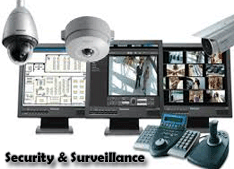
Physical security has come a long way since the advent of the lock and key. Being price conscious, customers cannot afford to have security personnel but a security camera can surely help them monitor the activities in and around the premises. In the surveillance space, the share of high definition (HD) is growing. Key technologies like HDTVI and AHD will emerge and a clear consolidation will happen in these technologies in the coming years. Adding more to this, Manoj Khadkikar, Head of channel solution, Zicom Electronics says, “Services riding on the crest of hardware will be the key differentiators. More and more technologies –CCTV, fire, access, and intrusion will merge into hybrid devices. IP CCTV will also increase with resolutions of 2 MP/3 MP and above becoming mainstream. â€
Analytics technology will take off within the surveillance industry from 2015 and beyond for getting valuable insights from the enormous amount of both structured and unstructured information collected. More analytics are needed to help organizations make sense of the information such as images and videos. Sudhindra Holla, Country Manager, Axis Communications India & SAARC exert, "With intelligent applications and analytics, the information can be turned into actionable insight. With network cameras’ capability to provide higher resolution video and to be connected from everywhere and around the clock, security departments are getting more information from more sources."
For the year 2015, Sparsh as a company and brand would like to lead the Digital Surveillance Space by continuous innovation and offering technically advanced product in the market. Sanjeev Sehgal, Managing Director, Sparsh India shares,†Due to our focus on technology, various global leaders in electronic security have partnered with us to further advance the technology and bring these products to market.â€
The infrastructure sector looks quite promising as we began to see better IT security and surveillance systems at malls, offices and other public places. There is likely to be growth witnessed from across verticals such as city surveillance, airports, seaports, metros and other greenfield projects.
Cyber Security
Security analysts called the year 2015 the year of the mega breach, and severe vulnerabilities such as Heartbleed and Shellshock in 2014 showed that the security community can never rest on its laurels. Naresh Padhee, Founder CEO, QCS Communication Technologies says, “This is a space where major IT firms are putting their efforts. WhatsApp is the latest enterprise to take action on this issue."
Sanjay Rohatgi, President- Sales, India, Symantec adds, “All indications are that 2015 will bring more of the same, with the struggle between those wishing to create new threats and exploit vulnerabilities and those looking to protect against them likely to intensify. In general, in 2015, we can expect attacks to get smarter and sharper." Besides Distributed denial-of-service (DDoS) will continue to rise as a threat with the increase in Unix servers being compromised and their high bandwidth being used in DDoS attacks.
Aditya Khemka, CEO & Director at Aditya Infotech opines, "The growth of smartphones, internet coverage area and electronic gadgets strongly suggests that the customers are getting more tech savvy. They believe in user friendly, hassle free and quick solutions." However, advancements in the IoT space, smartphone penetration also means consumers will have increased connectivity across their devices, gadgets and machines – and with this connectivity comes the potential for a whole new range of security risks. Mobile devices will continue to become a target for cyber attackers in 2015 especially when mobile devices store up a trove of personal and confidential information. Agreeing to this, Govind Rammurthy, MD & CEO, eScan opines, “With the explosive growth and adoption of Smartphones, 2015 will see a huge rise in businesses clamoring to provide security that mobility devices may pose, within the corporate environment. This we believe will be the area which will garner maximum attention from us, in terms of R&D funding.â€
Today’s security challenges require a fresh perspective on protection architecture. They mandate an architecture that adapts quickly and keeps pace with fast-evolving threats and the ever-changing requirements of advanced enterprise information systems. “As an organization, we provide customers new and innovative security solutions to protect organizations of all sizes and complexities.
The Software Defined Protection architecture is a new-paradigm as it combines a solid, reliable enforcement layer and a fast-adapting intelligence-based control layer to deliver real time proactive protections to corporate networks,†says Bhaskar Bhakthavatsalu, Regional Director, Check Point Software Technologies.
Substantial growth across industries in upgradation & innovation in systems also gives opportunities to cyber criminals for undertaking malicious activities. With increase in data browsing and free apps downloading, malicious activities have further become sophisticated. Amit Nath, Country Manager, India & SAARC, F-Secure explains, “We have witnessed constant evolution across platforms viz. mobile, iOS, etc. which remain unchanged. Simultaneously we see newer cybercrime emerging every year."
Enterprises today have come to leverage online tools to either monitor or promote stronger collaboration between onsite and offsite staff. As a result there’s a clear link between how physical security and cyber security needs to be seen in tandem with each other. Sunil Sharma, VP Sales & Operations, India & SAARC, Cyberoam points out, “Today’s hackers are not yesterday’s amateur criminals but pose as evolved threat actors. When it comes to targeted attacks, they adopt a thorough multi-stage attack, leaving no stone unturned to gather all key information on victim.â€
In 2015, more and more data will be hosted on the cloud but as this move occurs, businesses will need to take a closer look at data governance and ensuring their data is cleaned before it is hosted there. Sidharth Malik, Managing Director and Vice President, India, Akamai Technologies adds, “While the coming year will see IoT, Big Data and Cloud leveraged in a big way, enterprise organizations will also adopt technologies that will drive business innovation and provide a strong platform for future growth.â€
2014 saw retailers being hacked and millions of emails lifted. Majority of companies lack confidence in their ability to detect targeted attacks in a timely manner. Offering an answer to this, Jagdish Mahapatra, MD India and SAARC at McAfee, part of Intel Security says, “Organizations can bolster their security posture by better leveraging their current solutions, without investing in new technologies. By understanding the most common Indicators of Attack (IoAs) and automating their next generation Security Information and Event Management (SIEM) system to detect those events in real-time, companies can dramatically reduce risk potential.â€
However, according to Fortinet’s Global Security Survey commissioned, this year 75 per cent of IT decision makers at retail companies are rethinking their IT security strategies in India. Addressing this changing requirement, Rajesh Maurya, Country Manager, India & SAARC, Fortinet explains, “Security buyers may seek a combination of firewall options, such as NGFW, unified threat management (UTM), virtual and stateful firewalls, to meet a wide range of enterprise needs, such as data center, small offices or highly distributed enterprises.â€
“Going forward, enterprise security solutions will have to become context aware and adaptive. Security organizations and leaders that fail to alter strategies to accommodate a more consumerized workforce will soon be sidelined,†says Sonit Jain, CEO at GajShield.