India generates about two million tonnes of e-waste annually, but only around 5% of them are recycled. The poor record in e waste collection coupled with 15% annual growth in consumer electronics sales has become a big concern for the industry.
“Not many people exchange their old phones while buying a new one,” said Avijit Mitra, CEO & executive director of Croma. “At Croma, only 5% of the e-waste collected is mobiles or smartphones.”
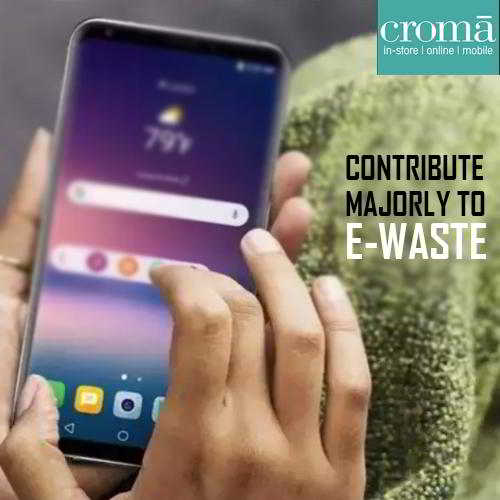
“Smartphones will be a major contributor to e-waste in future, as this is the category where upgrade cycles are much shorter than other categories,” he further said.
The consumer not only misses out on a good deal while refusing to part with the old phone when buying a new one, but the aging device is likely to end up in India’s fastest-growing trash stream, e-waste.
Computer equipment currently account for around 70% of e-waste in India, followed by phones (12%), electrical equipment (8%) and medical equipment (7%) with the remaining being generated from households, according to an Assocham-KPMG study, titled ‘Electronic Waste Management in India’.
This increase in quantity of e-waste, according to Mitra is because of heightened consumption and the rapid pace at which consumers are upgrading to new gadgets.
To address the e-waste menace, Croma created a dedicated e-waste zone in 140 stores across 35 cities. The Tata Group-owned chain soon followed it up with a call-centre number, which a customer can use to arrange for doorstep pick-up of e-waste. The retailer’s website, too, is equipped to accept requests for e waste pick-up.
“When we at Croma started off with this initiative, we promised to plant a tree for each customer who got rid of his/her e-waste. Till now, we have planted over one lakh trees,” said Mitra.
A report revealed that India, Pakistan, Malaysia and China are the main destinations for large scale shipments of hazardous waste in Asia.