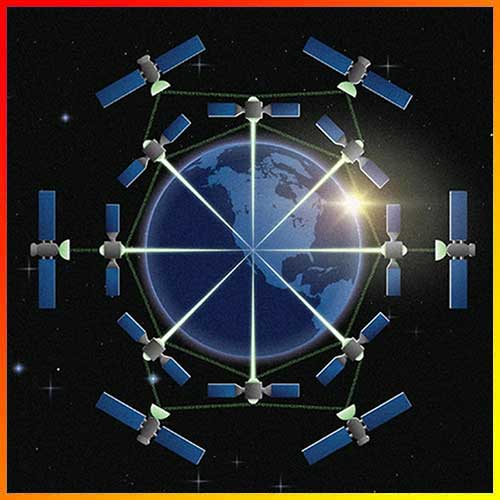
Jeff Bezos believes that within the next 10 to 20 years, the world’s largest artificial intelligence data centers may no longer be built on Earth. Instead, they could operate in orbit — powered by uninterrupted solar energy and freed from terrestrial infrastructure constraints.
As AI models grow exponentially in size and complexity, so do their energy requirements.
Gigawatt-scale training clusters already demand enormous electricity loads, often straining power grids and raising environmental concerns. In space, however, solar energy is constant, abundant, and unaffected by weather or day-night cycles. This makes orbit an attractive long-term solution for powering next-generation compute infrastructure.
Bezos has long advocated moving heavy industry into space to preserve Earth for residential and ecological balance. Hosting hyperscale AI training clusters in orbit aligns with that broader vision. Without atmospheric interference, cooling systems could also operate more efficiently, potentially reducing operational costs at massive scale.
The concept may sound futuristic, but rapid advances in reusable rockets, satellite manufacturing, and modular space stations are accelerating feasibility. Companies exploring orbital infrastructure and space-based solar power are laying early groundwork for what could become a new era of off-world computing.
Significant hurdles remain — including launch costs, latency challenges, maintenance logistics, and cybersecurity in space-based systems. Yet as AI infrastructure races toward multi-gigawatt consumption levels, the economics of orbital energy could begin to make sense.
If realized, space-based data centers would transform not just the AI industry, but the entire cloud ecosystem. The next frontier may not only host satellites — it could host the world’s most powerful computers.
Breaking News
Space May Host Future AI Data Centers
Jeff Bezos believes that within the next 10 to 20 years, the world’s largest artificial intelligence data centers may no longer be built on Earth. Instead,