
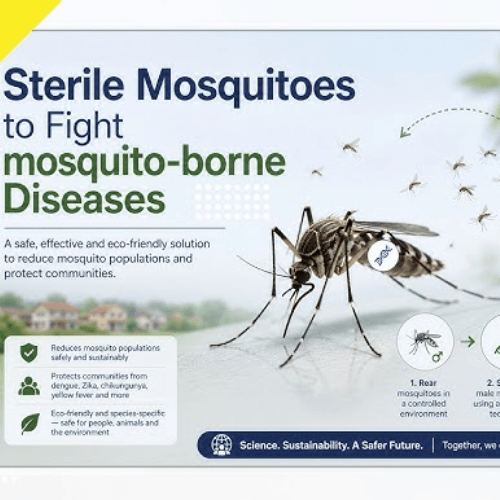
A major technology company’s life sciences division has sought regulatory approval to release millions of sterilized mosquitoes in California and Florida to help reduce the spread of mosquito-borne diseases such as dengue, Zika, chikungunya, and West Nile virus.
The initiative aims to control disease transmission through biological methods rather than chemical insecticides.
Mosquitoes, particularly the Aedes Egypti species, are among the world's most dangerous disease carriers.
Growing urbanization, climate change, and increased global travel have expanded their reach, making traditional control measures less effective in many regions.
The program involves releasing male mosquitoes carrying a naturally occurring bacterium called Wolbachia.
Since male mosquitoes do not bite humans, they pose no direct health risk.
And when they mate with wild females mosquitoes, the eggs fail to hatch, gradually reducing mosquito populations over time.
Regulators are reviewing plans to release up to 64 million mosquitoes over two years.
The approval process includes environmental assessments, public consultations, and safety evaluations to ensure the programme does not create unintended ecological consequences.
Supporters believe this targeted approach could offer a safer, more sustainable alternative to pesticides.
If successful, it may become an important tool in global efforts to reduce mosquito-borne diseases and improve public health.