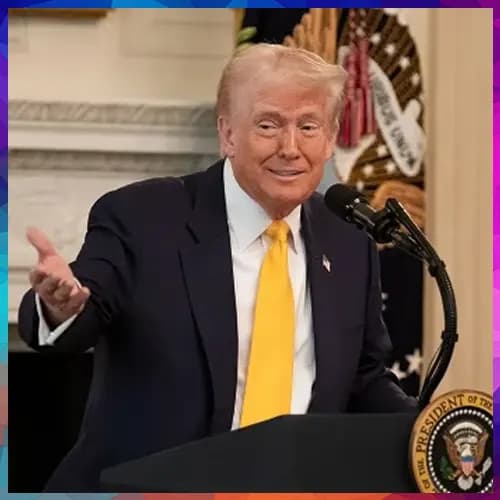
The Trump administration issued a legislative framework for a single national policy on artificial intelligence on Friday. The new policy aims to create uniform safety and security guardrails around the nascent technology while preempting states from enacting their own AI rules.
The six-pronged outline broadly proposes regulations on AI products and infrastructure, ranging from implementing new child-safety rules to standardizing the permitting and energy use of AI data centers. It also calls on Congress to address thorny issues surrounding intellectual-property rights and craft rules “preventing AI systems from being used to silence or censor lawful political expression or dissent.”
In an official release, the administration said it wants to work with Congress “in the coming months” to convert its framework into a bill that President Donald Trump can sign.
The White House wants to codify the framework into law “this year” and believes it can generate bipartisan support, Michael Kratsios, director of the White House Office of Science and Technology Policy, said in an interview with Fox News on Thursday evening.
That won’t be easy in a deeply divided Congress where Republicans hold thin and often fractious majorities, and where Trump has already urged GOP lawmakers to prioritize his controversial voter-ID bill above all else ahead of the November midterms. The Senate has spent much of this week debating the SAVE America Act even though it doesn’t have the votes to clear the chamber.
Amid rapidly growing concerns about AI and its impacts, lawmakers in New York, California and elsewhere have pushed to enact their own state-level regulations.
AI industry leaders have strongly opposed those efforts, arguing that a “patchwork” of laws would hobble innovation and give global competitors like China a major advantage in the race for AI dominance.