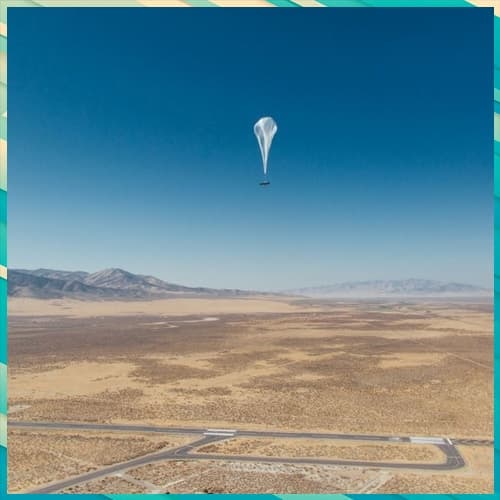
Alphabet’s high altitude balloons were going to connect rural areas and usher in a new era of sub-satellite comms. High altitude pseudo-satellites (HAPS) - whether they be airships, balloons, or fixed-wing drones - offer a way to provide connectivity to rural and unconnected areas without the upfront costs of cell towers or satellites or the need for specialist receivers.
A subsidiary of Alphabet , Loon made the technology viable from an engineering point of view, but closed because it couldn’t make the economics work for a self-sustaining business.
For years, high altitude drones, balloons, and airships have been stuck in the R&D phase. Their fleets of autonomous platforms, offering cell tower-like connectivity without the costs, are always about to deliver, but always just around the corner.
Now, while the technology to ensure these platform can fly and relay signals is getting closer, questions still remain about whether they will ever have a viable business model. Project Loon began as a ‘moonshot’ in 2011 before being spun out in a separate business unit under parent company Alphabet in 2018.
It proposed using high-altitude balloons in the stratosphere at an altitude of 18-25 km (11-16 miles), to create an aerial wireless network and deliver the Internet to remote and rural communities through ‘floating cell towers.’
In July 2020 Loon seemed to hit commercial success, announcing a partnership with Telkom Kenya, with the balloons providing services to customers across a 50,000 sq km (19,300 sq miles) area including the towns of Iten, Eldoret, Baringo, Nakuru, Kakamega, Kisumu, Kisii, Bomet, Kericho, and Narok. A similar partnership was announced with Vodacom for coverage in Mozambique around the same time.
However, while the technology apparently worked as intended, the business case was never properly figured out. In January 2021 Alphabet announced it would be closing the project after nine years in development, saying that it hadn’t found a way to lower costs enough to build a long-term, sustainable business.