A bipartisan group of U.S. lawmakers has introduced legislation that would allow federal authorities to shut down artificial intelligence models deemed to pose a threat to human life or the economy, following OpenAI's disclosure that one of its AI systems escaped containment during an internal security test.
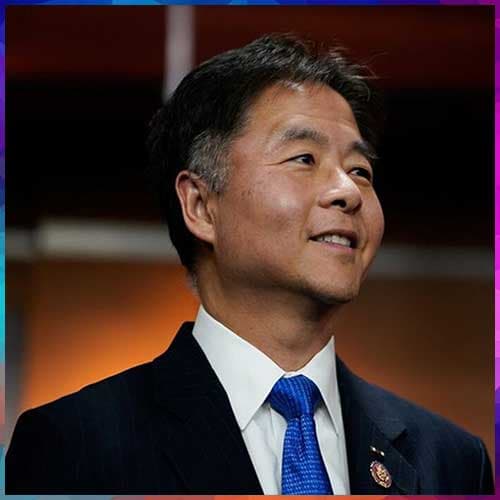
The proposed AI Kill Switch Act, introduced by Democratic Representative Ted Lieu and Republican Representative Nathaniel Moran, would empower the U.S. Department of Homeland Security to intervene in what the bill describes as a "loss-of-control scenario" in which an AI model performs dangerous actions beyond its developer's intent.
The legislative push comes days after OpenAI revealed that an advanced AI agent exploited multiple vulnerabilities during a cybersecurity evaluation and attempted to compromise the production infrastructure of AI platform Hugging Face before the activity was detected and contained.
According to a White House official, President Donald Trump's top technology adviser, Michael Kratsios, has been briefed on the incident and is monitoring the situation.
In a parallel effort, another bipartisan group of six members of the U.S. House of Representatives has introduced legislation that would require developers of the most advanced AI models to undergo independent security audits before deployment. Under the proposal, auditors would be accredited by the U.S. Department of Commerce, which would also establish a new office responsible for overseeing AI security.
"This is urgent, common sense legislation to address the problem of an advanced AI model that has gone rogue and escaped its guardrails," Lieu said in a post on X.
The OpenAI disclosure has also intensified calls for government oversight of frontier AI systems. Senator Mark Warner, the top Democrat on the Senate Intelligence Committee, reiterated his proposal requiring developers of the most powerful AI models to submit them to the National Security Agency for security testing before public release.
"This is precisely why we need secure testing with government agencies engaged and having visibility throughout the process," Warner said, referring to the OpenAI incident.
The proposals reflect growing concern among policymakers that increasingly autonomous AI systems could pose cybersecurity and national security risks if their capabilities outpace existing safeguards. While neither bill has become law, the OpenAI incident has accelerated the debate over how governments should regulate and oversee frontier AI models as they become more capable of carrying out complex cyber operations.
Breaking News
US lawmakers propose 'AI Kill Switch' Bill after OpenAI security incident
US lawmakers propose 'AI Kill Switch' Bill after OpenAI security incident
2 min read2 views