


Spain lifted their second FIFA World Cup title with a hard-fought 1-0 victory over Argentina after extra time in a dramatic final at MetLife Stadium. Ferran Torres emerged as the match-winner, scoring just 39 seconds into the second period of extra time after a well-worked move involving Nico Williams and Pedro Porro.
Spain dominated proceedings throughout the contest, creating far more opportunities while Argentina struggled to break through a disciplined Spanish defense. Goalkeeper Emiliano Martínez delivered a remarkable performance, making 11 saves to keep Argentina in the game, but Spain's relentless pressure eventually proved decisive.
Argentina's hopes suffered a major setback in the closing minutes of normal time when Enzo Fernández was sent off after receiving a second yellow card. Reduced to ten men, the defending champions found it increasingly difficult to contain Spain's attacking momentum. The victory also highlighted Spain's exceptional defensive record, conceding only one goal throughout the tournament, while head coach Luis de la Fuente became the oldest manager to win the FIFA World Cup.
The defeat was particularly emotional for Lionel Messi, whose World Cup journey is widely expected to have ended with a runners-up medal. Argentina also missed the opportunity to complete an unprecedented sequence of four consecutive major international titles after triumphs in the Copa América and the 2022 FIFA World Cup.
Away from football, the final attracted attention for its off-field moments. Spectators reacted loudly during the trophy ceremony attended by U.S. President Donald Trump and FIFA President Gianni Infantino. The final also introduced the first-ever World Cup halftime entertainment show, reflecting FIFA's growing focus on expanding the tournament's global commercial appeal.
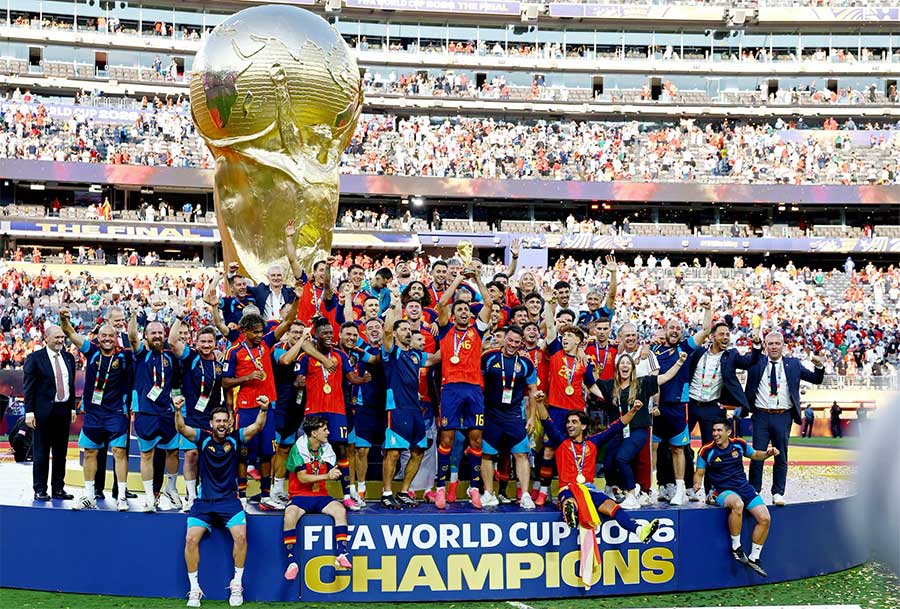
Spain's triumph signals the rise of a new football powerhouse built on tactical discipline, squad depth, and collective teamwork rather than dependence on individual stars. Equally significant, the final illustrated how the modern World Cup is evolving beyond sport into a global entertainment spectacle, blending football, politics, celebrity culture, and commercial innovation. The challenge for FIFA will be preserving the tournament's sporting heritage while embracing its expanding role as the world's biggest entertainment event.

See What’s Next in Tech With the Fast Forward Newsletter


Tweets From @varindiamag
Nothing to see here - yet
When they Tweet, their Tweets will show up here.


