AI Needs Humans After All
The artificial intelligence industry is entering a phase of realism. After years of predictions about fully autonomous AI replacing large portions of the workforce, technology leaders are discovering a more complex truth: operating AI agents at scale can be extraordinarily expensive. As organizations move from experimentation to production deployments, many are finding that unrestricted automation often generates costs that rival—or even exceed—the expense of employing human workers.
One of the primary challenges is the massive infrastructure required to power advanced AI systems. Every AI interaction consumes computing resources, including GPUs, memory, networking, storage, cooling, and electricity. As enterprises deploy larger models and more sophisticated agents, operational expenses rise significantly. The economics of AI are increasingly becoming a boardroom concern rather than merely a technical issue.
Another factor is the emergence of agentic AI systems. Unlike simple chatbots, autonomous agents continuously reason, plan, retrieve information, execute actions, and coordinate with other systems. While the cost per token has declined, the total volume of tokens consumed by these complex workflows has exploded. As a result, organizations are seeing unexpected increases in cloud and AI infrastructure spending.
This reality is driving a renewed focus on Human-in-the-Loop (HITL) architectures. Rather than allowing AI agents to operate without oversight, enterprises are introducing checkpoints where human approval is required before critical actions are executed. This approach helps control operational costs while reducing the risks associated with autonomous decision-making.
Microsoft’s evolving AI strategy reflects this shift. Through its Agent Framework and multiagent orchestration approach, AI systems are designed to handle repetitive and data-intensive tasks while humans provide judgment, validation, and strategic direction. By creating approval boundaries, organizations can prevent agents from consuming excessive resources and avoid costly mistakes that may arise from inaccurate outputs or hallucinations.
Human oversight also plays a crucial role in maintaining quality and trust. Whether reviewing software code, validating financial transactions, approving compliance decisions, or assessing business recommendations, human experts provide contextual understanding that AI systems still struggle to replicate. This combination improves accuracy while minimizing operational and reputational risks.
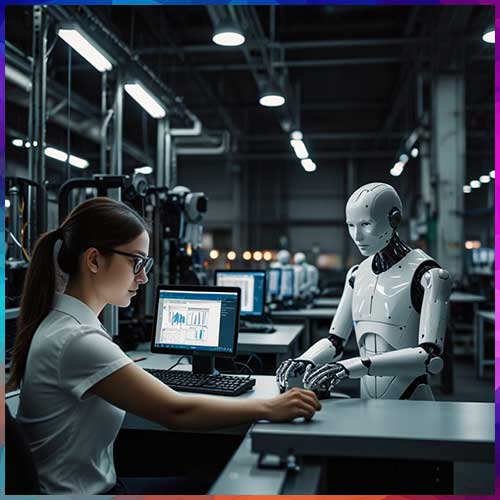
The future of enterprise AI is therefore unlikely to be defined by complete automation. Instead, the most successful organizations will adopt a collaborative model where AI acts as a productivity multiplier and humans remain responsible for critical decisions. The lesson emerging from the AI race is clear: the greatest value comes not from replacing people, but from combining human intelligence with machine efficiency to achieve scalable, cost-effective outcomes.

See What’s Next in Tech With the Fast Forward Newsletter









Tweets From @varindiamag
Nothing to see here - yet
When they Tweet, their Tweets will show up here.