


The Union Budget 2026–27 may well be remembered as the moment when India decisively aligned tax certainty with its digital ambitions. At the heart of the announcement was a structural reform long sought by industry - the consolidation of software development, IT-enabled services (ITES), KPO, and contract R&D into a single “Information Technology Services” category, accompanied by a uniform safe harbour margin of 15.5 percent –
Industry leaders have broadly welcomed the proposed tax certainty measures, viewing them as a strong signal of policy stability and long- term commitment to the digital economy.
One of the most significant proposals is the tax holiday until 2047 for foreign cloud service providers operating data centres in India. This move is expected to incentivize global technology companies to establish and expand their data infrastructure within the country, reduce regulatory ambiguity, and align with India’s broader data localization and digital growth objectives. By offering a long-term horizon of tax predictability, the government is effectively lowering investment risk and encouraging sustained capital inflows into the data centre ecosystem.
15% SAFE HARBOUR MARGIN
The proposed 15% safe harbour margin for related-party services has been appreciated as a practical step toward reducing transfer pricing disputes. For years, transfer pricing disputes and interpretational challenges have cast a shadow over cross-border IT service models. By introducing a common 15.5 percent safe harbour margin, enhancing the eligibility threshold from ₹300 crore to ₹2,000 crore, and shifting to an automated, rule-driven approval system, the government has significantly reduced friction. This is expected to improve ease of doing business, enhance compliance certainty, and foster a more predictable tax environment.
These steps provide long-term predictability for capital-intensive infrastructure and reinforce the critical role of data centres in enabling cloud, AI, and global connectivity. Together, these measures are being seen as part of a broader strategy to position India as a competitive and reliable global hub for cloud services, digital infrastructure, and technology-driven innovation.
Along with a uniform 15.5% safe harbour margin, Budget 2026 also simplifies India’s tax framework for IT services by bringing software development, IT-enabled services, KPO and contract R&D under a single category.
Industry bodies such as Nasscom have described these reforms as a decisive shift toward clarity, predictability, and scale. In its statement, Nasscom said – “The consolidation of software development services, IT-enabled services, KPO and contract R&D relating to software development into a single category of Information Technology Services with a uniform safe harbour margin of 15.5 percent, together with the enhancement of the Safe Harbour eligibility threshold from INR 300 crore to INR 2,000 crore, materially expands access to certainty mechanisms for routine cross-border IT service models. Importantly, the proposal to move Safe Harbour approvals to an automated, rule-driven process without examination by tax officers, along with the option to apply the same Safe Harbour for a continuous five-year period, represents a decisive shift away from process-heavy compliance towards clarity, predictability and trust-based governance. This can significantly reduce recurring transfer pricing friction for GCCs as well as for other Indian IT and ITES providers operating eligible related-party arrangements.
The Budget also makes an important intervention to strengthen India’s cloud and digital infrastructure ecosystem. The proposal for a tax holiday till 2047 for foreign companies providing cloud services to customers globally using data centre services from India, with services to Indian customers routed through an Indian reseller entity, sends a clear signal to attract long-term global investment and support the expansion of India’s compute capacity. The introduction of a 15 percent on-cost safe harbour for related-party data centre service providers provides pricing certainty for routine infrastructure services. On a broad reading, the combined design of these measures helps address long-standing interpretational challenges by clearly separating cloud service activity from data centre operations and aligning India’s taxing rights with arm’s length remuneration, thereby improving ease of doing business and investment confidence.
Nasscom also welcomes the continued emphasis on building domestic capability in strategic technologies. The launch of the India Semiconductor Mission 2.0 and the enhanced outlay of INR 40,000 crore for the Electronics Components Manufacturing Scheme represent an important push towards a resilient and globally competitive electronics and semiconductor ecosystem. On the broader ease of doing business agenda, the reduction in the mandatory pre-deposit for appeals from 20 percent to 10 percent of core tax demand and the proposal to allow updated returns even after reassessment proceedings have been initiated support resolution-based compliance and help reduce avoidable disputes.
Taken together, these measures reflect sustained, data-backed engagement by Nasscom and industry, and signal a more mature policy approach that places technology, digital infrastructure and tax certainty at the centre of India’s long-term competitiveness. Union Budget 2026 sets a clear direction by aligning policy certainty with digital and manufacturing capability, and Nasscom looks forward to working closely with the government to ensure effective implementation and translate this direction into durable outcomes for industry and the economy.”
Industry leaders have broadly welcomed these measures as a clear signal of trust-based governance. For Global Capability Centres (GCCs), multinational IT firms, and Indian engineering R&D providers, the reform offers long-term clarity in structuring related-party transactions, reducing recurring litigation, and enabling better resource allocation.
-----------------------------------------------------------------------------------------------------------------------------------------------------
 Faiz Shakir, VP & Managing Director - India & ASEAN, Nutanix underscores that stronger policy and investment support for cloud infrastructure will help organisations securely manage regulated and sovereign data, while enabling AI at scale. As a company that foresees a big market opportunity with this exemption, Faiz says, “By strengthening policy and investment support for cloud and digital infrastructure, the Union Budget supports India’s move to help organisations securely manage regulated and sovereign data. Nutanix’s platform supports these sovereign cloud environments by providing strong security, operational control, and the ability to run AI at scale.”
----------------------------------------------------------------------------------------------------------------------------------------------------
 Aparna Iyer, CFO, Wipro stressed on the fact that proposals such as combining IT services and R&D Services into a single bucket, increasing the threshold limit for safe harbor and providing a 2-year timeline for conclusion of unilateral APAs will provide tax certainty and reduce the cost of compliance for companies operating in the sector. "It is commendable to see the government meeting the fiscal deficit targets for FY’26 despite a very volatile external environment, tax rate rationalization both on taxation for Individuals announced as part of last budget and GST rates rationalization during the year. The budget clearly articulates the Government’s vision to promote the Indian IT services sector as a primary driver of India’s economic growth, leveraging Artificial Intelligence (AI) as the force multiplier. By identifying AI as central to accelerating and sustaining economic growth, the government underscores its strategy to establish India as an AI-powered economic superpower. Proposal to provide long term tax exemption for data center services provided from India to foreign customers will help in establishing India as a data center hub.”
She further states, “We also welcome the government’s initiatives to further improve ease of doing business, as these reforms will support enterprises across sectors by alleviating operational challenges and boosting India’s economic growth momentum.”
-----------------------------------------------------------------------------------------------------------------------------------------------------
 Jaydeep Singh, General manager for India, Kaspersky highlighted that as AI adoption accelerates, cybersecurity must form the bedrock of trust, ensuring resilience and reliability in digital systems. Across the board, industry voices have echoed
a common theme: predictability fuels innovation.
“The Budget takes a pragmatic, execution-focused approach to scaling technology and AI across India's digital ecosystem. Measures such as bringing IT services under a single framework, setting a common safe harbour margin of 15.5%, raising the eligibility threshold from ₹300 crore to ₹2,000 crore, and moving to an automated, rule- driven approval process significantly reduce friction for technology-led enterprises," says Jaydeep. "The emphasis on emerging technologies with AI positioned as a force multiplier for governance and productivity signals a clear shift from policy intent to implementation. As digital services, AI platforms, and data-driven systems scale across sectors, strong cybersecurity becomes essential to ensuring trust, continuity, and reliability.”
“At Kaspersky, we believe that secure-by-design digital systems and robust cyber resilience are critical to unlocking the full value of AI-led transformation. We welcome initiatives that strengthen trust-based digital frameworks and enable organizations to adopt advanced technologies with confidence," cites Jaydeep.
The broader impact of Budget 2026-27 lies in how it integrates tax certainty, infrastructure incentives, and technology capability into a unified growth narrative. With sustained investment in power, fibre connectivity, sustainability, and network expansion-including deeper penetration into Tier 2 and Tier 3 cities-India is positioning itself not merely as a cost-efficient outsourcing destination, but as a trusted, high- value global technology partner.
--------------------------------------------------------------------------------------------------------------------------------------------------
 Piyush Jha, Group Vice President & Head - APAC at GlobalLogic described the Budget as reinforcing India’s competitiveness as a global delivery and engineering hub at a time of macroeconomic uncertainty. He says, "This Union Budget 2026-27 is a strong signal of policy confidence, positioning technology as the backbone of a Viksit Bharat. At a time when global macro headwinds are reshaping tech spending, the Budget brings much- needed certainty for India’s IT services and GCC ecosystem. The unified IT services safe harbour framework with a predictable 15.5% margin, along with faster closure of advance pricing agreements, meaningfully strengthens ease of doing business and reinforces India’s competitiveness as a global delivery and engineering hub.”
Piyush further adds, "Just as importantly, the Budget makes a clear long-term bet on AI, through AI-led governance and enabling digital infrastructure, while recognizing that India’s next growth curve will be won on talent. What is more encouraging is our government’s balanced approach, combining regulatory simplicity with long-term bets on AI-led governance, emerging technologies like quantum computing, and stronger participation of women in STEM. Put together, this is a decisive step towards making India not just a scale destination, but a high-value, trusted technology partner to the world.”
---------------------------------------------------------------------------------------------------------------------------------------------------
 Rajendra Kumar Shreemal, CFO, Quest Global notes that the unified IT services category and rationalized safe harbour margins materially improve ease of doing business and enhance India’s attractiveness for high-value engineering and product development work.
“Above change, coupled with introduction of a common Safe Harbor margin of 15.5% and the substantial enhancement on the eligibility threshold from ₹300 crore to ₹2,000 crore is a positive move for the sector and meaningfully improves ease of doing business whether it is for foreign MNCs or of Indian MNCs. This rationalization provides greater tax certainty, reduces compliance complexity, and supports scale-driven growth for engineering R&D service providers operating global and related-party delivery models,” he says.
He further asserts that this will further strengthen India’s attractiveness for higher-value captive engineering work, reinforcing investor confidence and global enterprises evaluating India as a hub for advanced engineering, product development, and R&D-led innovation.
-----------------------------------------------------------------------------------------------------------------------------------------------------
 Raju Vegesna, Chairman & Managing Director, Sify Technologies agrees that the Union Budget for 2026-27 emphasizes accelerating India’s AI journey and strengthening the country’s data center infrastructure. “This focus is timely and forward-looking. The Budget combines long-term tax incentives for cloud and data center investments with a broader push for digital infrastructure and innovation. It recognizes that high-quality computing capacity is now crucial to India’s growth, just like roads and power.
As a home-grown, AI-ready data center platform with a growing presence in India’s key digital hubs, we see these measures as a positive sign for sustained, cost-effective capacity creation. They also promote deeper partnerships with hyperscalers and faster cloud adoption by enterprises.
These initiatives will allow us to continue investing in energy-efficient, high-density infrastructure that supports India’s AI workloads, protects data sovereignty, and helps global and domestic customers run their most demanding applications in India. Overall, the Budget supports a long-term, demand-driven vision for the country’s digital infrastructure sector, which aligns with our goal of building India’s trusted, large-scale colocation and AI infrastructure platform,” he says.
-------------------------------------------------------------------------------------------------------------------------------------------------
 Manoj Paul, Managing Director, Equinix India comments, "The proposed tax certainty, including a tax holiday until 2047
for foreign companies providing global cloud services using data centre infrastructure based in India subject to the requirement that services for Indian customers are delivered through an Indian reseller entity, along with the establishment of a safe harbour margin of 15% on costs where data centre services are provided from India by a related entity, are being hailed as positive moves that will enhance long-term predictability and investment certainty for capital-intensive digital infrastructure.
Such measures will further reinforce the increasing recognition of data centres as a critical enabler of cloud adoption, AI workloads, and global interconnectivity, and will also help to support India’s vision to become a preferred destination for serving international markets. The emphasis on routing domestic services through local businesses is expected to increase value creation and ecosystem participation within India. However, advancements in important enablers like more affordable and dependable power, faster fibre deployment, and stronger alignment with sustainability objectives will also be necessary for the long-term development of AI-ready digital infrastructure.”
Manoj further recommends that in order to fully realize the potential of these Budget announcements, continued policy support for renewable energy integration, grid stability, and network expansion will be required. “India’s digital infrastructure ecosystem is well positioned to support long-term value creation, global interconnectivity, and a stable AI-powered future through supportive policies and an encouraging investment climate,” he says.
----------------------------------------------------------------------------------------------------------------------------------------
 According to Hemant Tiwari, managing director & vice president, India & SAARC, Hitachi Vantara, by providing long-term incentives and a clear safe harbour framework for data centres and cloud services, the government is creating an ecosystem that encourages global investment and drives technological innovation. “These measures will accelerate the growth of world-class data centres, enable secure and efficient cloud operations, and foster the adoption of emerging technologies such as AI.
By supporting infrastructure development across Tier 2 and Tier 3 cities and facilitating a robust digital services ecosystem, the budget positions India to become a global hub for data, cloud, and IT services, while creating new opportunities for talent and sustainable economic growth.”
Consolidation of the APA framework
Equally impactful is the strengthening of the Advance Pricing Agreement (APA) framework. The Budget’s proposal to fast track unilateral APAs for IT services, with an endeavour to conclude them within two years and a limited extension window, directly addresses long-standing concerns around timelines and access to certainty. The extension of the modified return facility to associated entities where income changes arise due to an APA is particularly relevant, as it supports smoother implementation of group-level outcomes and reduces the risk of residual disputes. From an industry perspective, this is a practical step towards reducing friction, improving resource allocation within the tax system, and strengthening the credibility of India’s tax certainty framework at scale.
A fast-track APA mechanism also provides flexibility for more complex R&D models. Together with incentives supporting cloud and data centre investments, these measures reduce compliance and pricing uncertainties, reinforcing India’s position as a preferred global hub for technology and digital services.
Big bet on AI, semiconductor
The Budget’s digital vision goes beyond taxation. It reinforces India’s long-term bets on AI, semiconductor manufacturing, and electronics ecosystems, including the launch of India Semiconductor Mission 2.0 and expanded outlays for electronics component manufacturing. The emphasis on AI-led governance, digital public infrastructure, and emerging technologies such as quantum computing signals a shift from policy articulation to execution.
--------------------------------------------------------------------------------------------------------------------------------------------
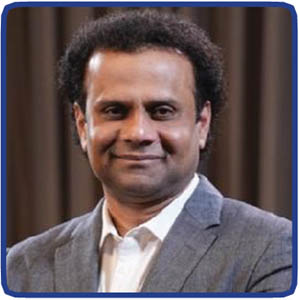 Vishak Raman, Vice President of Sales, India, SAARC, SEA & ANZ, Fortinet says, “Budget 2026 reflects India’s intent to strengthen its position as a trusted hub for digital services, cloud, and advanced technologies. Steps to simplify the IT services framework, encourage data center investments, and push wider AI adoption are aimed at building long-term competitiveness. At the same time, as digital infrastructure scales, complexity, and cyber risk increase. Cyber risk today is continuous, not episodic, and organizations need to plan for resilience as a core business requirement. Embedding security into digital foundations will be critical to protecting data, ensuring continuity, and maintaining trust as India’s digital economy continues to expand.”
----------------------------------------------------------------------------------------------------------------------------------------------
 Aditya Khemka, Founder & Managing Director, CP PLUS contends that the Union Budget 2026 signals a decisive shift in India’s technology and security journey, with a clear focus on building capability at home. "The strengthened push under the India Semiconductor Mission 2.0 is not only about self-reliance, but about ensuring that the intelligence, computing power, and hardware powering next-generation AI systems are designed and manufactured in India. The government’s emphasis on artificial intelligence reflects a move from experimentation to real-world, mission-critical deployment. As AI becomes central to public safety, surveillance, and smart infrastructure, this Budget lays the foundation for scalable, secure, and responsible adoption across the country.”
For homegrown technology companies, this policy clarity creates long-term confidence to invest locally, innovate for Indian needs, and build globally competitive solutions. It positions India not just as a consumer of advanced technologies, but as a trusted creator of AI-led security and infrastructure solutions aligned with the vision of Make in India.
---------------------------------------------------------------------------------------------------------------------------------------------
 Sanjay Sehgal, CEO &MD, TP-Link India says, "The Union Budget 2026 sends a strong signal of intent around strengthening India’s electronics and high-tech manufacturing ecosystem. The continued focus on capital expenditure, the ₹40,000-crore boost to the electronics PLI scheme, and the launch of Semiconductor Mission
2.0 will accelerate localization, deepen the component supply chain, and position India as a global hub for advanced technology manufacturing. For companies like us, this creates the right environment to expand local production, invest in innovation, and build products that are designed and made in India for global markets.
We see this as a significant step towards making India truly self-reliant and globally competitive in the digital infrastructure space.”
And so…
The Budget 2026-27 significantly strengthens India’s digital and data infrastructure ecosystem. Long-term
incentives and a clear regulatory framework are expected to attract global investments, accelerate the development
of world-class data centres, and support secure, efficient cloud operations while driving wider adoption of AI and emerging technologies. The expansion and automation of safe harbour approvals, combined with the strengthening of the APA regime and the extension of modified return facilities to associated entities, create a tiered certainty architecture-routine matters handled by rule, complex ones by negotiated agreement. This layered approach reduces transfer pricing friction while enhancing the credibility of India’s tax framework globally.
Against this backdrop, the momentum is unmistakable. The industry now stands at an inflection point-where policy clarity meets technological ambition. OEMs and big corporates, VARs, and the partner ecosystem should come together to collaborate and translate this policy push into tangible growth, innovation, and global leadership for India’s digital economy. With continued focus on power, fibre, sustainability, and network expansion-including growth across Tier 2 and Tier 3 cities-the Budget positions India as a global hub for data, cloud, and IT services.

See What’s Next in Tech With the Fast Forward Newsletter






Tweets From @varindiamag
Nothing to see here - yet
When they Tweet, their Tweets will show up here.