

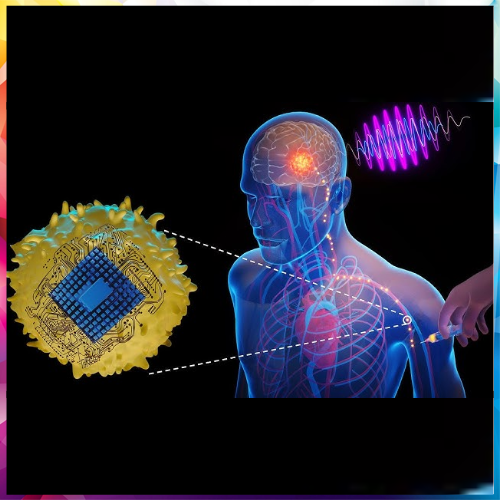
Scientists have developed a revolutionary brain implant that can teach neural circuits to interpret light-based signals, opening a new frontier in treating blindness, neurological disorders, and even enhancing human learning. The breakthrough combines optogenetics—using light to control neurons—with an adaptive implant that trains the brain to recognise artificial sensory input.
Researchers demonstrated that the implant could stimulate specific brain regions with pulses of light, which the brain gradually learned to interpret as meaningful information. Instead of merely sending signals, the device helps neurons reorganise and build new pathways, effectively “teaching” the brain to understand a new sensory language.
In early trials on animal models, subjects successfully learned to respond to light-encoded cues despite having no natural ability to perceive them. This suggests future possibilities for restoring lost vision by sending optical signals directly to the visual cortex, bypassing damaged eyes or optic nerves.
Beyond vision restoration, the technology could support rehabilitation after stroke, spinal injuries, or degenerative neurological diseases by retraining the brain to process missing or altered sensory signals.
Experts say the development represents a major step toward seamless brain–machine communication—an area also being explored by companies like Neuralink and academic research groups worldwide. However, ethical concerns around cognitive enhancement, neural privacy, and long-term safety will require careful consideration.
This implant marks a shift from simply interfacing with the brain to actively teaching it, signalling the next era of neuroadaptive technologies.

See What’s Next in Tech With the Fast Forward Newsletter









Tweets From @varindiamag
Nothing to see here - yet
When they Tweet, their Tweets will show up here.