
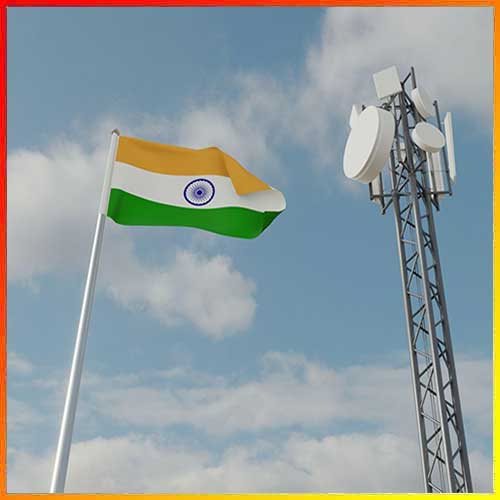
Union Communications Minister Jyotiraditya Scindia told Parliament that Indian telecom operators have invested nearly ₹74 lakh crore to build nationwide fifth-generation networks, with coverage now reaching almost every district in the country.
He said roughly five lakh base transceiver stations have already been deployed, enabling about 40 crore users to access 5G services out of India’s 1.2 billion total phone subscribers.
According to current projections cited by the minister, that figure is expected to surge to nearly 100 crore users by the end of the decade, underscoring the speed at which next-generation connectivity is moving from early adoption to mass usage.
India’s private carriers — Reliance Jio, Bharti Airtel and Vodafone Idea — are driving the rollout. Jio and Airtel have additionally introduced commercial fixed wireless access offerings to improve monetisation of their spectrum investments.
Industry forecasts reinforce the government’s optimism. Ericsson estimates India could account for about one billion 5G subscriptions by 2031, implying penetration of nearly four out of five mobile users.
The vendor expects rapid migration away from older technologies. While 4G remains dominant today, its share is projected to fall sharply as consumers upgrade devices and data demand intensifies.
Scindia highlighted the pace of execution, calling India’s rollout among the fastest in the world. In just under two years, he noted, advanced mobile broadband has become effectively nationwide.
The expansion is being powered by wider handset availability, competitive tariffs and growing appetite for high-capacity services ranging from streaming to enterprise connectivity.

See What’s Next in Tech With the Fast Forward Newsletter








Tweets From @varindiamag
Nothing to see here - yet
When they Tweet, their Tweets will show up here.