
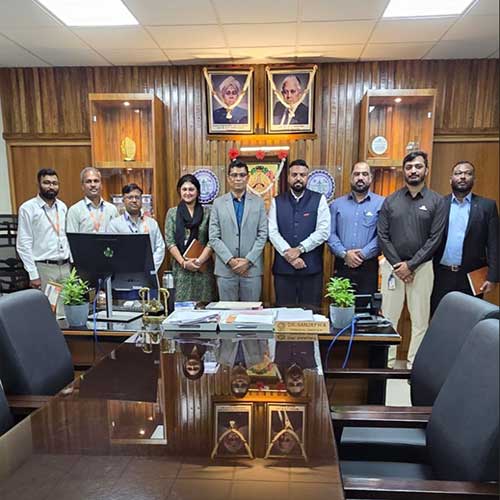
Check Point Software Technologies has announced the expansion of its SecureAcademy educational program to six leading universities in India, providing students across multiple departments including engineering, law, and other specialized faculties with hands-on cyber security training and globally recognized certifications
The participating universities include
· Dayananda Sagar University (DSU) along with its constituent colleges of engineering, technology and management (DSCE, DASTAM)
· Shri Devi Institute of Engineering and Sciences (SIET)
· Shri Siddhartha Institute of Technology – (SSIT)
· BNM Institute of Technology (BNMIT)
· BMS Group (BMS College of Engineering and BMS Institute of Technology and Management)
· Jain University
· Dr. D.Y. Patil College of Engineering
· Lovely Professional University, Punjab.
Through this initiative, students will gain access to Check Point certification courses focusing primarily on CCSA (Check Point Certified Security Administrator) and CCSE (Check Point Certified Security Expert). A distinctive feature of this collaboration is that local Check Point TAC (Technical Assistance Center) experts will lead the in-person instruction, ensuring students receive up-to-date, localized insights into cybersecurity trends. Three TAC experts are already committed to conducting sessions at least three times a week at these prestigious institutes of higher learning.
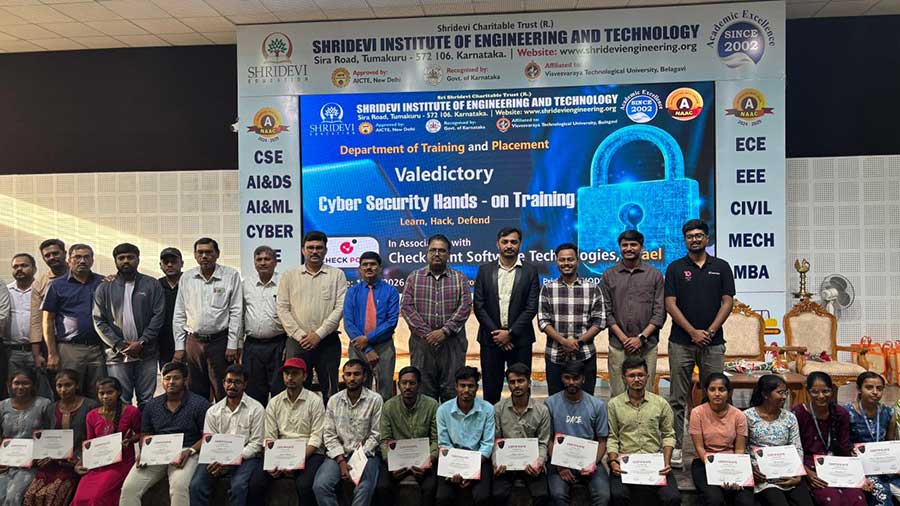
This initiative is delivered as part of Check Point Services, which provides a comprehensive portfolio spanning professional services, training and certification programs, and managed security services. By combining expert-led instruction with real-world security expertise and research-driven insights, Check Point Services ensures that educational programs like SecureAcademy™ align with the latest threat landscape and industry requirements, preparing students not just to learn cybersecurity, but to apply it in real operational environments.
In India, this program will consist of hands-on labs, self-paced online content, workshops, guest lectures and certifications, giving these students across engineering, law, and other faculties practical exposure to real-world cybersecurity scenarios. The training program spans one week, comprising 40 hours of theoretical instruction and an additional 10 hours of lab sessions conducted by a subject matter expert. Participants also receive an 85 percent discount on certification exams, access to software licenses, eBooks, virtual SecureAcademy events, and a train-the-trainer program for faculty.
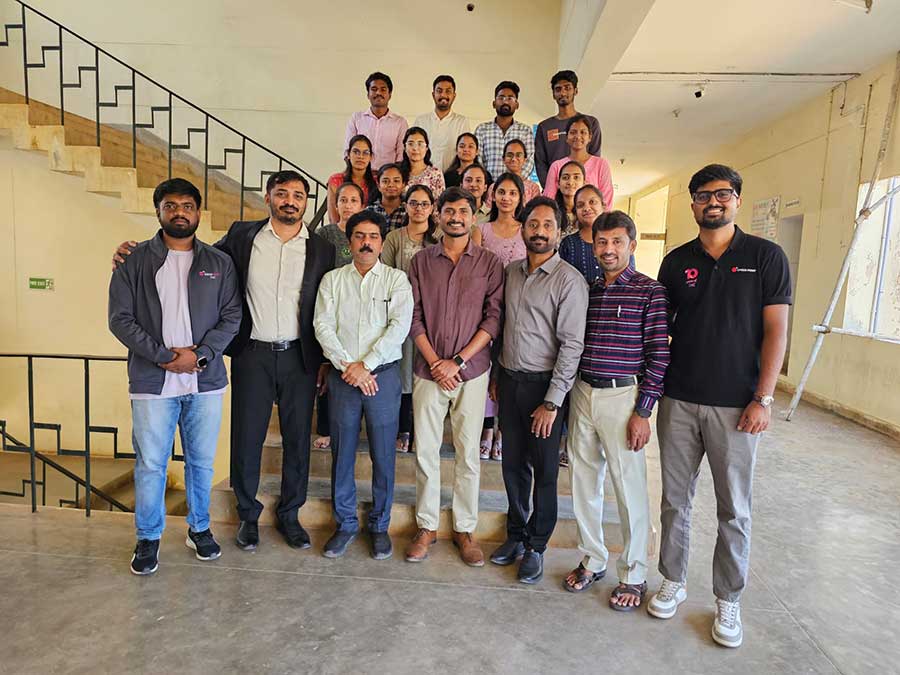
Approximately 200 to 300 students are expected to benefit in the first phase, with the program already underway since Monday, 9 February 2026. As part of this collaboration, Check Point is planning an internship program, providing students with opportunities for mentorship, industry networking, and real-world exposure, with around 15 interns expected to be onboarded in 2026 from these institutions.
India is facing a critical cybersecurity skills shortage, with demand for professionals surging sevenfold in the past year, ranking the country second globally in workforce deficit. Organizations are also grappling with rising cyber threats, with Indian entities facing an average of 3,104 cyberattacks per week, nearly double the global average of 1,959. This underscores the urgent need for hands-on, industry-aligned training.
At the same time, India’s technology workforce is undergoing a structural reset. The rapid adoption of AI has already led to job losses across traditional IT roles, as routine coding, testing and support tasks become increasingly automated. While this shift is reshaping employment across the sector, it is also accelerating demand for new, specialised roles—particularly in cyber security—where human expertise, risk analysis and real‑world judgement remain essential to securing AI‑driven systems at scale
“In India, the demand for cyber security skills is growing rapidly, yet the talent gap remains severe. This transition of traditional job roles to roles with specialised skills like in cyber security signals a move away from volume‑driven IT jobs toward higher‑value, security‑critical roles, reinforcing the importance of reskilling programmes that prepare India’s workforce for an AI‑first but security‑dependent future,”
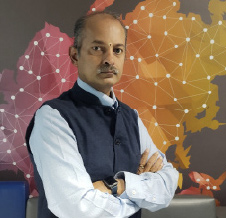
said Sundar Balasubramanian, Managing Director, Check Point Software Technologies, India and South Asia. “Through SecureAcademy, we are equipping students across multiple departments and universities with hands-on, industry-relevant skills. This initiative ensures that the next generation of cyber defenders is prepared to meet the real-world challenges of a rapidly digitalizing India, strengthening the foundation for a secure Digital India.”

See What’s Next in Tech With the Fast Forward Newsletter






Tweets From @varindiamag
Nothing to see here - yet
When they Tweet, their Tweets will show up here.