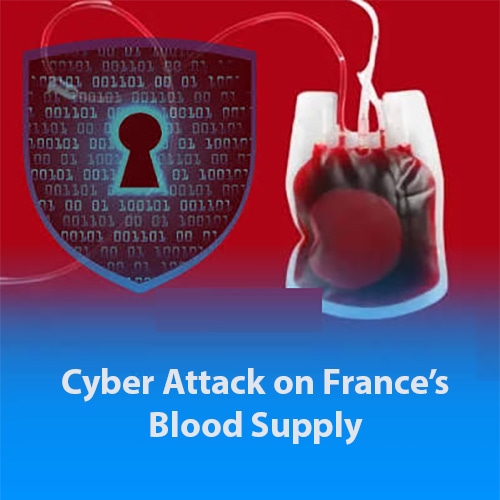
Hackers recently launched a chilling cyber assault on France’s national blood service, targeting the refrigeration systems that keep life-saving blood safe. Instead of missiles or guns, they used keyboards and malicious code to try raising storage temperatures to dangerous levels that could have spoiled critical supplies.
The French Blood Service supports more than 1,900 hospitals and serves over one million patients every year. It forms a vital pillar of the country’s healthcare system. Any disruption could have triggered shortages with potentially fatal consequences for patients needing transfusions.
Investigators believe the attackers gained entry through a third-party supplier. Once inside, they manipulated temperature controls at least three cold-storage facilities. The goal appeared clear: compromise the integrity of stored blood without ever setting foot near a hospital.
Fortunately, automated alarms detected the unusual temperature spikes in time. Staff responded quickly and prevented any blood from being spoiled. The rapid detection turned what could have been a major medical crisis into a narrow escape.
This incident is not isolated. Similar cyberattacks have struck across Europe, affecting 11 countries. Hundreds of supermarket refrigeration systems have also been hit in previous waves, showing how industrial control systems remain vulnerable targets.
No group has claimed responsibility for the French attack. The silence adds another layer of uncertainty, leaving authorities to wonder whether state-backed actors, cybercriminals, or others are probing critical infrastructure for weaknesses.
The episode serves as a stark warning. In an interconnected world, healthcare systems must treat cybersecurity as seriously as physical security. Lives now depend as much on digital defenses as on medical skill.