Elon Musk has backed Starlink as a potential solution for India’s underserved villages, where thousands of communities still lack 4G access despite rapid growth in internet subscriptions and rural digital infrastructure.
India’s digital transformation has expanded well beyond major cities, with high-speed mobile networks, fibre connectivity and wireless broadband enabling more people in rural areas to work, study and access essential services online. Yet, a significant connectivity gap remains, with thousands of villages still without basic 4G coverage.
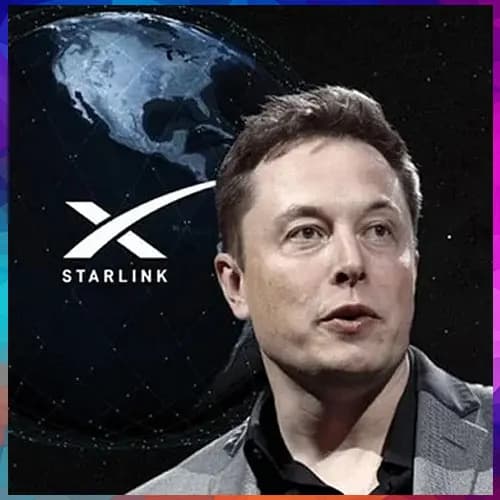
Elon Musk, the world’s richest person and head of SpaceX, believes his satellite broadband service Starlink could help address that gap. Musk on Friday reshared a post on X highlighting the number of Indian villages that continue to remain outside the country’s 4G network.
The post, shared by X user DozDesigner (@cb_doge), pointed to 11,256 Indian villages that reportedly had no 4G connectivity. It also highlighted the scale of India’s internet user base, with 1.093 billion internet subscriptions across the country, including 440.87 million subscriptions in rural areas.
“Starlink would help the least served in India, especially in rural areas,” Musk wrote while resharing the post.
The comments come as India continues to expand digital infrastructure in rural and remote locations. However, the uneven availability of last-mile connectivity means some communities remain unable to fully benefit from the country’s broader digital expansion.
Fibre expansion continues alongside satellite plans
The post shared by Musk also highlighted progress under the government’s BharatNet programme, which is intended to extend broadband infrastructure to rural India through fibre connectivity.
More than 850,000 route-km of fibre has reportedly been deployed under BharatNet, while 80,472 Gram Panchayat Points of Presence (PoPs) are operational. These networks are intended to strengthen broadband availability in rural communities and provide a foundation for digital services.
Despite these investments, geographical challenges can make conventional telecom and fibre deployment difficult in sparsely populated or remote areas. Satellite broadband could potentially complement existing networks by providing connectivity without requiring extensive last-mile terrestrial infrastructure.
Reliable internet access has become increasingly important in rural India as government services, education, healthcare, digital payments and employment opportunities move online. The expansion of connectivity has also enabled remote work and online learning, increasing the economic importance of broadband access beyond urban centres.
Starlink awaits final regulatory clearances
Starlink is seeking to enter the Indian market with its satellite-based broadband service, but a commercial rollout has yet to begin. The company has obtained key telecommunications licences in India, although additional regulatory and security approvals remain necessary before services can be launched commercially.
The regulatory process has faced scrutiny over security considerations surrounding satellite communication services. Reports in June 2026 indicated that the final clearance process had been paused amid concerns related to the use of Starlink terminals during the Iran conflict, despite the service not being licensed there.
For Starlink, gaining access to India’s large and diverse market could represent a major opportunity, particularly in regions where conventional broadband infrastructure remains difficult to deploy. For India, satellite connectivity could provide another option for reaching communities that continue to remain beyond the effective coverage of terrestrial networks.
Musk’s latest comments therefore come at a time when India is balancing rapid digital expansion with the challenge of ensuring that rural and remote communities are not left behind.