The deployment combines AMD’s server processors with Google Cloud’s AI accelerators to help enterprises protect sensitive data and models while running inference, fine-tuning and reinforcement learning workloads through hardware-enforced confidential computing across hosts and accelerators.
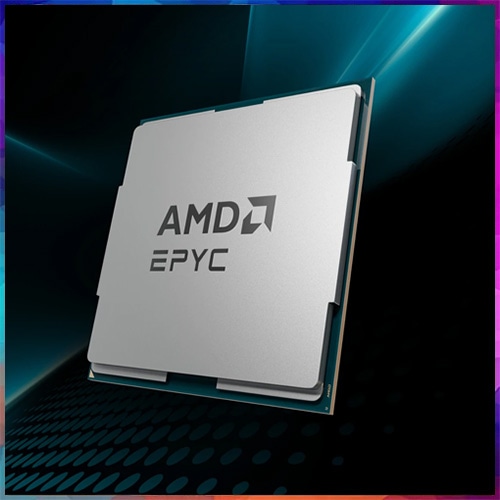
AMD said that its fifth-generation EPYC processors are powering the host infrastructure for Google Cloud’s TPU 8tx. AMD described the system as the first cloud Tensor Processing Unit (TPU) platform to offer hardware-enforced confidential computing, which helps protect data while it is being processed.
The EPYC processors prepare data, coordinate workloads and manage communication with the TPU accelerators. The system combines Google Cloud’s AI acceleration with AMD Infinity Guard security features and compatibility with existing x86 software.
Hardware protections extend to AI accelerators
The system uses AMD Secure Encrypted Virtualization (SEV) alongside security features in the TPU to extend confidential computing protections from the host processor to connected accelerators. It verifies an accelerator’s identity and security configuration before allowing it to access protected memory directly.
According to AMD, customer prompts, model weights and intermediate data remain encrypted in host memory and during transfers between the host and accelerators. The system uses hardware isolation to protect the data while the accelerator processes it.
“When teams move AI agents into production, they need confidence that their data and intellectual property stay private, even from the underlying infrastructure,” said Mark Lohmeyer, vice president and general manager for AI and Computing Infrastructure, Google Cloud. “By pairing 5th Gen AMD EPYC processors with our 8th-generation TPU architecture inside the AI Hypercomputer, we are bringing hardware-enforced confidential computing to cloud TPUs for the first time. Customers get silicon-level data protection alongside the low-latency performance needed for modern reasoning models.”
AMD and Google Cloud expand their collaboration
The TPU 8tx deployment builds on several generations of collaboration between AMD and Google Cloud. EPYC processors already support several Google Compute Engine virtual machine families, including C4D, N4D, H4D, Z4D and G4. AMD’s SEV technology also helps protect workloads in services such as Confidential VMs, Confidential GKE and Confidential Dataflow.
“The most capable AI systems need a CPU foundation that can match the demands of the accelerators they host,” said Dan McNamara, senior vice president and general manager, Compute and Enterprise AI, AMD. “Across generations of EPYC, we have built leadership capabilities in the performance, memory bandwidth and I/O that keep accelerated systems productive, backed by years of engineering collaboration with the world’s leading cloud providers. Our work with Google Cloud brings that strength to TPU 8tx, helping customers scale AI with the performance and protection their most important workloads demand.”