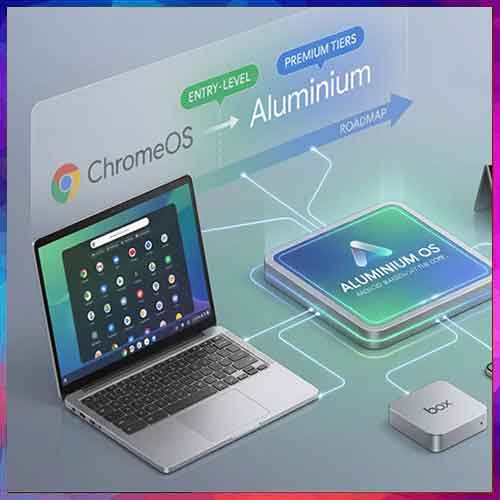
Google is evaluating a major shift in its platform strategy by exploring an Android-based desktop operating system, internally known as Aluminium OS, signalling a renewed effort to expand Android beyond mobile devices into mainstream personal computing.
Google appears to be reconsidering its long-standing approach to desktop computing as it evaluates how Android could evolve into a full-fledged operating system for PCs. While Android already powers smartphones, tablets, televisions, cars and mixed-reality devices, traditional desktops and laptops have largely remained outside its core focus.
Recent hiring activity suggests that may be changing. A newly surfaced job listing points to internal work on an Android-powered desktop platform, referred to as Aluminium OS. The role, focused on Android across laptops and tablets, describes the initiative as an AI-first operating system built on Android foundations. This indicates a more deliberate move to address a segment where Google has historically relied on ChromeOS rather than Android.
AI at the centre of Aluminium OS
Artificial intelligence is expected to play a central role in the proposed platform. Aluminium OS is likely to integrate Google’s Gemini AI capabilities, many of which already operate on-device within modern Android smartphones. On desktop-class hardware, these tools could benefit from higher processing power, larger memory pools and fewer energy constraints, enabling more advanced AI features to run locally.
This approach aligns with Google’s broader push to embed AI deeper into its software stack, extending intelligent assistance, automation and contextual computing beyond mobile environments.
Coexistence with ChromeOS
The job description also outlines a wider hardware portfolio spanning ChromeOS and Aluminium OS devices, including laptops, detachable systems, tablets and compact desktop-style machines. References to multiple product tiers—from entry-level to premium—suggest Google may be targeting a broader PC audience rather than limiting itself to education and budget segments where Chromebooks have traditionally performed well.
By positioning ChromeOS and Aluminium OS side by side, Google appears to be planning a period of coexistence rather than an immediate replacement strategy. Over time, shared frameworks or deeper integration between the two platforms could emerge.
If Aluminium OS progresses beyond internal exploration, it would represent a notable shift for Google—placing Android at the centre of a renewed desktop strategy that blends mobile familiarity with desktop-grade performance and AI-driven capabilities.

See What’s Next in Tech With the Fast Forward Newsletter







Tweets From @varindiamag
Nothing to see here - yet
When they Tweet, their Tweets will show up here.