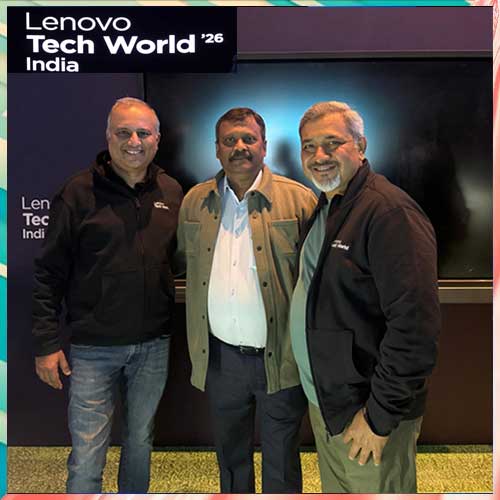
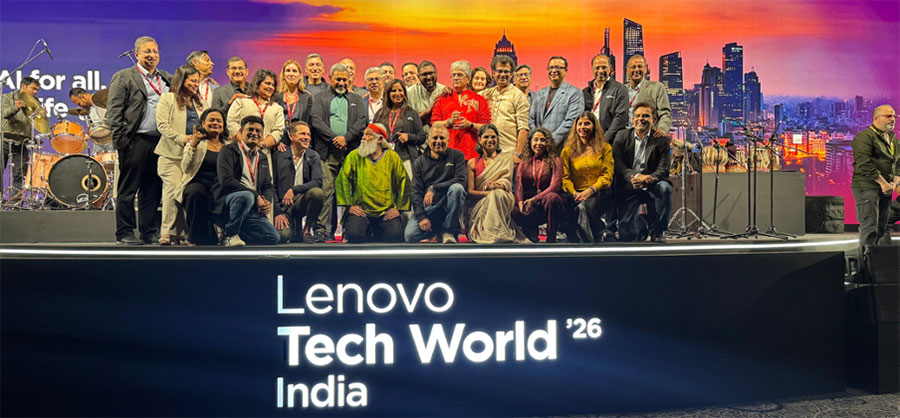
Lenovo turned New Delhi into a showcase of the AI future during Tech World ’26 India, held on February 11–12 at the JW Marriott. The annual gathering united enterprise leaders, channel partners, developers, creators, and gamers under a single message: intelligent technology is moving from experimentation to everyday reality.
Day one focused on how artificial intelligence is redefining personal computing, mobility, entertainment, and professional productivity. Demonstration zones allowed visitors to interact with AI-enhanced PCs, tablets, smartphones, and gaming systems designed to adapt to user behavior, automate workflows, and deliver real-time performance gains.
Lenovo’s strategy highlighted on-device intelligence working in tandem with silicon partnerships and software optimisation. The result, executives said, is faster response, stronger privacy control, and seamless multitasking across work and life scenarios.
Global leadership attendance underscored India’s rising importance. Shailendra Katyal described the country as uniquely positioned thanks to its engineering depth, expanding digital infrastructure, and hunger for innovation. According to him, democratising AI at population scale is no longer aspirational—it is underway.
Matthew Zielinski added that organisations across sectors want AI to solve practical problems. The real debate, he said, is architectural: how to combine cloud, edge, and device intelligence into workable hybrid models.
Enterprise conversations moved beyond gadgets to data centres and platforms. Leaders discussed the rapid rise in AI workloads, the need for sovereign control, and the investment surge in next-generation compute.
Executives from partners including Intel and Microsoft
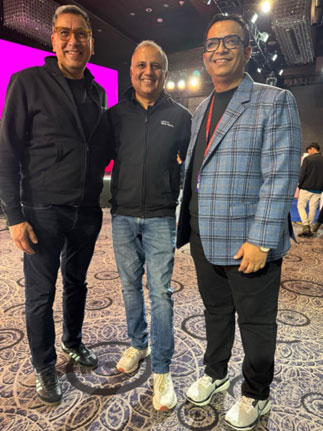 Leaders at Lenovo used the platform to underline that India’s AI moment has arrived—but scaling it responsibly will depend on the right foundations. Powerful systems must be transparent, reliable, and aligned with business objectives, particularly as adoption spreads into regulated industries.
Speaking on hybrid AI, Matthew Zielinski said both government and industry are moving quickly to apply artificial intelligence to practical challenges. Many organisations, he observed, feel intense pressure to modernise. The real hurdle, however, is not ambition but design. Success will depend on building the correct architecture that blends cloud, edge, and on-device intelligence.
Sumir Bhatia, who leads the Infrastructure Solutions Group in Asia Pacific, shifted the focus to governance. AI can produce brilliant outcomes in advanced scenarios yet still struggle with basic tasks, he noted. That unpredictability makes oversight critical. Enterprises must understand how data is being used, how decisions are derived, and what consequences may follow.
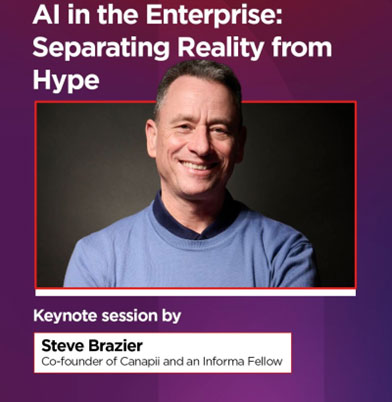 Offering a macro view, Steve Brazier spoke about the transformation underway in data-centre economics. Organisations increasingly want control across the full technology stack—from facilities and power to hardware and software. While this creates major opportunity for India, energy availability is emerging as the defining constraint. Renewable adoption, he argued, will be vital to sustain AI growth.
Closing the perspective from India, Shailendra Katyal highlighted the nation’s rare combination of talent, infrastructure momentum, and innovation appetite. These strengths, he said, position India to lead the democratisation of AI, turning vision into practical impact through experiences such as Lenovo’s ambient intelligence and its end-to-end hybrid portfolio.
A crowd favourite was the India debut of Qira, Lenovo’s personal ambient intelligence platform designed to unify context and memory across devices. The company also introduced updated ThinkSystem and ThinkEdge infrastructure aimed at high-performance inferencing across verticals.
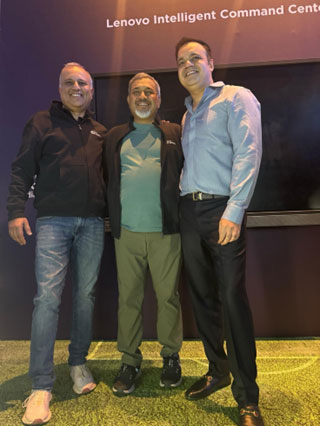 Masterclasses on agentic AI and AI filmmaking illustrated how generative tools are reshaping creativity, media production, and storytelling, blurring the line between enterprise innovation and pop culture.
With thousands of participants and global attention on India’s expanding AI ecosystem, Lenovo made its intent clear: the country will be a launchpad for the next wave of intelligent experiences. Day two is expected to deepen the focus on enterprise transformation and services.
Tech World ’26 didn’t just display products—it framed India as a defining force in how AI will be built, governed, and scaled worldwide.

See What’s Next in Tech With the Fast Forward Newsletter








Tweets From @varindiamag
Nothing to see here - yet
When they Tweet, their Tweets will show up here.