Nvidia’s board faces a simple test: explain why Jensen Huang had to go. A movement to reinstate him is growing, and it now has two of the most powerful backers in America, President Donald Trump and Elon Musk. If the board stays silent, the pressure will only build, and it could eventually put directors’ own seats at risk. Tuesday’s earnings update is the obvious moment to give answers.
From “confidence” to the exit door in four days
The board’s change of position is the heart of the problem. On Sunday it opened an independent investigation into reports that Huang had been the target of a foreign intelligence effort, while saying it had confidence in Jensen and his leadership team. Huang has acknowledged an affair with Alice Huang, a former Megaspeed executive suspected of being a Chinese spy. By Thursday, he had stepped down as president, CEO and board member, and CFO Colette Kress became interim CEO while the board searches for a permanent replacement. nvidianews.
The board never explained what changed. The affair alone did not seem to justify cutting short an investigation it had just launched. Reports that Nvidia turned a blind eye to chips being smuggled into China may matter more. Treasury Secretary Scott Bessent’s call for the company to bring in an outside CEO was reportedly tied to those smuggling questions. If that drove the decision, the board should say so.
The White House and Musk weigh in
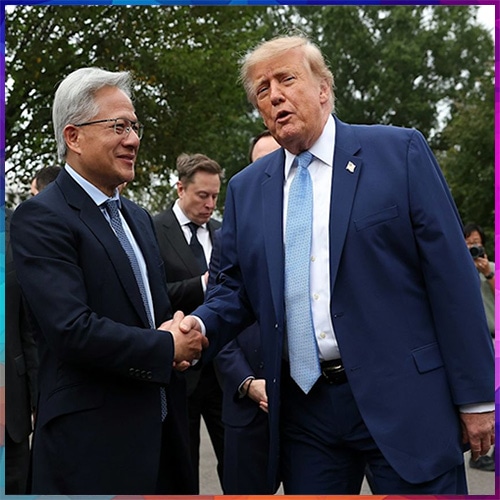
Trump has backed Huang from the start. He reportedly called Huang on Tuesday and urged him to fight to keep his job. After the resignation, he changed tone, suggesting on Truth Social that former Apple CEO Tim Cook should replace him. By Monday he had moved again. He told reporters he “would not mind” seeing Huang reinstated, adding that he thinks Huang “learned a big lesson.” He said there is a “big group of people that would like him to return.”
Musk’s support has also grown. Before the resignation, he endorsed a post calling Huang “irreplaceable for America’s AI leadership,” even though the same post called his conduct “incredibly dumb.” Afterwards, Musk said it would be an honor to have Huang at Tesla or SpaceX, but made no formal offer. He has since signed the “Stand with Jensen” petition, along with current and former Nvidia staff, investors and other Silicon Valley figures.
A grassroots campaign with a point
Several thousand current Nvidia employees and others have signed the petition. Inside the company, an internal post urging the board to weigh staff sentiment has drawn more than 1,600 comments. The petition asks the board to bring Jensen back while an independent investigation establishes the facts, unless it can show compelling evidence that his removal is in Nvidia’s best interests. Analyst Gene Munster gives Huang’s return a 51% chance, arguing that the board forced his hand.
The loyalists may look quixotic, but some of their complaints are fair. Investors Brad Gerstner and Gavin Baker warned of massive uncertainty around Huang’s exit. They called for a slow, deliberate succession process, and they were right.
Could shareholders force the issue?
Nvidia’s bylaws let shareholders who own at least 15% of the stock call a special meeting, which in theory could be used to replace the board. In practice, it’s hard. Huang owns 3.6%. The biggest holders are institutions like BlackRock (8%) and Vanguard (7%), which rarely lead revolts. Shares must also have been held for at least a year, which rules out activists buying in now. Even if a meeting happened, removing directors would likely need a majority. Still, the threat alone would add to the instability.
The market’s verdict
Nvidia fell another 4% on Monday to $156.14. That is down 16% in 10 days and 35% since early October, partly on reports that the board would not reinstate Huang. For perspective, the stock was at the same level only 16 months ago, and it traded near $16 when ChatGPT launched in late 2022. Against rivals like AMD, Nvidia now looks cheap on expected earnings. That discount reflects a real unknown: how much revenue Nvidia loses if China is truly cut off.
With the president, Musk and thousands of employees asking questions, the board’s silence is no longer workable. It doesn’t need to bring Huang back, but it does need to explain why he left.