AU Bank Data Leak Scare Exposes Third-Party Security Risks
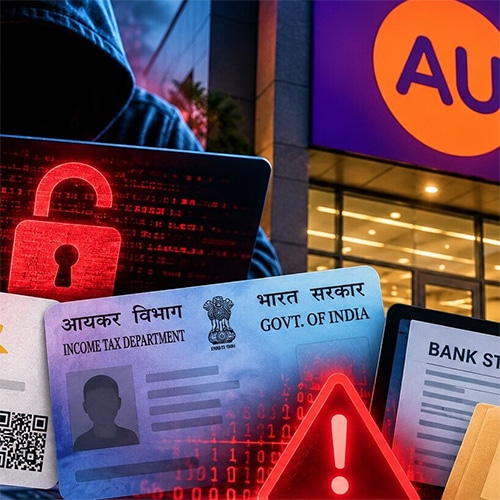
AU Small Finance Bank is investigating a potential customer data leak following claims by hacker group ScarlettGroup that it accessed sensitive banking information, including Aadhaar, PAN, KYC documents, loan agreements and financial records.
The allegations surfaced on October 29, 2026, raising serious concerns about customer privacy, third-party technology dependence and the effectiveness of cybersecurity governance across India's banking ecosystem.
Key Highlights: Security Gaps
1. Third-Party Cloud Risk: The
2. Sensitive Identity Exposure
3. Access-Control Vulnerabilit
4. Insufficient Visibility Rem
5. Customer Protection and Acc
The bank acknowledged investigating a possible leak involving a Salesforce-hosted software-as-a-service platform containing limited vehicle loan customer information. However, it maintained that its internal banking systems remained unaffected and services continued normally.
Why could this have happened? The suspected exposure highlights vulnerabilities associated with cloud applications, third-party access, excessive permissions, compromised credentials and inadequate monitoring. However, investigators have not established the actual attack method.
The central concern is whether customer information was sufficiently protected through encryption, data minimisation, privileged-access controls, continuous monitoring and independent vendor security assessments. There is currently no verified evidence establishing that AU Bank failed to implement these safeguards.
Importantly, the attackers' claims remain unverified. Neither the volume of compromised records nor the authenticity of allegedly stolen Aadhaar and PAN information has been independently confirmed. The bank has not disclosed the number of potentially affected customers.
Preventive priorities must include comprehensive forensic investigation, immediate credential reviews, multifactor authentication, zero-trust access, encryption, data-loss prevention, third-party risk assessments and continuous anomaly detection. Customer notification and regulatory reporting should follow applicable requirements.
The incident reinforces a fundamental reality: outsourcing technology does not eliminate accountability for customer information. Banks must establish end-to-end visibility across cloud platforms, vendors and digital ecosystems. Protecting financial transactions alone is insufficient; customer identity, personal data and digital trust require equally strong safeguards.
Finally, the most important qu