Many IT companies are focusing on quickly adopting disruptive technologies to improve the customer experience and increase efficiency. Whether the organization is small or a large corporate, adoption of new technologies can be a challenge. Many of them struggle to balance the need to deploy new technology with speed and agility with risk management.
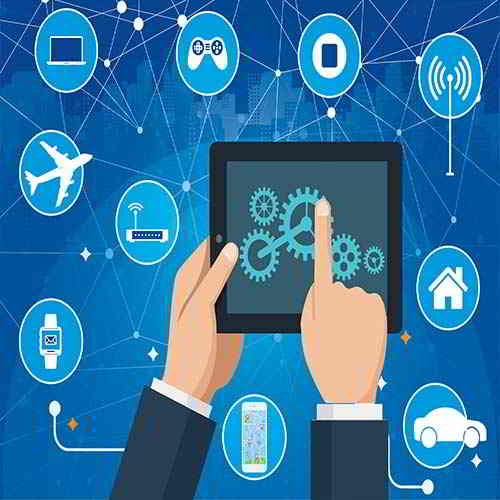
Adopting new technologies is necessary for an organization’s success and survival. The new technologies are often referred as “emerging”, which includes cloud computing, connected devices, mobile, robotics and blockchain. Technologies are continuously evolving to address and adapt to the changing needs of businesses and organizations. There are several factors that can lead to adoption of new technology tools and projects. The adoption is increasingly important as a strategy to empower users, to become more effective and efficient.
Many IT companies are focusing on quickly adopting disruptive technologies to improve the customer experience and increase efficiency. Whether the organization is small or a large corporate, adoption of new technologies can be a challenge. Many of them struggle to balance the need to deploy new technology with speed and agility with risk management.
Many veteran CIOs and IT leaders of different fields have shared their views on the adoption of new technologies and the influence of the technologies on the best practices adopted by an organization.
New Technologies and Best Practices
Carefully choosing their Strategies and Product Solutions GM-IT of Arjas Steel,Anand Mangalam comments, “After closely observing the new technologies, we have chosen what really adds value to us and not a namesake kind of a strategy of just going with the crowd. We have carefully chosen our strategies and product solutions. We choose strategies, technologies, platforms, in terms of which we can have a low gestation period or quicker ROI, adds value in terms of both horizontal and vertical scalability and whereinvestment is not huge.”
He thinks automation plays a keyrole in scaling up the business.Industrial automation is one of the driving forces and he speculates it as one of the potential areas where they can do a lot of improvements over the coming years. They have already reached a significantly stable and evolved environment. He sees this as one potential area wherein they can differentiate themselves, add value and reduce operating costs, and so on and so forth.
 Bohitesh Misra, CEO & CTO, Xiphias Software Technology explains that they follow an iambic model of AI, IoT, blockchain and cloud. Their products are all based on these latest technologies. They use artificial intelligence to give users a better usage perspective.
“Xiphias Software Technologies is a group of companies which manufacture the touchscreen kiosks and Bill Payment Services can be offered through these kiosks. We have digital signage kiosk and retail checkout kiosks. All our kiosk machines are IoT driven, we capture a lot of data from these devices and based on that we do lot of analytics and serves our customers with payment behaviours and patterns.”
Through the new technologies he wants to scale up the business. He is hopeful to launch 25,000 kiosks across various cities in the country this year and in next three years more than one lakh kiosks.
HEALTHCARE INDUSTRY
Ashish Bansal, Director, Global ERP Operations Asia –Pacific,Glaxosmithkline Pharmaceuticals feels disruptive technologies are something which he definitely wants to keep an eye on. He says, “There are a lot of new technologies in the market. We normally have an approach of being at the verge of it. We are normally implementing them at a slightly mature stage rather than we being in the early adopters. We are already considering blockchain, RPA extensively and already implemented more than 200 bots. AI is one of our key strengths as currently we are working on it.”
 Now, adoption of new technologies for healthcare industry also plays an important role. On this aspect Cloudnine Hospital is focusing on its IT adoption. N Balasubramanian, CIO,Cloudnine Hospital conveying his perspective says, “From a very early stage, we have started the digitization with our ERP system for the backend transaction and the hospital information system for the billing under legal transactions. Our prime focus has been providing customer experience. We have put more emphasis onin-house developments with developer team under a Chief Digital Officer formed more than three years ago. The mobile application for patients and doctors has been developed and tested in-house, all the patient records are digitized and the doctors can have access to their health records of the patients.Through digitization, latest technologies like IoT, the cloud, the mobility, we are able to serve a larger cause saving each and every life.”
AUTOMOBILE INDUSTRY
 GB Shaik, General Manager, Enterprise Architecture & Cloud Strategy, Nissan Motor ensures that the critical objective of any digitization for an automobile company like Nissan is to ensure that the customers are in touch with the company. He explains automation from two perspectives; one is bringing down the cost and making the company competitive in the market space. Second is improvement of go-to-market strategy.
Aviation Industry
 Ramkumar Mohan, CIO, Airworks India (Engineering) says though they are not an IT company but as an engineering company for the last few years they have understood the need of technology automation and digitization.
“We have invested into technology and for the last few years, we have automated many of our processes. Other than that, our IT infrastructure has been completely migrated to cloud and now we are completely cloud run organization. We are into B2B segments and the number of customers we serve is limited. Though the number is small, but it is highly in demand because it is aviation related and life is involved. So, my current focus is on automation and digitization,” explains Ramkumar Mohan.
 According to Subhash Kumar Mishra, Head - IT, Vistara - TATA SIA Airlines they have been known to adopt digitalization from the first day of their journey. “Being a user centric company, we make sure to use advanced technologies in terms of digitization, automation and security. Everything which we design is actually cloud, data and information centric. The company actually runs on the cloud and the cloud has become the backbone of the organization. We need to maintain certain data which is manual but we also need to see for automation which is required to digitize the organization. We make sure our data details are kept secure, customer information is encrypted and follow all those modern data security laws.” says Subhash.
OTHER INDUSTRIES
Manish Kumar Sinha, Global Application Manager SAP, Busch Vacuum Pumps and Systems says, “In terms of new technology, some of them are at a very nascent stage, some of them have their capabilities such as RPA. It shows a lot of promising future for the organization in terms of efficient improvements and cost savings. It also gives opportunity to those employees who are involved in those processes to grow their skills and become available for the next level task in the same organization.”
He claims involving internal stakeholders into the planning will enable a more efficient big picture, assessment of scope and impact, and stimulate camaraderie and alignment to promote adoption.Manish feels while running a department or managing a team it is a CIO’s responsibility to make people aware on each day.
 Having a presence across all over India like Chennai, Kolkata, Cochin, Vizag and many other cities, Shriram Properties has already started digitizing its 32 projects through new technologies. Hariharan Subramanian, Vice President - IT & Technology Shriram Properties says, “We have taken common standardize practices which has to be integrated with SAP. We are extending this to vendor as well as to the customers and more over the internal departments are also insisted to start using this product.”
Hariharan is aware of the fact that until they adopt technologies, their survival will be difficult, so they are forced to go for all the technologies. Closely working with the customers they are trying to form a portal setup for customers where they can log in and can see all their documents of bills, receipts and allotments. They are also putting a lot of concern on security with tightening the web security.
 Terrago Logistics, a B2B aggregator model trucking company, is using digitalization as the main focus of operations. Ranendra Datta, CTO, Terrago Logistics discusses about the technologies used by the company. He says, “We bring in technology as a part and parcel of the solution. The technology is enabling the drivers to be able to inform where they are and whether they are available for a truckload, and that information along with the pricing information is available to the businesses on a real time. The business is taking opportunities of placing their demands through the platform. So it's a complete end to end digitalization activity that the buyers and the sellers are able to come to a single platform to provide their related business requirements.”
THE GROWING SECURITY CONCERN
Ransomware attacks and cyber extortion is increasingly popular among hackers targeting businesses with lack of resources and technical expertise. People are starting to understand that cyber criminals are no longer just targeting large data-heavy companies; they are looking to disrupt any business from any sector with a vulnerability they can target in return for a ransom.As a business head, it is vital to the health of the company to understand the gravity of this situation and what could happen to them if they are not protected.
 Anand Mangalam, GM-IT, Arjas Steel is also very sceptical about the security issues. Keeping all critical applications safe he makes sure to balance the risk factor. He comments, “Security is a very critical aspect of every decision that we take. We are very careful choosing our product and our landscape.We have to integrate all the PLCs, SCADA, HMI systems on to one single platform, but by doing so, we are also increasing the risk of those critical systems being exposed to internet. So, we need to balance both the risk factors as well as the advantages of having a common one integrated network which integrates both Operation Technology and IT and give us a better benefit in terms of common shared service infrastructure and hyper converge benefit.”
 For Ashish Bansal, Director, Global ERP Operations Asia – Pacific Glaxosmithkline Pharmaceuticals with implementation of new technologies security is also a very broad term. After adopting everything possible for security, he still feels that it is not enough. He points out, “Primarily, we focus more on access control, process control and function control standpoint. We have built the controls around that framework by implementing RPA and AI supervised by human beings.”
For GB SHAIK, General Manager - Enterprise Architecture & Cloud Strategy at Nissan Motor,Cyber security has always been a Tom and Jerry story. “As more avenues are willing to grow and more UR systems are going to get integrated with the social media platforms, other digital platforms, definitely cyber security is going to be a critical piece.No company can ignore in terms of securing the applications, infrastructure etc. Nissan also have invested hugely in terms of securing the systems,” GB Shaik comments.
 Manish Kumar Sinha, Global Application Manager SAP, Busch Vacuum Pumps and Systems, also feels that from a CIO perspective security is a very big concern for an organization as it directly attacks the reputation in the market. Only awareness is the key to security. He says, “We have to start spreading awareness by conducting a lot of training session, educational sessions and making them realize that security aspects are very important.”
Ramkumar Mohan, CIO, Airworks India (Engineering)feels security plays vital role for the company because of the growing cyber threats. Though they use cloud as their infrastructure platform, they also ensure the security enabled products. They have made investments on security tools to make sure the cyber threats are not to be addressed.
Ranendra Datta, CTO, Terrago Logistics also claims that security is a bigger aspect for them as they are collecting a huge amount of data. The data security is very paramount. It is important for them to secure the data and build the platform in a much secured way.
To Conclude
It is important for companies to recognize and responsibly manage the risks associated with the new technologies that they have implemented so that they can reap benefits and minimise IT risk.Through the speeches of the leaders it is clear that spending on technology risk is set to accelerate over the next few years. With technology increasingly touching nearly every aspect of the business, more business leaders are beginning to recognize and acknowledge the IT risk. Many are beginning to view IT risk management as a function that can add value to the business, rather than just being a cost.