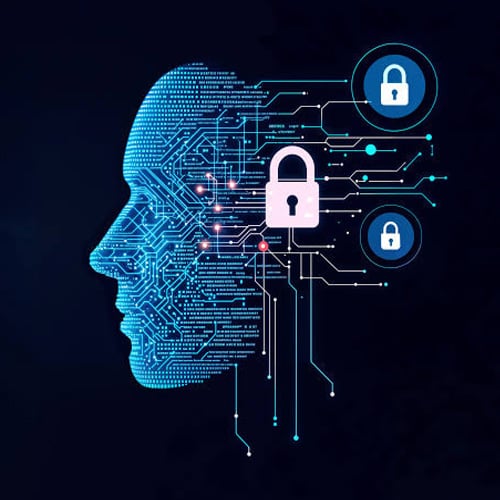

For decades, cybersecurity strategy revolved around a simple premise: build stronger walls. Firewalls, intrusion detection systems, endpoint protection and encryption formed layered defenses designed to protect data and infrastructure. But in today’s hyperconnected world, that perimeter-first mindset is no longer sufficient. The threat landscape has shifted from attacking systems to exploiting people.
AI-powered phishing, deepfake impersonations, synthetic identities and automated social engineering campaigns now target human behavior more than network vulnerabilities. Attackers use generative AI to craft hyper-personalized emails, clone executive voices, fabricate video evidence and scale fraud operations with near-zero marginal cost. In this environment, protecting data without protecting people leaves a critical gap.
This is where AI must evolve—from being a defensive tool inside the firewall to becoming a proactive guardian of digital trust.
Modern AI security systems can analyze behavioral signals in real time: anomalies in voice patterns, typing rhythms, transaction flows, device fingerprints and contextual metadata. Instead of waiting for a breach, AI models can flag suspicious interactions before harm occurs—whether it’s a fraudulent “digital arrest” scam, a compromised enterprise account or a manipulated media asset.
The shift is philosophical as much as technical. Security must move from perimeter defense to identity assurance, behavioral intelligence and preventive intervention. This requires embedding AI into telecom networks, financial systems, messaging platforms and enterprise workflows—not as surveillance, but as protective infrastructure.
However, deploying AI for protection introduces new governance questions. Transparency, bias mitigation, privacy-by-design architecture and auditability must accompany automated decision-making. The same AI that detects threats must operate within clear ethical and regulatory guardrails.
Enterprises must also recognize that resilience is no longer a static state. As AI accelerates product cycles and digital adoption, response windows shrink dramatically. Security must become a continuous learning system—adaptive, self-correcting and tightly integrated with operational change.
Ultimately, cybersecurity’s purpose is not simply to safeguard databases or block malicious packets. It is to protect citizens, employees and customers from harm in an increasingly deceptive digital ecosystem.
Beyond the firewall lies the real battleground: human trust. AI, when responsibly deployed, can become not just a shield for data—but a safeguard for people.