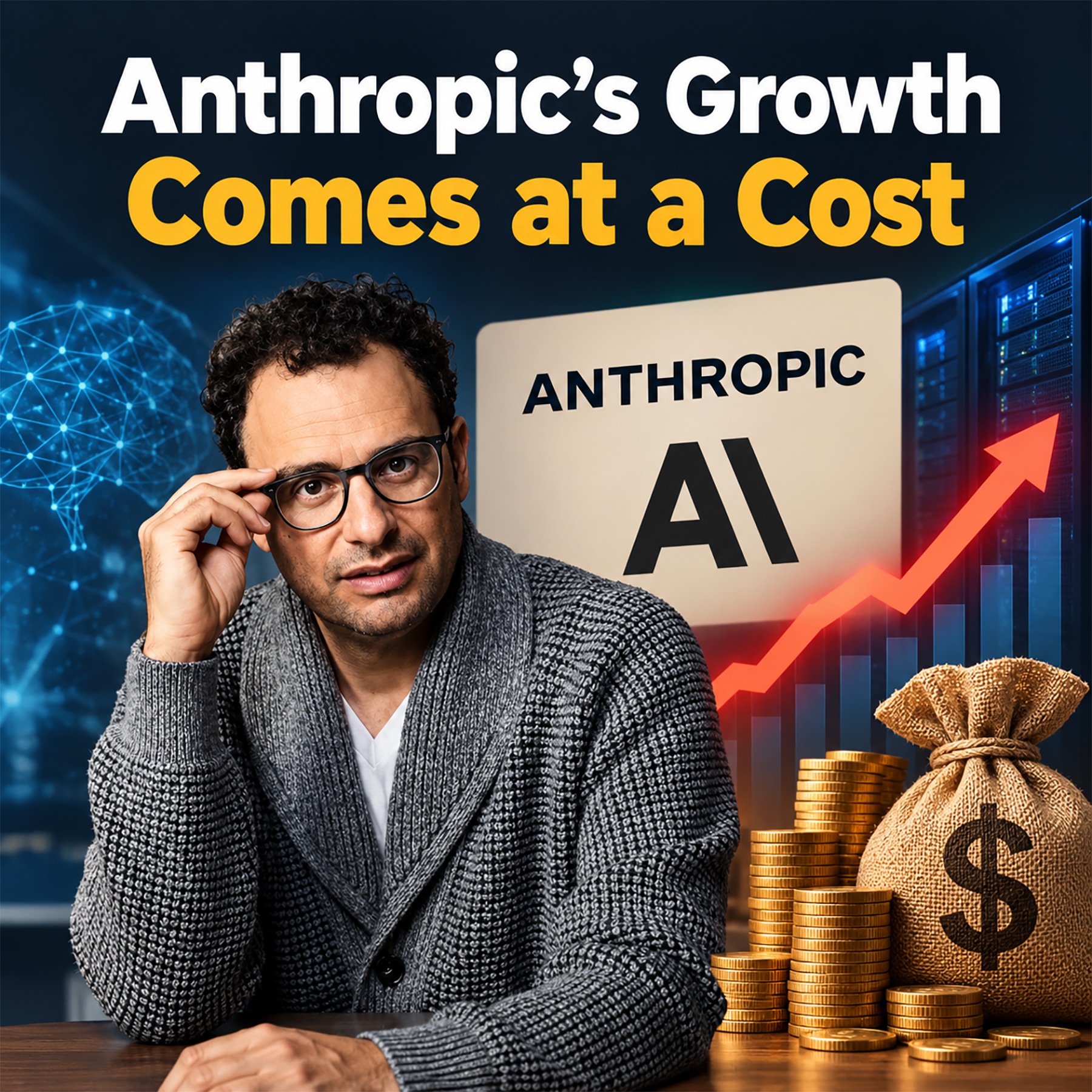
Anthropic’s prospectus highlights a fundamental challenge facing the generative AI industry: extraordinary revenue growth does not necessarily translate into a sustainable business. Claude’s expanding adoption demonstrates strong demand, but escalating compute and infrastructure costs could keep profitability under pressure even as sales accelerate.
The first consequence appears in the growth stage of the business lifecycle. AI companies traditionally would use rising revenue to generate operating leverage. Anthropic faces a different equation because every increase in model usage creates substantial inference, training, storage and infrastructure expenses.
The second risk is dependency concentration. Amazon and Google are simultaneously strategic investors, cloud infrastructure providers and important commercial partners. While these relationships provide enormous computing capacity and distribution, excessive dependence could reduce Anthropic’s bargaining flexibility and expose the company to changes in pricing or strategic priorities.
The third challenge emerges during scale-up. Massive long-term infrastructure commitments effectively require Anthropic to forecast future AI demand years in advance. If demand, pricing or technological architecture changes faster than expected, today's capacity investments could become tomorrow's financial burden.
Competition adds another complication. Anthropic must continuously invest in frontier models while competing with OpenAI, Google, Meta and emerging AI providers. Falling model prices could therefore compress margins before infrastructure costs decline sufficiently.
The broader implication extends beyond Anthropic. The AI industry's business lifecycle may look fundamentally different from traditional software: innovation → rapid adoption → massive infrastructure investment → margin pressure → consolidation.
Ultimately, the next phase of AI competition may be determined not simply by who builds the most capable model, but by who can convert enormous computing expenditure into recurring revenue, operating leverage and sustainable cash flow.