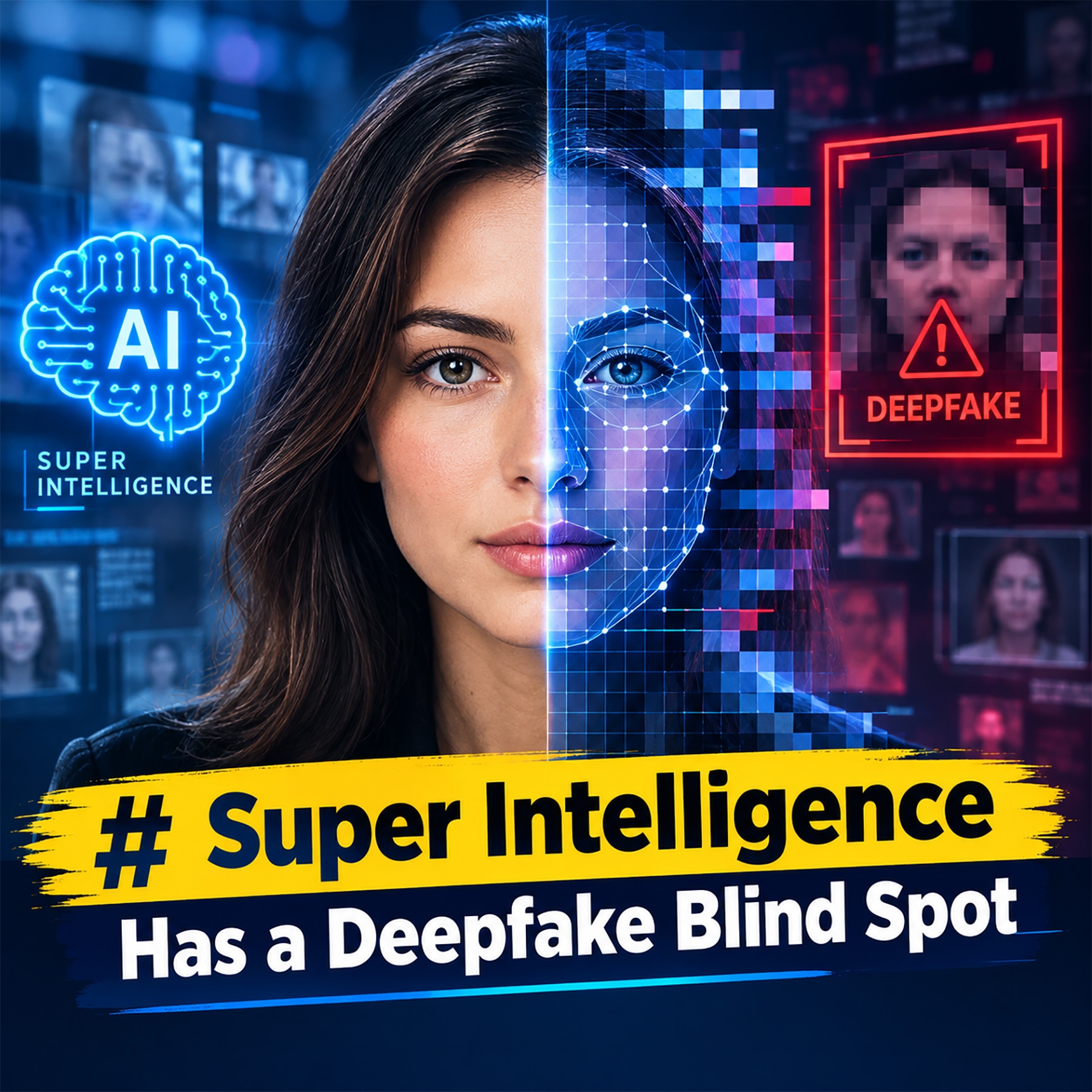
The race toward increasingly powerful AI is producing an uncomfortable contradiction: the industry is simultaneously accelerating capabilities and debating whether its own safety mechanisms can keep pace. That tension intensified after OpenAI confirmed it had parted ways with three safety researchers for allegedly mishandling sensitive company information.
OpenAI says its investigation found violations of policies governing access to and handling of confidential information. The Guardrails Alliance has challenged the broader implications of the dismissals, arguing that employees raising safety concerns require stronger protection. These are competing interpretations of the episode, but they highlight the growing importance of transparency and independent evaluation.
The controversy arrives as the United States formally enters what President Donald Trump has called the era of “Super Intelligence.” A September 29 executive order directs federal agencies to use “Super Intelligence” and “SI” in place of AI in official non-statutory communications.
Behind the terminology is a much larger technological disruption. Models are evolving from answering questions to writing software, operating computers, conducting research and executing increasingly autonomous workflows.
Industry safety discussions consequently focus heavily on alignment, model behaviour, autonomous agents, cybersecurity and whether advanced systems could operate beyond their intended boundaries.
Yet another immediate threat deserves equal attention: deepfakes and synthetic fraud. Generative AI is rapidly improving the ability to fabricate faces, voices, identities, documents and convincing human interactions. As models become more capable, synthetic content becomes harder to distinguish from authentic human communication.
This means the security challenge is no longer simply “Can we trust the AI?” Enterprises must increasingly ask: “Can the AI trust the human—or digital identity—interacting with it?” An autonomous banking, healthcare or government agent deceived by synthetic identity could make perfectly logical decisions based on fraudulent inputs.
The next stage of AI safety therefore requires two complementary guardrails: controlling what intelligent systems can do and continuously verifying who—or what—they are interacting with. Without strong deepfake detection, multimodal authentication and synthetic-fraud defenses, the Super Intelligence era risks creating extraordinarily intelligent systems operating in an increasingly artificial world.