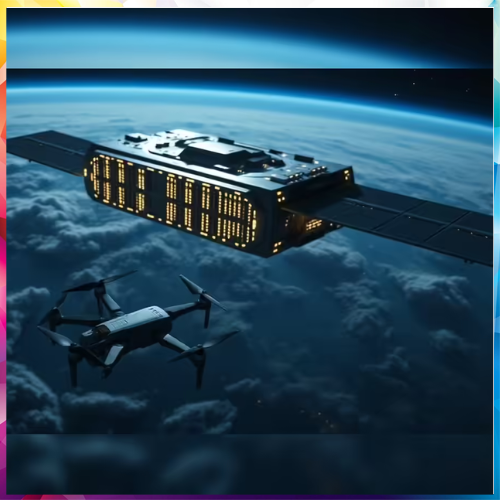
As energy demands from AI and cloud computing soar, global tech giants and space companies are exploring orbital data centers powered by solar energy, aiming to overcome the physical, environmental, and power constraints of Earth-based facilities.
The rapid expansion of artificial intelligence and cloud services is forcing hyperscalers to rethink how and where data centers are built. With terrestrial facilities facing mounting pressure from power shortages, land constraints, and sustainability concerns, companies are increasingly looking beyond Earth—toward space—as a potential long-term solution.
Space-based data centers, once considered science fiction, are now emerging as a serious area of experimentation. Tech leaders and space entrepreneurs believe orbital infrastructure could eventually support the next phase of AI-driven computing growth.
Why space is gaining attention
Data centers in orbit promise access to near-continuous solar energy and freedom from many physical limits faced on Earth. In space, facilities would not compete for land, water, or local power grids, offering a theoretical path to massive scalability. Analysts estimate that global electricity demand from data centers could rise sharply by the end of the decade, intensifying the search for alternative energy sources.
Interest accelerated this year as experimental projects moved from concept to testing. Nvidia-backed Starcloud launched an orbital computing demonstrator carrying an advanced AI processor, marking one of the first real-world tests of space-based computing infrastructure. Alphabet has also outlined plans for experimental satellites under a project aimed at evaluating how AI models and custom hardware perform in orbit, with prototype launches expected later this decade.
While Microsoft has not announced a full-scale orbital data center, it already supports space-related cloud operations and remote deployments using satellite connectivity, signaling gradual steps toward off-Earth computing.
Visionaries and the technology hurdles
Prominent space entrepreneurs have openly endorsed the concept. Elon Musk has argued that the vast energy available from the Sun makes space a compelling environment for large-scale AI workloads. Reports also suggest Blue Origin is developing technologies relevant to orbital data centers, highlighting growing interest across the private space sector.
However, significant challenges remain. Launching and maintaining hardware in space is expensive, and components must withstand radiation and extreme conditions. Cooling systems are another obstacle, as heat can only be dissipated through radiation. Reliable, low-latency satellite networks would also be essential to connect orbital data centers with users on Earth.
Despite these barriers, momentum is building. As AI workloads continue to strain global infrastructure, space-based data centers are increasingly viewed not as replacements, but as a future extension of Earth-bound computing—one that could redefine how digital infrastructure is powered and scaled.

See What’s Next in Tech With the Fast Forward Newsletter








Tweets From @varindiamag
Nothing to see here - yet
When they Tweet, their Tweets will show up here.