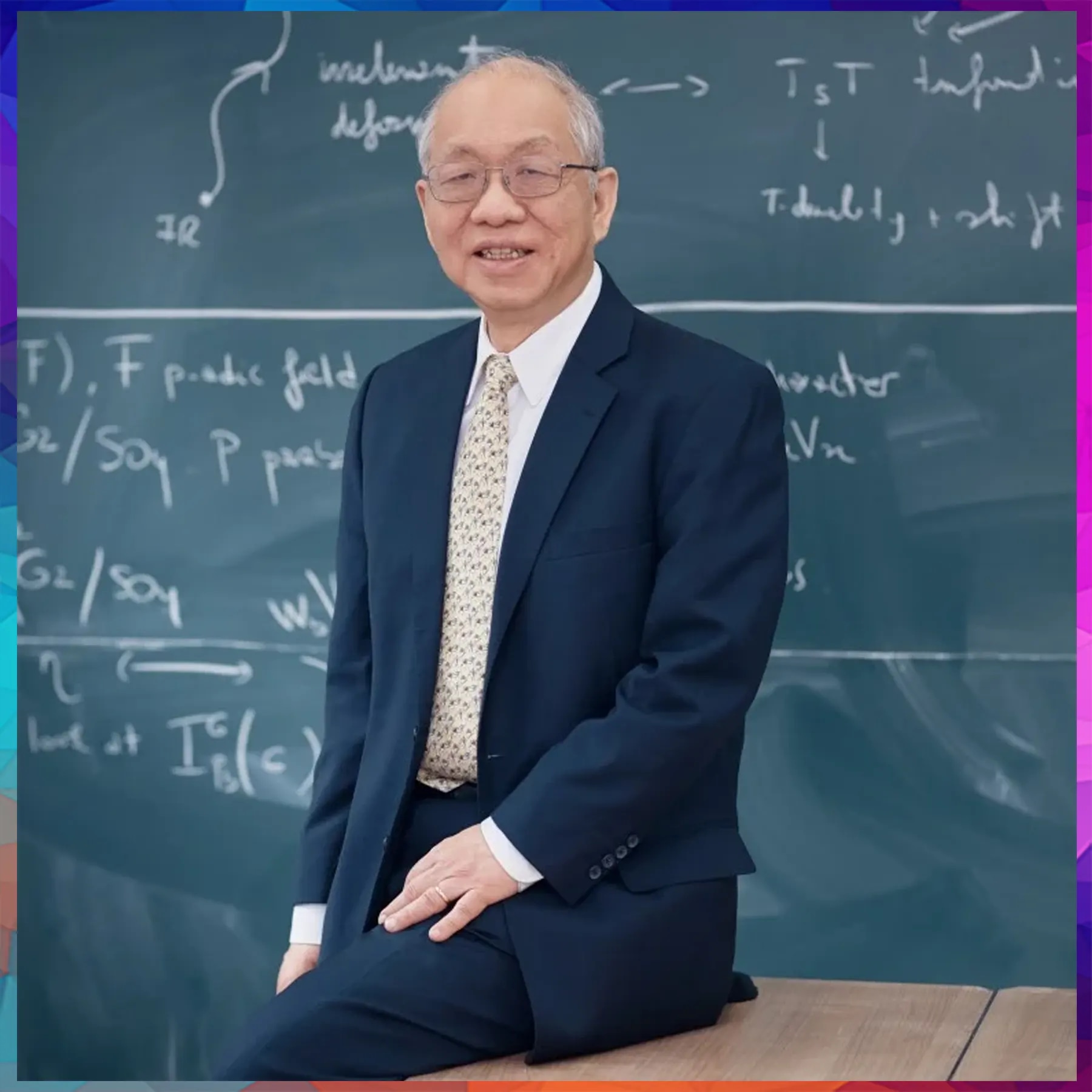
China is assembling a nationwide network of more than 1,000 mathematicians and AI researchers to build systems capable of solving complex mathematical problems. Led by Fields Medal-winning mathematician Shing-Tung Yau, the effort signals Beijing’s resolve to challenge US laboratories such as OpenAI and Anthropic in a field increasingly seen as a true test of machine intelligence.
The push reflects a wider global contest to create AI that goes beyond plausible answers to deliver rigorous reasoning, construct verifiable proofs and contribute to original scientific discovery.
At its heart is the Yau Laboratory Alliance for Mathematics and Artificial Intelligence, launched at Tsinghua University on October 11, 2026. It unites eight leading institutions across Beijing, Shanghai, Nanjing, Shenzhen and Hong Kong, with the aim of building specialised mathematical AI models under Chinese leadership rather than relying on overseas systems.
The alliance will focus on several priorities: using AI to generate new conjectures, developing formal and verifiable proofs, making AI reasoning interpretable, applying maths-AI to quantum computing and life sciences, and building shared research infrastructure. Yau has candidly admitted China trails the United States in applying AI to frontier mathematics and physics.
Mathematics has become a strategic battleground because, unlike language tasks, it demands sustained logic, abstraction and proofs that survive independent scrutiny. Breakthroughs could ripple across chip design, cryptography, scientific simulation and engineering. The timing is pointed: on October 6, OpenAI published work on 377 problems with formalised Lean proofs, reigniting debate over whether AI can truly discover new mathematics.
Yet talent alone will not guarantee success. China will also need vast computing power, high-quality datasets, advanced verification tools and sustained investment, while any claimed breakthrough must withstand expert validation.
Ultimately, the race is not about who fields more scientists or chips. It is about which ecosystem can turn AI reasoning into reliable, reproducible and genuinely original mathematical knowledge.