

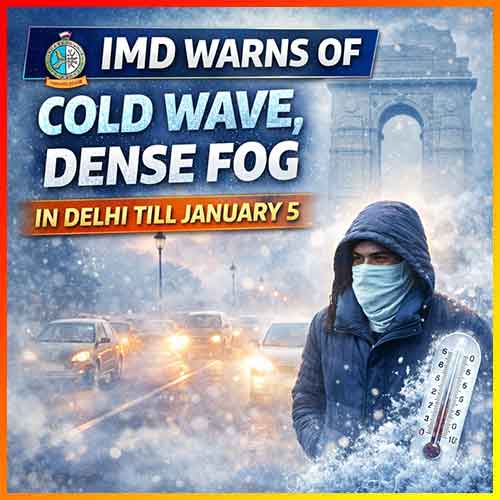
The India Meteorological Department has warned of cold wave conditions and persistent dense fog in Delhi and neighbouring states, with low temperatures, poor visibility, and very poor air quality expected to continue in the coming days.
The national capital is set to face intensified winter conditions over the first week of January, with the India Meteorological Department (IMD) forecasting cold wave conditions at isolated locations in Delhi between January 2 and January 5. The advisory comes as chilly weather continues to prevail across the region, affecting daily life, transport, and air quality.
According to the IMD, a cold wave is declared when minimum temperatures fall significantly below normal levels. While Delhi’s minimum temperature has remained slightly above average so far, weather officials have cautioned that conditions could deteriorate due to a drop in night temperatures combined with stagnant atmospheric conditions. Dense to very dense fog is also expected during night and early morning hours until at least January 6, raising concerns over reduced visibility.
Visibility, temperature trends raise concerns
Several parts of the city have already experienced poor visibility, particularly during late-night and early-morning hours. Key monitoring stations such as Safdarjung and Palam reported visibility dropping to around 500 metres before marginal improvement later in the morning. Similar foggy conditions are likely to persist over the next few days.
Daytime temperatures have also remained subdued. The IMD recorded maximum temperatures below seasonal averages, while minimum temperatures are expected to range between 8 and 10 degrees Celsius. Skies are likely to remain partly cloudy, with fog continuing to dominate morning hours.
Air quality remains very poor
Adding to the discomfort, Delhi’s air quality continues to hover in the ‘very poor’ category. Data from the Central Pollution Control Board showed a 24-hour average AQI of around 380, with several locations slipping into the ‘severe’ bracket. Officials attributed the pollution build-up to low wind speeds and an unfavourable ventilation index, which are limiting the dispersion of pollutants.
The IMD has also issued cold wave warnings for parts of Rajasthan, Punjab, and Haryana, indicating that northern India is likely to remain under the grip of harsh winter conditions in the coming days.

See What’s Next in Tech With the Fast Forward Newsletter









Tweets From @varindiamag
Nothing to see here - yet
When they Tweet, their Tweets will show up here.