
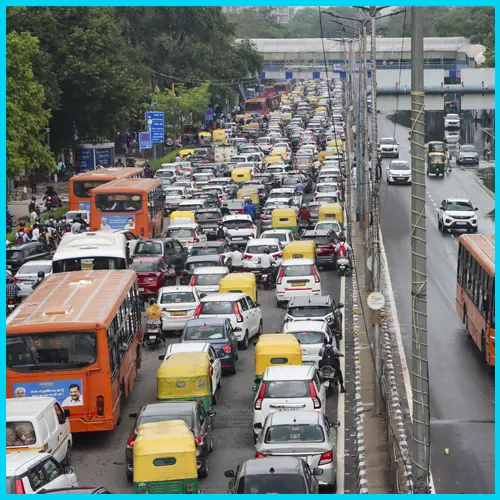
The comprehensive action plan targets key pollution sources through stricter enforcement, technology integration, and expanded public transport, alongside large-scale EV adoption and infrastructure upgrades to improve air quality across the national capital.
The Delhi Government has announced an extensive roadmap to combat air pollution, introducing tighter restrictions on vehicular movement and a series of sector-specific interventions aimed at improving air quality in the national capital.
As part of the plan, non-BS VI compliant goods vehicles will be prohibited from entering the city starting November 1, 2026. Only vehicles meeting BS VI emission standards, along with those powered by CNG and electric systems, will be allowed entry. The measure is expected to significantly reduce emissions from commercial transport, a major contributor to urban pollution.
The initiative is a key component of the Air Pollution Mitigation Action Plan 2026, unveiled by Chief Minister Rekha Gupta. The strategy adopts a multi-pronged, data-driven approach to address pollution sources such as vehicular emissions, construction dust, industrial output, and biomass burning.
Enforcement-driven strategy with technology integration
The action plan outlines 11 priority sectors, each assigned specific targets, timelines, and accountability mechanisms. The government has indicated a shift towards stricter enforcement, supported by digital monitoring and real-time tracking systems.
One of the notable measures includes the rollout of the “No PUC, No Fuel” policy, which will be enforced using Automatic Number Plate Recognition (ANPR) technology. Vehicles without valid Pollution Under Control certificates will be denied fuel, ensuring compliance through automated checks.
Additionally, contingency measures are being prepared for periods of severe pollution, when stricter restrictions may be imposed to limit emissions and protect public health.
Focus on public transport, EVs, and dust control
To reduce dependence on private vehicles, the government plans to significantly expand public transport infrastructure. Delhi’s bus fleet is projected to grow to 13,760 vehicles by 2028-29, with a strong emphasis on electric buses to support cleaner mobility.
Parallel efforts are underway to accelerate electric vehicle adoption, including the installation of around 32,000 EV charging points over the next four years. This expansion is expected to strengthen the city’s EV ecosystem and encourage a transition to cleaner transport options.
The plan also targets congestion and road dust, two major contributors to poor air quality. Authorities have identified 62 congestion hotspots where infrastructure upgrades and intelligent traffic management systems will be implemented. Dust control measures will include mechanised road sweeping, water sprinkling, and the use of anti-smog guns, all monitored through GPS-enabled systems to ensure efficiency.
Overall, the initiative reflects a comprehensive push by the Delhi government to tackle air pollution through coordinated, technology-backed interventions and stricter regulatory enforcement.