AI, cloud, cybersecurity and data infrastructure are fundamentally reshaping India’s technology distribution landscape, pushing distributors and Value-Added Distributors (VADs) beyond traditional product fulfilment towards integrated solutions, partner enablement and strategic technology value.
As VARINDIA marks its 27th Anniversary Issue, the industry stands at an important inflection point. Over nearly three decades, distribution has evolved from a business driven largely by volume, availability and logistics into an ecosystem increasingly defined by technical expertise, orchestration and business outcomes.
The transformation is accelerating as enterprises invest in hybrid cloud, AI-ready infrastructure, high-performance computing, cybersecurity and data governance. Regulatory developments such as the Digital Personal Data Protection Act (DPDPA) are further strengthening demand for
privacy, security and compliance solutions. Consequently, distributors and VADs are rethinking their role in the technology value chain. Competitive advantage today increasingly depends on technical capabilities, solution integration, subscription-based models, partner training and the ability to advise customers on increasingly complex technology decisions
For its Anniversary Issue, VARINDIA brings together leading voices from India’s distribution and VAD ecosystem to understand how they see the next two to three years unfolding. Their perspectives reveal a common direction: cloud, AI, cybersecurity and data infrastructure will remain major growth engines. From AI-ready data centres and semiconductor solutions to identity security and Pro AV, distributors are transforming from “box movers” into technology enablers, ecosystem orchestrators and strategic advisors, preparing India’s channel community for an AI-first digital economy
DRIVING GROWTH THROUGH TECHNOLOGY CONVERGENCE

Rajat Vohra
CEO – India,
Redington
Limited
Rajat Vohra expects Redington’s next growth phase to be defined by the convergence of cloud, SaaS, AI and cybersecurity rather than any single technology. As enterprises modernise their foundations for hybrid cloud, data and AI workloads, Redington is accelerating its transition towards a solutions-led, platform-driven business model.
The company’s Software Solutions Group is emerging as an important growth engine, creating recurring revenue opportunities, while demand for AI-ready infrastructure, data centres and AI-enabled endpoints continues to rise. Vohra also sees significant potential beyond metropolitan markets, particularly as India’s vast SMB ecosystem accelerates digital adoption. Subscription models and platforms such as CloudQuarks and AI Exchange are expected to enable partners to address these opportunities more effectively.
At the heart of this strategy is a fundamental change in Redington’s role. While distribution remains its foundation, the company is moving from scale-driven distribution towards outcome-led ecosystem enablement. Vohra describes Redington as increasingly becoming a “technology orchestrator” connecting vendors, partners, technologies and customers. Platforms including Redington Online, CloudQuarks, AI Exchange and RedAI support this transformation. Subscription-led and everything-as-a-service models, partner academies, an AI Centre of Excellence and services-led support are helping partners discover, deploy and manage cloud, AI and cybersecurity solutions at scale.
Looking ahead, Vohra’s priority is to remove geographic, financial and skill barriers for partners. Through its “Unlock Next” approach, Redington aims to enable partners to automate workflows, operate more efficiently and compete effectively in an AI-first digital economy.
POWERING PARTNER GROWTH THROUGH AI-LED PLATFORMS

Flavio Moraes
Junior
MD & CCE
Ingram Micro
India
Flavio Moraes Junior sees strong growth emerging from the convergence of AI, devices, digital workplace, data-centre infrastructure, cloud and cybersecurity. AI, he believes, is creating opportunities far beyond infrastructure by accelerating demand for AI-capable PCs, mobility solutions and modern workplace technologies.
At the infrastructure level, AI-ready environments are stimulating investment in servers, storage, networking, data centres and cybersecurity, while cloud modernisation and automation remain important growth areas. Despite component availability challenges, supply-chain constraints and inflationary pressure, underlying technology demand remains resilient as enterprises increasingly view digital infrastructure as critical to productivity, resilience and business growth.
Ingram Micro is responding by transforming itself from a traditional technology distributor into a platform-led, services-enabled and AI-powered ecosystem orchestrator. Central to this transition is Xvantage, its AI-powered digital platform designed to change how customers, partners and vendors engage and transact.
Through Xvantage, partners can discover, configure, buy, manage and scale technology solutions within a more intelligent digital environment. Ingram Micro is simultaneously focusing on building practical AI capabilities among partners. Its Xvantage Enable AI Program is designed to move businesses from AI experimentation towards execution by identifying use cases, building skills, developing solutions and supporting scalable deployments. The Xvantage Integration Hub and secure Model Context Protocol Server further connect AI assistants with business applications, workflows and data. For Moraes Junior, AI transformation is therefore not simply about adding intelligence to existing processes. The objective is to create a more connected, automated and intelligent operating model that helps partners simplify complexity, accelerate execution and capture new opportunities across an increasingly AI-first economy.
EXTENDING INTO ENTERPRISE, EMBEDDED AND SEMICONDUCTOR SOLUTIONS
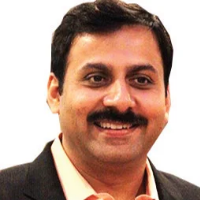
Rajesh Goenka
Director & CEO,
Rashi Peripherals
Limited
Rajesh Goenka expects Rashi Peripherals’ next growth phase to extend beyond its established Personal Computing & Enterprise Solutions and Lifestyle & IT Essentials businesses, with high-margin enterprise technologies and embedded and semiconductor solutions becoming significant growth drivers.
Digital transformation, cloud expansion and AI adoption are increasing enterprise demand for data-centre infrastructure, High-Performance Computing and cybersecurity. The addition of WEKA.io strengthens the company’s ability to support advanced AI and machine-learning architectures at scale.
Another strategic growth area is Rashi Peripherals’ joint venture with Japan’s Restar Corporation. The partnership brings advanced image-sensing solutions, localised engineering and Field Application Engineering capabilities, targeting Automotive Tier-1 companies, industrial robotics, enterprise surveillance and EMS/ECMS manufacturing. Goenka views this as a significant move into the expanding semiconductor and embedded solutions market
This diversification reflects RP tech’s broader philosophy of moving beyond “box-moving” logistics towards becoming an integrated solutions provider. Its acquisition of VDA Infosolutions supports this transition by extending enterprise capabilities into Hybrid Cloud, cybersecurity, DevOps and Managed IT Services.
The company’s Embedded Lab in Bengaluru provides another differentiator, acting as an extension of global OEMs through reference solutions and customised application development that can accelerate customer design cycles. Technology is also transforming internal operations. Rashi Peripherals’ nationwide supply chain operates on SAP S/4HANA combined with Power BI real-time analytics, enabling automated inventory planning and logistics optimisation. By combining distribution scale, enterprise services, engineering capabilities and automation, Goenka aims to deliver greater value to Rashi Peripherals’ network of more than 10,250 channel partners.
FOCUSING ON AI INFRASTRUCTURE, SECURITY AND NETWORKING

Byju Pillai
Group Managing
Director, Inflow
Technologies
Pvt. Ltd.
Byju Pillai expects AI infrastructure, cybersecurity, networking, cloud and data-centre technologies to collectively drive Inflow Technologies’ growth over the next two to three years. As enterprises move from AI experimentation to deployment at scale, demand is increasing for high-performance compute, accelerated infrastructure, high-speed networking, storage, data-centre connectivity and power infrastructure. Cybersecurity remains equally important. Expansion of cloud, hybrid environments, AI applications and distributed workforces is widening the attack surface, creating opportunities across Zero Trust, SASE, identity and access management, cloud security, data security, and threat detection and response
Networking is another critical layer. High-speed data-centre networking, SD-WAN, secure networking, wireless infrastructure and network automation are becoming essential for supporting AI workloads and increasingly distributed enterprise environments. These opportunities align closely with Inflow’s existing Compute, Storage, Networking and Cybersecurity portfolio. Pillai believes AI is simultaneously changing how technology is consumed, deployed and supported. For a VAD, this means moving beyond transactional distribution towards an ecosystem-led, solution-oriented business model.
Inflow’s transformation is centred on three areas. First is specialisation, with deeper in-house expertise across AI infrastructure, cybersecurity, networking, cloud and data centres. Second is partner enablement through solution design, pre-sales, proofs of concept, technical training, certifications and deployment support. Third is portfolio development through the selective addition of complementary technology vendors.
Pillai describes Inflow’s role as that of a Technology Enabler—connecting global technology vendors with system integrators, resellers and customers while bringing together technology, skills and execution capabilities to help partners successfully address increasingly complex enterprise requirements.
BUILDING A MORE AGILE SOLUTIONS-LED ORGANISATION
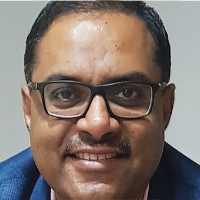
Atul Gaur
Director, Savex
Technologies
Pvt. Ltd.
Atul Gaur expects Savex Technologies’ growth over the next two to three years to be shaped by emerging technologies alongside the continued evolution of enterprise IT infrastructure. Artificial intelligence, cloud, cybersecurity, data-centre infrastructure and networking are becoming increasingly important areas of customer demand.
As organisations accelerate digital transformation, Savex sees growing opportunities to provide integrated technology solutions addressing evolving business requirements. Its strategy is therefore focused on strengthening capabilities across these technology segments, deepening engagement with technology partners and expanding its value proposition across enterprise and channel ecosystems. AI is particularly significant because it is changing the technology distribution landscape itself. Gaur believes its emergence creates opportunities for distributors to move beyond traditional distribution towards a more integrated, value-led business model.
For Savex, that transition means strengthening technology capabilities, improving partner and customer engagement and enabling access to a broader portfolio of digital solutions. The company sees considerable potential in combining its established distribution expertise and ecosystem relationships with emerging capabilities across AI, cloud, cybersecurity and enterprise infrastructure. Technology enablement and solution-led engagement will become increasingly important as customer environments grow more complex. At the same time, operational efficiency remains essential to maintaining competitiveness and delivering value at scale.
Gaur’s strategy is therefore evolutionary rather than disruptive: retain the company’s distribution strengths while building the capabilities required for a more solutions-oriented market. Looking ahead, Savex aims to become a more agile, digitally enabled and solutions-oriented organisation, capable of responding rapidly to changing technology requirements. The ultimate objective is to remain relevant as the distribution model evolves while creating sustainable, long-term value for technology vendors, channel partners and enterprise customers.
EXPANDING INTO AI-READY ENTERPRISE INFRASTRUCTURE

Kamini Talwar
Director,
IRIS Global
Services Ltd.
Kamini Talwar sees enterprise infrastructure and emerging technologies as key growth drivers for IRIS Global Services. Over the next two to three years, the company expects opportunities across AI-led computing, GPU-based servers, enterprise storage, networking, cybersecurity, data-centre infrastructure and intelligent power solutions. AI is accelerating infrastructure investment as enterprises move from experimentation towards deployment. IRIS Global is pursuing this opportunity through its Enterprise Infrastructure Solutions portfolio, which brings together enterprise and GPU-based servers, storage, networking, cybersecurity, UPS systems, batteries and cooling solutions to address the interconnected requirements of modern data centres. Talwar also sees considerable potential across cloud, digital transformation and emerging technology solutions while continuing to strengthen IRIS Global’s Computing and Mobility Solutions business. She points to the broader expansion of India’s ICT products market as providing substantial headroom for future growth. The opportunity is accompanied by a fundamental evolution in IRIS Global’s distribution model. The company is moving from product fulfilment towards a solution-oriented, service-enabled approach. Partner enablement sits at the centre of this strategy. IRIS Global is equipping channel partners with training, technical support and solution capabilities to address increasingly complex customer requirements. These are complemented by established distribution capabilities across logistics, credit support, warranty services and annual maintenance contracts. Through a strategic distribution arrangement, the company is also extending into AI assessments and consulting, application modernisation, migration planning and intelligent quality engineering Talwar’s objective is ultimately two-sided: help technology brands expand their market reach while enabling channel partners to participate in higher-value customer engagements. This positions IRIS Global to move beyond supplying infrastructure towards enabling complete technology solutions for an AI-first enterprise environment.
EVOLVING TOWARDS STRATEGIC TECHNOLOGY ADVISORY

Sunil Kumar Pillai
Chairman &
Managing
Director, iValue
InfoSolutions Ltd.
Sunil Kumar Pillai expects iValue InfoSolutions’ next growth phase to be driven by cybersecurity, AI-led technologies, Data Centre Infrastructure, cloud and Information Lifecycle Management. Rather than viewing these as independent markets, iValue sees their convergence creating larger enterprise transformation opportunities.
Cybersecurity remains a major driver as enterprises prioritise resilience, Zero Trust architectures, data protection, identity, threat detection and compliance. AI adoption is simultaneously creating opportunities across AI infrastructure, data platforms, cybersecurity and enterprise applications. Data Centre Infrastructure is another important growth pillar as AI and hybrid-cloud environments increase demand for compute, storage and networking. Information Lifecycle Management is also gaining relevance as organisations manage expanding data volumes alongside stricter governance requirements. Pillai emphasises that iValue’s strategy is not simply about individual technologies. The company is bringing complementary technologies together into integrated solution stacks focused on enterprise outcomes, enabling participation in larger technology transformations while generating greater value for OEMs and partners.
This philosophy is also changing iValue’s identity. Pillai describes its evolution from technology aggregation and distribution towards a Strategic Technology Advisor model. The objective is to go beyond taking technology to market and increasingly help emerging and established technology companies architect their route to market. iValue is strengthening solution architecture, pre-sales, professional services, market intelligence, partner orchestration and strategic go-to-market capabilities, supported by integrated solution stacks and Centres of Excellence. AI is also being applied internally across market intelligence, customer engagement, sales productivity, solution development and decision-making.
With operations spanning India, SAARC and Southeast Asia, Pillai sees iValue transitioning from a route-to-market participant to an architect of the route to market, reflecting the broader evolution of value-added distribution.
PURSUING GROWTH ACROSS CLOUD, STORAGE AND SECURITY

Debraj Dam
Chief – SEPL
VAD, Subsidiary
of Supertron
Electronics
Pvt. Ltd.
Debraj Dam expects SEPL VAD’s growth over the next two to three years to come from cloud, AI-ready infrastructure, storage, cybersecurity, security and surveillance, and Pro AV solutions. These opportunities reflect India’s continuing shift towards hybrid IT, AI-enabled workloads, data protection and more integrated technology environments.
SEPL VAD plans to build on its existing strengths across cloud, storage, security and surveillance, and Pro AV while increasingly taking complete business propositions to partners rather than standalone products. Dam believes this approach allows channel organisations to address broader customer requirements and build more valuable technology engagements.
The strategy also reflects a wider transformation in distribution. As Dam explains, the distributor’s role is moving from simply supplying products towards creating value across the technology ecosystem. SEPL VAD is therefore increasing its emphasis on solution selling, partner enablement, technical training, pre-sales support and market development. These capabilities can help partners address emerging opportunities even when they do not possess every required technical competency internally. AI is becoming an important layer across the company’s cloud, storage, security and IT infrastructure portfolio. SEPL VAD’s approach is to help partners identify practical AI opportunities and understand how artificial intelligence connects with customers’ existing infrastructure and applications rather than treating AI purely as a standalone product category.
Technical workshops, demonstrations, training programmes and industry-focused engagements are being used to deepen collaboration and strengthen partner capabilities. The direction is ultimately towards a broader enablement role. SEPL VAD wants to support partners beyond product supply and become a stronger technology and business-enablement partner, helping the channel convert emerging technologies into practical, commercially viable solutions while expanding its ability to address increasingly complex enterprise requirements.
SCALING TECHNOLOGY GROWTH BEYOND METRO MARKETS

Manoj Gupta
Managing
Director, Fortune
Marketing
Pvt. Ltd.
Manoj Gupta sees networking, surveillance and storage as Fortune Marketing’s strongest growth opportunities over the next two to three years. Increasing demand for reliable Wi-Fi connectivity, smart security solutions and data storage is creating opportunities across SMEs, enterprises, educational institutions, hospitality, retail and residential projects.
The company’s portfolio includes brands such as Tenda, Secureye, Acer, Enter, PNY, Targus and HP storage solutions, addressing growing requirements for dependable networking, security and IT infrastructure.
A particularly important opportunity is emerging beyond India’s metropolitan markets. Gupta believes rapid digital adoption across Tier 2 and Tier 3 cities is creating new markets for channel partners. By strengthening distribution, increasing product availability and supporting partners with marketing and technical resources, Fortune Marketing expects these markets to contribute substantially to future growth.
The company’s strategy is centred on strengthening the capabilities that have historically differentiated it. Gupta identifies Fortune Marketing’s distribution network, channel relationships and ability to bring technology closer to customers across India as core competitive strengths. Accordingly, the company has expanded its branch network, improved warehousing and streamlined supply-chain operations to accelerate product availability and delivery. It is also strengthening engagement with distributors, dealers, retailers, system integrators and project partners through enhanced support and training.
Portfolio expansion remains another priority. Alongside established brands, Fortune Marketing continues to introduce products addressing networking, surveillance, storage and IT infrastructure requirements while also developing its own brands. Gupta summarises the roadmap around a stronger distribution ecosystem, greater operational efficiency and longterm partnerships. By combining these fundamentals with deeper regional penetration, Fortune Marketing aims to remain responsive and well positioned as India’s technology adoption expands rapidly beyond the largest cities.
SHAPING NEW MARKETS THROUGH TECHNOLOGY SOLUTIONS
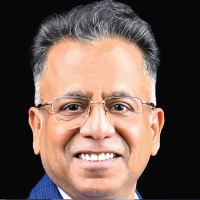
Prashanth GJ
CEO, TechnoBind
Solutions Pvt. Ltd.
Prashanth GJ sees TechnoBind’s strongest growth opportunities emerging where AI, data, cybersecurity and modern infrastructure converge. AI adoption is increasing investment in the underlying data layer, including data platforms, storage, high-performance infrastructure, data security and governance. At the same time, rising cyber risks and regulations such as the DPDPA are creating opportunities across identity security, PAM, DSPM, data protection, application security, endpoint resilience, SIEM and cyber recovery. PostgreSQL modernisation, cloud-native infrastructure and AI-ready computing represent additional growth areas.
TechnoBind has deliberately built complementary technology stacks rather than isolated product lines. This allows partners to address broader customer use cases and develop technology practices around actual business triggers. Consequently, Prashanth expects an increasing proportion of growth to come from solution stacks and cross-portfolio opportunities. The strategy is transforming TechnoBind from a traditional technology distributor into what Prashanth describes as a market creator and practice-building partner for the channel.
In an AI-first economy, access to product information is no longer sufficient differentiation. The value of a VAD increasingly comes from helping partners identify opportunities, architect appropriate solutions, demonstrate them technically and take them successfully to customers. TechnoBind has therefore invested in technical capabilities, demonstrations, PoCs, partner enablement, demand generation and use-case-led selling, supported by close alignment between sales and pre-sales teams. AI is also being deployed internally across market intelligence, content, knowledge management and sales productivity. Prashanth believes future relevance will depend less on the number of products distributed and more on the ability to help partners shift from product discussions towards trigger-led conversations around AI adoption, DPDPA, cyber resilience, identity, data security and infrastructure modernisation, ultimately creating new markets and profitable channel practices.
TURNING SECURITY SOLUTIONS INTO CHANNEL-LED GROWTH
Zakir Hussain
Rangwala
CEO, BD Software
Distribution
Pvt. Ltd.
Zakir Hussain Rangwala places the channel at the centre of BD Software Distribution’s growth strategy. With 95% of its business flowing through more than 1,500 partners, the company evaluates technology opportunities according to what partners can effectively sell, deploy and support rather than simply pursuing the latest market trend.
Identity and access management, DLP, cloud security and XDR/EDR are among its priority growth areas. The DPDP Act is also pushing privacy and compliance solutions into boardroom discussions, including among mid-sized businesses. Zero Trust, OT and IoT security for manufacturing, and AI-driven SOC/SIEM represent additional opportunities. For Rangwala, however, the bigger opportunity lies in combining these technologies into an integrated security proposition. Rather than selling individual security products, partners need coherent solutions they can take to CISOs around data, identity, endpoints, cloud and enterprise risk.
This approach underpins BD Software’s transition from product distribution towards genuine value addition. Around 35% of its 90-plus-member team works in technical support and pre-sales, reflecting the growing importance of technical capability. The company conducts PoCs, demonstrations and partner enablement at scale, helping partners outside major metros approach enterprise opportunities with stronger technical confidence.
Commercial models are evolving as well. BD Software is moving with vendors towards subscription and consumptionbased models while layering managed services onto its offerings.
Internally, AI supports lead scoring, partner recommendations and support triage, allowing employees to focus more on judgement-intensive activities. Rangwala’s objective is for BD Software to remain the essential bridge between global cybersecurity vendors and the local channel across India, Nepal and Bhutan—combining technology access with technical expertise and an understanding of local buyers.