

Elon Musk loses lawsuit against OpenAI

The verdict marks a significant legal victory for OpenAI and CEO Sam Altman, while clearing a major hurdle for the company’s future expansion plans, including a possible public listing amid intensifying competition in the AI industry.
A federal jury in the United States has ruled in favour of OpenAI in a closely watched lawsuit filed by Elon Musk, delivering a major legal setback to the billionaire entrepreneur in his battle over the future direction of artificial intelligence.
The unanimous verdict was delivered in a federal court in Oakland, California, where jurors concluded that Musk had filed the case beyond the permitted legal time limit. The jury reportedly reached its decision in less than two hours after a trial that lasted nearly three weeks.
Musk had accused OpenAI and its leadership, including CEO Sam Altman and President Greg Brockman, of moving away from the company’s original nonprofit mission of developing artificial intelligence for public benefit. He alleged that the company later shifted its focus toward commercial gains and investor interests.
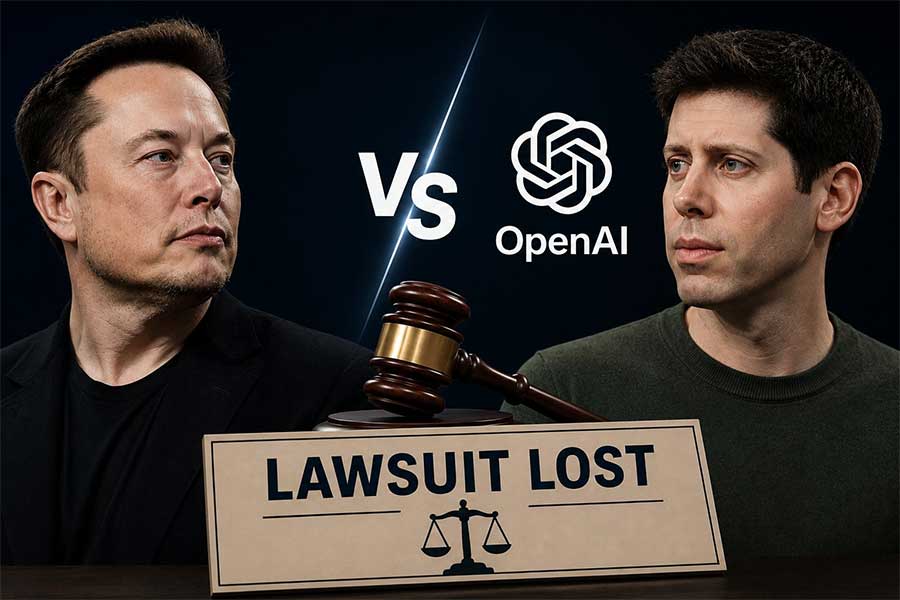
Legal battle over OpenAI’s direction
The lawsuit centred on claims that OpenAI’s transformation into a profit-oriented business violated the principles under which the organization was initially established in 2015. Musk, an early investor in OpenAI, argued that the company accepted large-scale funding from corporate partners while abandoning its original vision.
OpenAI’s legal team countered that Musk was fully aware of the company’s long-term growth plans and had waited too long to challenge its structure. Lawyers representing the company described the lawsuit as an attempt to damage a competitor, especially as Musk has since launched his own AI venture, xAI.
Following the verdict, Musk said he plans to appeal the ruling and continued to criticise OpenAI’s leadership through posts on X.
Impact on OpenAI and AI industry
The ruling is being viewed as a major relief for OpenAI, particularly as the company explores future expansion opportunities, including a potential initial public offering that could significantly raise its market valuation.
The case also highlighted growing concerns around the control, ethics, and commercialization of artificial intelligence, an industry that is increasingly influencing sectors ranging from healthcare and education to finance and cybersecurity.
Industry observers believe the verdict could strengthen OpenAI’s position in the rapidly evolving global AI race while intensifying competition among major technology companies investing heavily in AI infrastructure and products.

See What’s Next in Tech With the Fast Forward Newsletter




Tweets From @varindiamag
Nothing to see here - yet
When they Tweet, their Tweets will show up here.