

A Techarc study finds that component shortages pushed smartphone prices above launch levels before July festive sales, with most Amazon and Flipkart discounts largely reversing earlier increases instead of offering meaningful savings to consumers.
A new study by market research firm Techarc has found that the discounts offered during Amazon and Flipkart's July festive sales largely compensated for earlier price increases triggered by global memory-chip and component shortages, rather than providing significant savings to consumers.
The findings come after Amazon concluded its July festive sale on July 6, while Flipkart's sale ended on July 9. The study tracked pricing trends across 50 smartphone stock-keeping units (SKUs) from 10 brands, covering devices ranging from the sub-₹10,000 category to premium flagship models. The analysis compared launch prices, regular business-as-usual (BAU) prices in June 2026, and the final festive sale prices after bank offers but excluding exchange bonuses.
Majority of smartphones cost more than their launch price
According to the report, 68% of the smartphones analysed were priced higher in June 2026 than at their original launch, recording an average increase of 9.9% and a median rise of 8.7%. The study attributes this trend primarily to supply-side pressures arising from global shortages of memory chips and electronic components rather than normal market demand.
Only 12% of the tracked models followed the conventional pricing pattern, where smartphone prices typically fall below their launch levels ahead of major festive sales.
Advertised discounts did not always translate into real savings
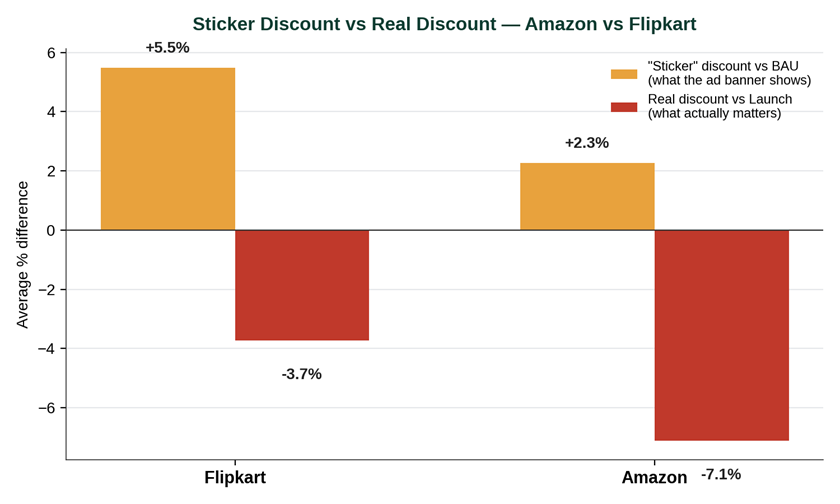
Techarc's analysis suggests that while sale promotions highlighted discounts averaging 5.5% on Flipkart and 2.3% on Amazon compared with June prices, the actual savings were limited when measured against the original launch prices.
On average, smartphones were still selling 3.7% above their launch prices on Flipkart and 7.1% higher on Amazon even after festive discounts were applied. The report noted that fewer than one-third of the listed smartphones on either platform were available at prices genuinely lower than their launch prices by the end of the sale.
Higher pre-sale price hikes reduced discount benefits
The study also identified an inverse relationship between pre-sale price inflation and the effectiveness of festive discounts. Smartphones that experienced minimal price increases before the sale were more likely to be offered below their launch prices, while devices with significant pre-sale mark-ups saw discounts primarily offset those earlier increases.
The research further highlighted differences between the two e-commerce platforms. Across the sample, Flipkart recorded a higher proportion of genuine below-launch-price deals than Amazon, with 33% of listings offering real discounts compared to 30% on Amazon. Flipkart also had fewer listings without any effective reduction and emerged as the lower-priced platform in 54% of the 35 smartphones available on both marketplaces.
Supply chain costs shaped festive pricing
The study observed that the extent to which festive discounts reversed earlier price hikes varied across smartphone brands and price segments, reflecting differing levels of exposure to rising component costs.
Commenting on the findings, Faisal, Founder & CEO, Techarc, said: “Discount season this year tells a supply-chain story as much as a retail one. The scale of price inflation ahead of the sale, driven by global memory and component costs, meant most of what showed up as a ‘festive discount’ was catching up rather than a genuine saving. Buyers who compare the sale price to the launch price — not just to last month’s price — are the ones getting the real picture.”