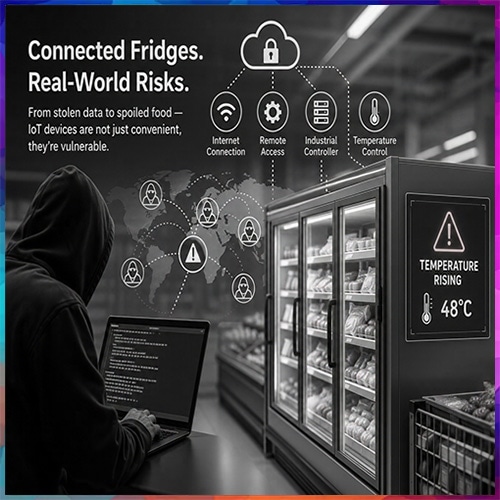
A wave of cyberattacks targeting supermarket refrigeration systems across Europe has exposed alarming vulnerabilities in internet-connected devices, demonstrating how digital intrusions can trigger physical disruption and financial losses.
Following widespread attacks in France during October, fresh incidents on November 2 affected retailers across Belgium, Luxembourg, Sweden, Ireland and other European countries.
Hackers reportedly manipulated refrigeration controls, causing temperatures to rise dramatically, spoiling perishable goods and forcing supermarkets to discard substantial quantities of food.
In France, earlier attacks disrupted hundreds of supermarkets, including Carrefour and Intermarché, with some refrigeration units reportedly reaching temperatures approaching 50 degrees Celsius.
Investigations identified weaknesses involving internet-exposed industrial controllers, outdated firmware and inadequate authentication, highlighting persistent failures in basic cybersecurity practices.
Experts warned that refrigeration systems, traditionally isolated from external networks, have become vulnerable through remote monitoring platforms and internet-connected maintenance interfaces.
The threat extends beyond supermarkets. Smart refrigerators, surveillance cameras, thermostats, connected vehicles and industrial equipment increasingly expose organisations and households to cybercriminal exploitation.
Compromised devices can enable attackers to manipulate operations, steal sensitive information or potentially gain access to interconnected networks, creating risks far beyond the original entry point.
The incidents also expose weaknesses in operational technology security. Manufacturers and enterprises must prioritise firmware updates, network segmentation, secure remote access, device authentication and continuous vulnerability monitoring.
The larger warning is that cyberattacks no longer threaten only digital information; they can disrupt physical infrastructure and essential services. As IoT adoption accelerates, cybersecurity must become fundamental to product design, deployment and lifecycle management. Without stronger safeguards, connected convenience could become a gateway to widespread operational sabotage.