From Deepfake Detection to Continuous Trust
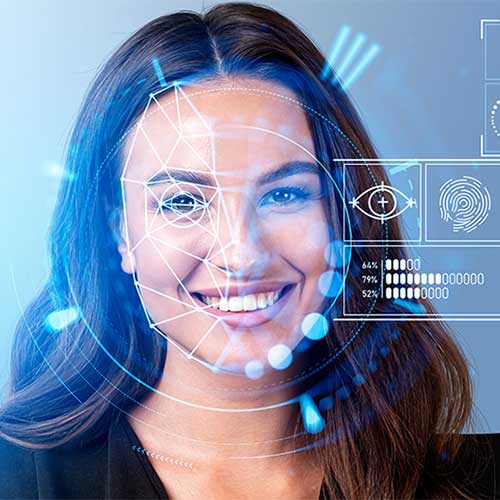
The deepfake era is changing a fundamental assumption of digital security: seeing a face is no longer sufficient proof that the person is real. AI can now generate convincing images, clone voices and manipulate live video streams, making traditional identity verification increasingly vulnerable.
The industry is already responding by placing greater emphasis on authenticity and provenance. Google now uses technologies including SynthID and Content Credentials to help determine whether media was AI-generated or modified, while its new selfie-video account recovery combines facial matching with guided movements and security checks designed to resist fake photos, videos and deepfakes. Microsoft is similarly advancing media authentication through C2PA Content Credentials, cryptographically signed provenance and watermarking technologies.
The next evolution, however, goes beyond determining whether an image is real. Authentication increasingly needs to determine whether the person remains genuine throughout the interaction. Security research and industry guidance are already pointing toward behavioral biometrics and continuous identity assurance as additional defenses against deepfake-driven authentication attacks.
This is where FaceOff Technologies is positioning its technology. FaceOff combines deepfake and synthetic-identity detection with behavioral and multimodal intelligence, including liveness, gaze patterns, micro-expressions, keystroke dynamics and other signals, to support continuous authentication rather than relying solely on a one-time identity check.
The industry journey can therefore be viewed as: Face Detection → Real-Image Verification → Liveness → Behaviour Detection → Continuous Authentication → Continuous Trust
From government and law enforcement to banking, payments, cloud access and enterprise applications, the future of authentication will increasingly require systems to answer three questions continuously: Is the identity genuine? Is the person live and present? Does their behaviour remain consistent with a trusted interaction?
After the industry learns to verify what is real, the next challenge is continuously determining who can be trusted. FaceOff moves beyond binary real-or-fake detection by examining multiple signals together—facial authenticity, liveness, gaze, micro-expressions, voice, posture, behavioral patterns and selected physiological cues.
Through its Adaptive Cognito Engine (ACE), these signals are correlated to uncover anomalies that a conventional face match or password-based authentication may miss. The result is a dynamic Trust Factor and Confidence Score, enabling systems to respond according to changing risk.
FaceOff therefore uncovers not just whether an image is real, but whether the human behind the digital interaction remains genuine, live and behaviorally consistent. Its behavioral authentication approach can continuously examine movement, blinking, gaze and speech rather than relying on a single authentication moment.
FaceOff sees the next generation of digital authentication heading.

See What’s Next in Tech With the Fast Forward Newsletter









Tweets From @varindiamag
Nothing to see here - yet
When they Tweet, their Tweets will show up here.