The update allows Aadhaar-based identity verification through Google Wallet across partner services, enabling faster onboarding and authentication in sectors such as entertainment, housing access, matrimonial services, and visa processing while improving digital convenience.
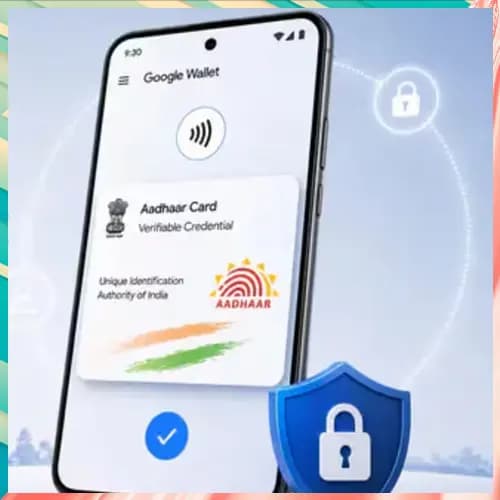
Google has expanded its digital identity ecosystem in India by allowing users to store Aadhaar Verifiable Credentials directly in Google Wallet. The move is part of its ongoing collaboration with the Unique Identification Authority of India (UIDAI) and aims to simplify identity verification across everyday services. With this update, users can now access Aadhaar details without carrying physical documents or logging into government portals during verification processes.
Secure digital storage with privacy-first design
According to Google, the Aadhaar credentials stored in Wallet are encrypted and remain on the user’s device rather than being saved on Google’s servers or account. A key feature of this system is selective disclosure, which ensures that only necessary information is shared during verification. For instance, if a service provider only needs to confirm a user’s age, other personal details from Aadhaar remain hidden.
This privacy-focused approach is expected to reduce data exposure risks while making identity checks faster and more seamless across digital and physical environments.
Expanding ecosystem across daily services
In its initial phase, the Aadhaar integration is being supported by several service providers across sectors. These include cinema chains such as PVR INOX, matrimonial platform BharatMatrimony, and visa processing service Atlys. Additional integrations are also being rolled out with platforms like Mygate, used for residential society access, and Snabbit, a local services provider.
To use the feature, users must have an Android device running Android 9 or higher, an active screen lock, and the official Aadhaar application installed. They can add Aadhaar to Google Wallet either through the Aadhaar app or directly via Google Wallet, which redirects them for verification. Once approved, the credential can be used through NFC, QR codes, or online authentication.
Alongside this India rollout, Google is also extending its passport-based digital ID system to Singapore, Taiwan, and Brazil, signalling a broader global push toward mobile-first identity solutions.