
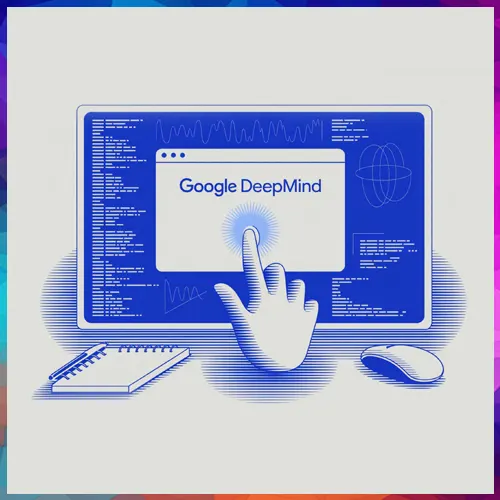
The experimental Gemini-powered interface aims to transform the traditional computer cursor into an intelligent assistant capable of understanding context, gestures and user intent, signalling a broader shift toward ambient and integrated artificial intelligence experiences.
Google DeepMind has introduced a new experimental concept that could significantly change the way people interact with computers — an AI-enabled cursor designed to understand not only where users point, but also the intent behind their actions.
The company revealed the concept in a recent blog post, describing the system as a Gemini-powered interface that integrates artificial intelligence directly into everyday computer interactions. Unlike traditional cursors that simply track coordinates on a screen, the new approach seeks to make the pointer context-aware and conversational.
The technology is being positioned as part of a broader move toward “ambient AI,” where artificial intelligence works seamlessly in the background instead of functioning as a separate chatbot or application window.
According to DeepMind, the goal is to eliminate the friction users often face when switching between applications and AI tools. Instead of copying text into a chatbot or manually uploading images, users could interact naturally by pointing at on-screen content and speaking commands.
Potential use cases demonstrated by the company include summarising highlighted text, identifying products in videos, retrieving information about locations, and visualising furniture inside real-world environments through AI assistance.
Shift towards context-aware computing
Industry observers believe the development could represent a major evolution in human-computer interaction.
AI educator Ansh Mehra said the concept reflects a transition from command-driven computing to systems capable of understanding user behaviour and intent.
Experts noted that current computer interfaces mainly respond to direct instructions, whereas the AI-powered cursor attempts to interpret context in a more human-like way. Instead of relying on detailed prompts, users may increasingly communicate through gestures, references and natural speech.
The concept also reflects a growing industry focus on integrating AI directly into operating systems, browsers and productivity environments rather than limiting it to standalone applications.
Future of ambient AI interfaces
Technology analysts believe AI-native interfaces could become the next major computing shift after graphical interfaces, touchscreens and voice assistants.
Srinivas Padmanabhuni said ambient AI systems are designed to continuously observe context and assist users more naturally within existing workflows.
According to DeepMind, some of these capabilities are already being explored within Chrome and upcoming Gemini-integrated experiences. The company indicated that future systems may allow users to interact with AI using intuitive gestures and references such as “this” or “that,” reducing the need for lengthy typed instructions.
While still experimental, the AI-powered cursor highlights how technology companies are increasingly working to embed artificial intelligence into the core experience of computing itself.
Industry experts believe such interfaces could eventually redefine how users interact with digital devices, much like touchscreens transformed smartphones and graphical interfaces reshaped personal computing decades ago.