
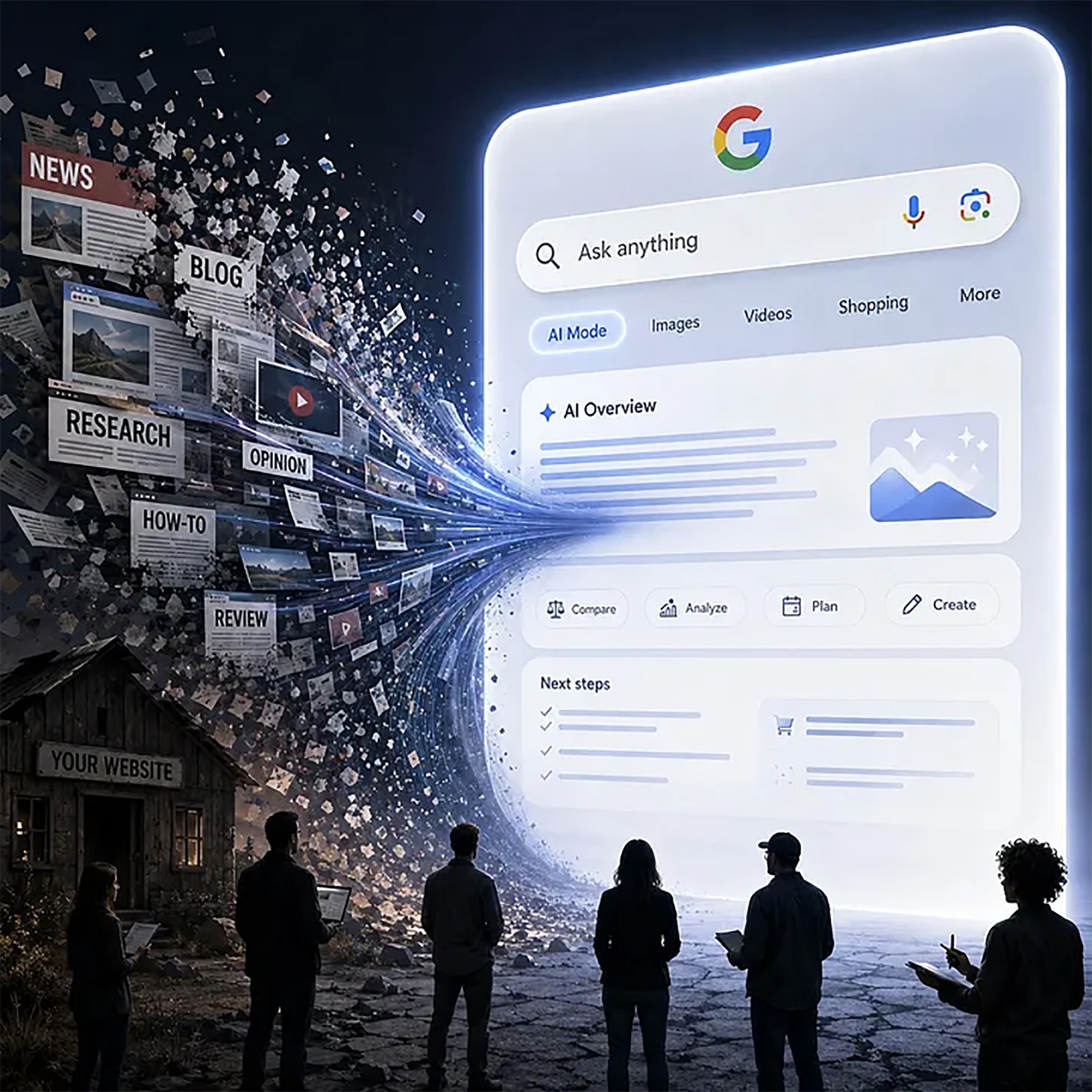
Google is testing a significant change in the economics of online publishing: paying selected publishers when their content materially contributes to AI-generated answers. The invitation-only AI Contribution Pilot reportedly covers roughly 100 publishers and applies to Gemini, AI Overviews and AI Mode.
For decades, the search bargain was straightforward. Publishers produced content, Google indexed it, users clicked links, and publishers monetized those visits through advertising, subscriptions or commerce. Generative AI is disrupting that exchange.
AI search increasingly answers questions directly. When users obtain what they need without visiting the source website, publishers can lose traffic even though their journalism, research or expertise helped create the answer. This is turning zero-click search into an economic challenge for content creators.
Google’s experiment effectively recognizes that content can have financial value even when it does not generate a click. Participating publishers reportedly see AI-related earnings through Search Console, although Google has not publicly disclosed the valuation formula or general eligibility criteria.
The early economics, however, appear highly uneven. Reporting indicates that one early participant earned more than $1 million over a year, while several smaller and midsize publishers reportedly received payments equivalent to less than 0.1% of their advertising revenue.
That raises a critical question: Who determines what original content is worth to an AI answer? Without transparent attribution, usage metrics and pricing mechanisms, publishers remain dependent on the platform consuming and valuing their information.
The tension is already reaching courts. On October 1, a U.S. federal judge dismissed antitrust lawsuits from Chegg and Penske Media alleging that Google’s AI summaries harmed traffic and revenue, while acknowledging broader concerns about technological disruption to content businesses.
The bigger transformation is therefore from pay-per-click to pay-for-contribution. If expanded, Google’s experiment could help establish a new commercial layer for the AI web—where publishers are compensated not simply for attracting readers, but for supplying the trusted knowledge that makes AI answers possible.